

















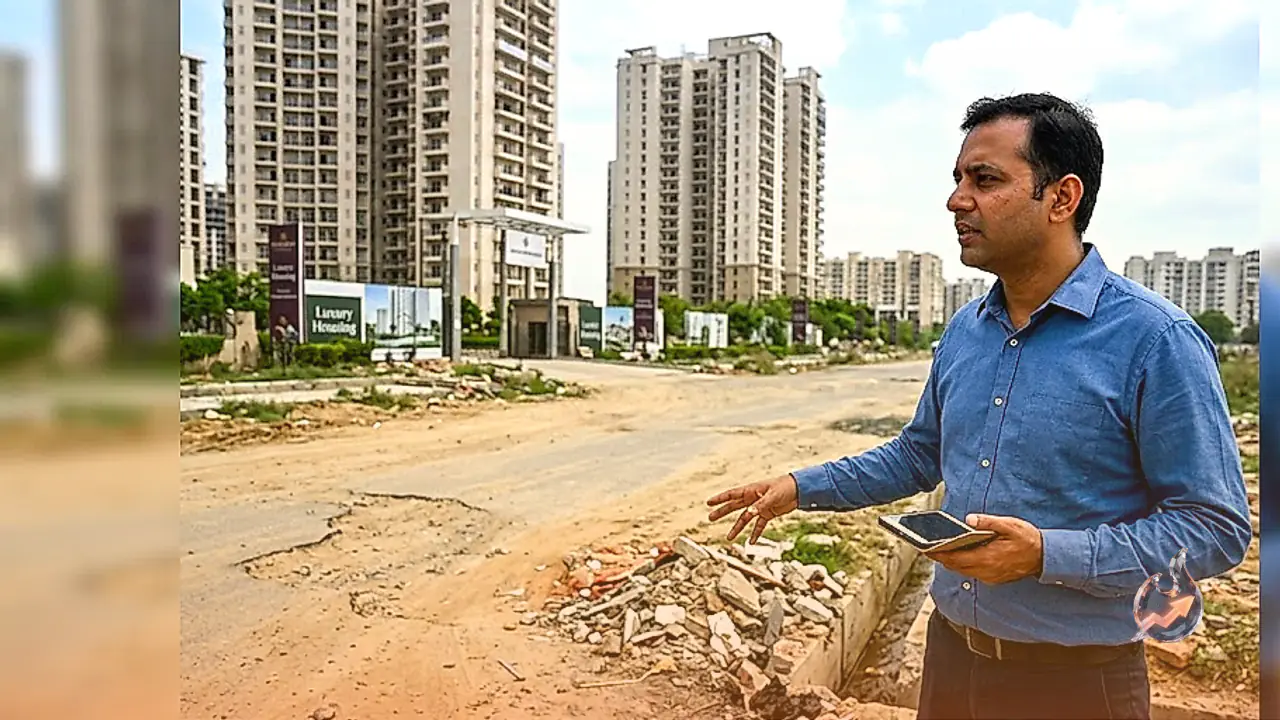

Three decades ago, Gurugram was largely an undeveloped, barren stretch of land on the outskirts of the national capital. Today, it stands as one of India's most prominent corporate hubs and expensive real estate markets. Within the Delhi-NCR region, top developers regularly promote high-end gated communities offering luxurious lifestyles to affluent homebuyers. Transactions involving luxury flats and villas priced at 100 crore INR have become an increasingly familiar feature of the local property market. However, a growing debate has emerged over whether the amenities advertised inside these multi-crore residential complexes are truly exclusive luxury features or merely basic infrastructure that every citizen deserves.
Insight From Real Estate Veteran's Trip to Canada
Arun Prakash, an industry professional who has been working in the Delhi-NCR real estate sector for the past 20 years, recently posted a video on the social media platform Instagram that triggered a wide-ranging discussion on urban living standards. Reflecting on his observations during a week-long stay in Canada, Prakash noted how his perspective on housing amenities underwent a fundamental shift. He pointed out that facilities marketed as high-end luxury items in Gurugram's premium residential towers are freely accessible public goods provided to ordinary citizens in developed nations.
Basic Human Facilities versus Marketed Luxury
In his video message, Prakash captured footage of local Canadian public parks, wide paved thoroughfares, and freely accessible sports facilities. He demonstrated how well-equipped children's play areas, clean green spaces, and recreational spots are available to all members of the public without any membership fees or property surcharges. Drawing a direct contrast with Gurugram's gated developments, Prakash questioned why essential quality-of-life elements are monetized in India. He argued that safe spaces for children to play, walkable streets, and sports infrastructure form the core foundation of daily human living. Consequently, packaging these basic civic necessities as luxury add-ons to justify exorbitant home prices needs strict regulatory scrutiny.
Public Reaction and Debate Over Urban Infrastructure
The social media post resonated strongly with homebuyers and urban residents, sparking an intense conversation online regarding housing quality and civic planning in India. Many commentators echoed Prakash's views, sharing their own experiences with expensive gated housing. One user observed that outdoor amenities lose their primary purpose without clean air, remarking that many luxury features offered in Gurugram feel artificial and superficial amid poor environmental conditions.
Another social media user emphasized that in Canada, parents from every socioeconomic background can easily afford and access public parks for their children because these facilities represent baseline civic standards rather than elite privileges. Furthermore, a third commenter noted that achieving a healthy lifestyle in India requires being ultra-rich, whereas developed countries treat access to green spaces and clean surroundings as standard public rights. While such basic facilities remain widely available across many parts of the globe, the Indian market continues to coat essential civic infrastructure in the cloak of luxury to charge steep premiums.