






















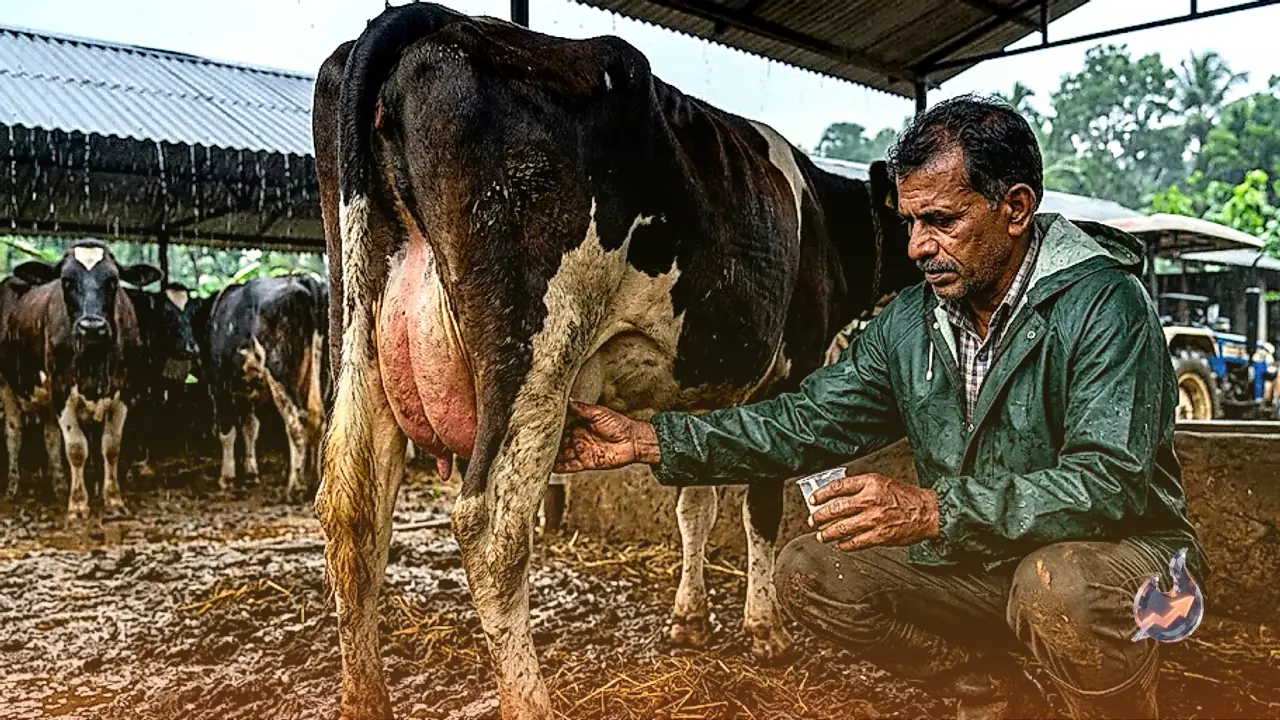

With the onset of the monsoon season, livestock owners face a heightened risk of various animal illnesses, among which mastitis emerges as a major threat for cattle and buffalo farmers. During rainy spells, damp conditions, filth, and accumulated mud inside animal shelters drastically elevate the chances of udder infections. When mastitis strikes, the animal suffers from severe swelling and pain in the udder, while both the quantity and overall quality of milk take a significant hit. In many instances, farmers also notice abnormal changes or lumps forming directly within the milk.
Recognizing Early Symptoms of Mastitis
Upon contracting mastitis, visible swelling and pain manifest clearly in the animal udder. Often, the cattle display clear signs of distress and discomfort whenever the udder is touched. Along with these physical indicators, the volume of milk begins to drop noticeably, and the standard quality deteriorates. It is crucial for caretakers to remain vigilant about any subtle shifts occurring in the udder and the milk during the milking process itself.
Abnormal Indicators in Milk
The appearance of lumps in the milk, a watery consistency, unexpected discoloration, or any other irregular trait can be reliably treated as a strong signal of mastitis. Spotting these red flags makes it imperative to consult a qualified veterinarian promptly for guidance and intervention.
Preventive Measures and Barn Hygiene
Keeping the animal shelter meticulously clean and dry stands out as the most vital step in warding off this disease. Rainwater and mud must never be allowed to pool inside the shed. Udder areas should be washed thoroughly with clean water and wiped dry, while rigorous standards of hygiene must be maintained both before and after milking sessions.
Precautions During the Milking Process
Milking should always be performed using impeccably clean vessels and washed hands. Cattle must not be forced to stand on dirty floors or wet ground for extended periods. If an animal sustains any cuts, injuries, or wounds on the udder, immediate attention must be paid because such breaks in the skin drastically amplify infection risks.
Regular Monitoring and Timely Treatment
Livestock keepers need to conduct regular inspections of their animals udders and milk output throughout the rainy months. Identifying early symptoms in a timely manner and securing proper veterinary treatment can prevent the condition from escalating into a severe health crisis, thereby keeping the animal healthy and minimizing losses in milk production.