






















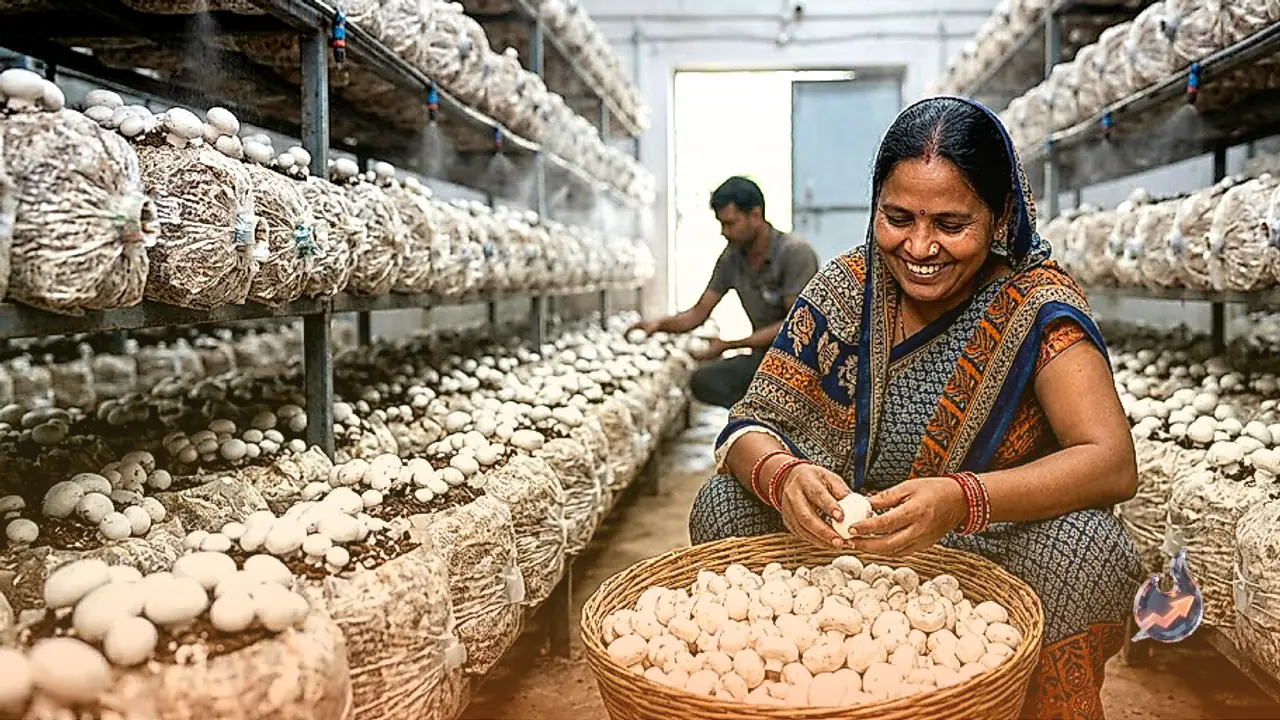

Uttar Pradesh has achieved a remarkable milestone by clinching the number one position in mushroom production across the nation. According to plant pathologist Dr. Onkar Singh, a time existed when Haryana and Punjab dominated this agricultural sector, followed by Bihar gaining early ground. However, Uttar Pradesh has now surpassed these states to claim approximately 14 percent of the entire country's total mushroom output. This massive shift has opened up lucrative avenues for local cultivators, strengthening the agrarian economy of the region.
Extraordinary Expansion of Mushroom Cultivation in Ghazipur
Within the district of Ghazipur, mushroom farming has witnessed rapid expansion over the past ten years. Records maintained at the Krishi Vigyan Kendra indicate that back in 2016, the local production stood at merely one and a half to two quintals. By the year 2026, this output climbed dramatically to reach roughly 250 to 300 quintals. This translates to an astounding 150-fold increase in production over a single decade, demonstrating how local farmers have warmly embraced this profitable farming practice.
Surging Demand Across Festivals and Social Events
Today, mushrooms are no longer viewed merely as a basic agricultural commodity. Traders and farmers regularly source mushrooms from the Krishi Vigyan Kendra to cater to local festivals, family celebrations, and various public gatherings. This continuously rising consumer demand has established mushroom cultivation as a robust alternative source of supplementary income for growers. Dr. Onkar Singh points out that mushrooms should be appreciated for their traditional culinary value alongside their profound nutritional attributes. Packed with protein and numerous other essential nutrients, they easily qualify as a valuable component of a well-balanced diet.
Health Benefits and Essential Cautions
Regarding health advantages, several claims frequently surround the consumption of mushrooms. It is often suggested that incorporating them into meals can help lower the risk of severe ailments like cancer, assist in maintaining healthy blood pressure levels, and promote a smoother digestive system. Nevertheless, experts advise that relying exclusively on mushrooms for the treatment or prevention of any disease is inappropriate. Their ultimate health impacts depend heavily on an individual's physical condition, the portion consumed, and their overall daily diet.
Extensive Training and Future Roadmap
Over the last eight years or so, the Krishi Vigyan Kendra has successfully provided professional training in mushroom cultivation to nearly 400 to 500 individuals. Through these structured training sessions, farmers and enthusiastic learners receive hands-on instruction regarding modern production techniques, proper crop maintenance, and practical operational details. Dr. Onkar Singh suggests that to promote mushroom production in a more organized manner, establishing a dedicated task force is essential. Drawing a parallel with the successful makhana production in Bihar, he notes that implementing a specialized framework and dedicated team for mushrooms could drastically elevate both total yields and farmers' incomes.