























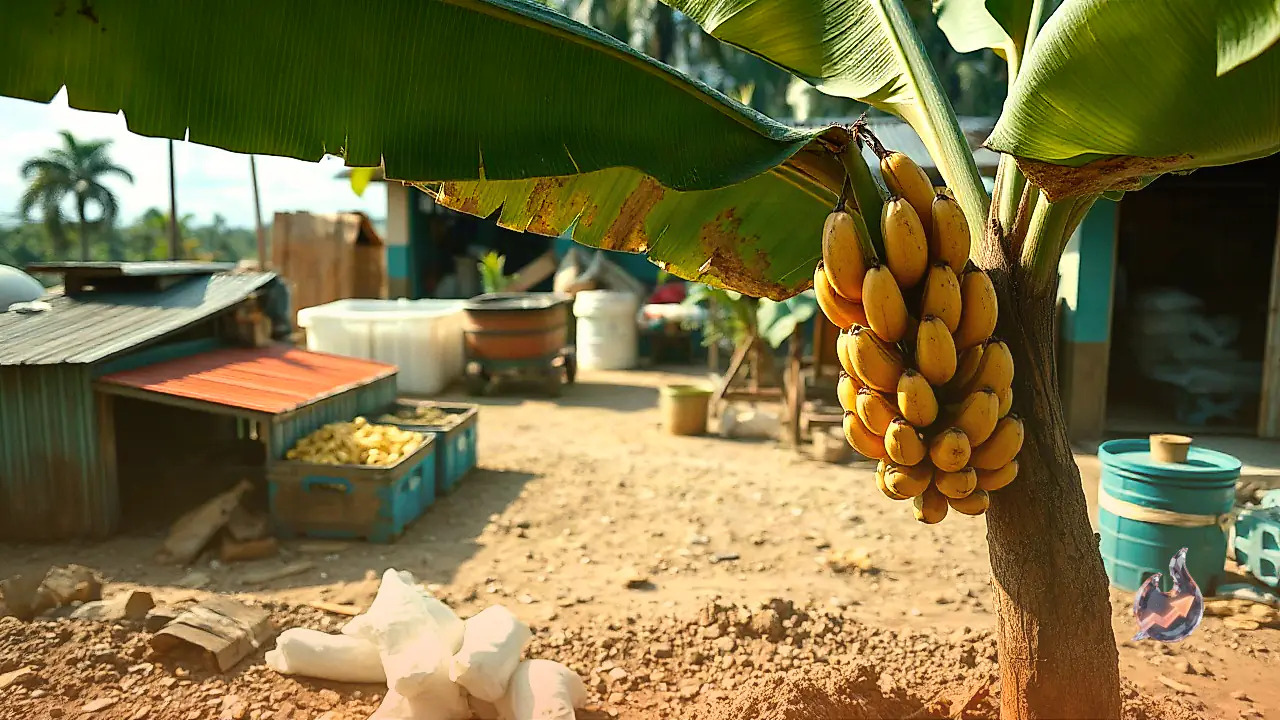

Banana cultivation is carried out on a large scale in the Mithilaanchal region of Darbhanga, where farmers put in significant effort to secure a bountiful harvest. During this process, it is frequently observed that farmers focus heavily on nitrogen while overlooking the critical importance of potash. According to agricultural experts, such neglect can prove costly because a shortage of potash not only stunts the overall development of the banana plant but also heavily damages the quality of the fruits and bunches produced.
Expert insights and cultivation statistics
Dr. S.K. Singh, a professor in the Department of Plant Pathology and Nematology at Dr. Rajendra Prasad Central Agricultural University, states that a balanced management of nitrogen, phosphorus, and potash is essential for achieving a better and higher-quality yield of bananas. Looking at national agricultural data, banana farming is practiced across approximately 9.48 lakh hectares of land in India, yielding an annual production of around 377 lakh tons. In a horticultural sector of this magnitude, even minor nutritional oversights can lead to widespread repercussions.
Primary causes of potash depletion
Continuously cultivating bananas in the same field over multiple seasons, a shortage of organic manure in the soil, sandy soil composition, and the washing away of vital nutrients due to heavy rainfall are identified as the main reasons behind potash deficiency. Banana crops demand a high volume of potash throughout their lifecycle, meaning that whenever the soil lacks this element, it directly and negatively impacts plant growth and final production volumes.
Identifying deficiency symptoms to protect yield
When potash is scarce, plants initially display warning signs on their older leaves. A yellowish tint first appears along the edges of the leaves, which gradually turns brown and eventually causes the leaf margins to dry out. Furthermore, stunted plant growth, a weak pseudostem, curling leaves, and undersized fruit bunches also serve as indicators of this issue. However, relying solely on these visual symptoms cannot confirm a definitive potash deficiency, making soil testing an absolute necessity.
Assessing damage and implementing proper management
Experts clarify that it is not mandatory for every field facing potash deficiency to suffer a 40 percent loss, as the actual damage depends entirely on the severity of the shortage, soil conditions, and farm management practices. Nevertheless, in cases of severe deficiency, production can drop sharply, dealing a financial blow to growers. Therefore, farmers must avoid blindly applying MOP or other potash fertilizers without conducting a prior soil test. Determining the precise requirement and applying it in split doses proves much more beneficial. In fields equipped with drip irrigation, fertigation can be carried out under expert guidance. Additionally, using well-decomposed cow dung and compost helps maintain soil health and structure. Caution is also required when spraying potash directly onto leaves, as high concentrations can scorch the foliage. Ultimately, a balanced management of both water and potash is vital for banana crops, and growers should test their soil and manage nutrients proactively rather than waiting for visible symptoms to appear.