




















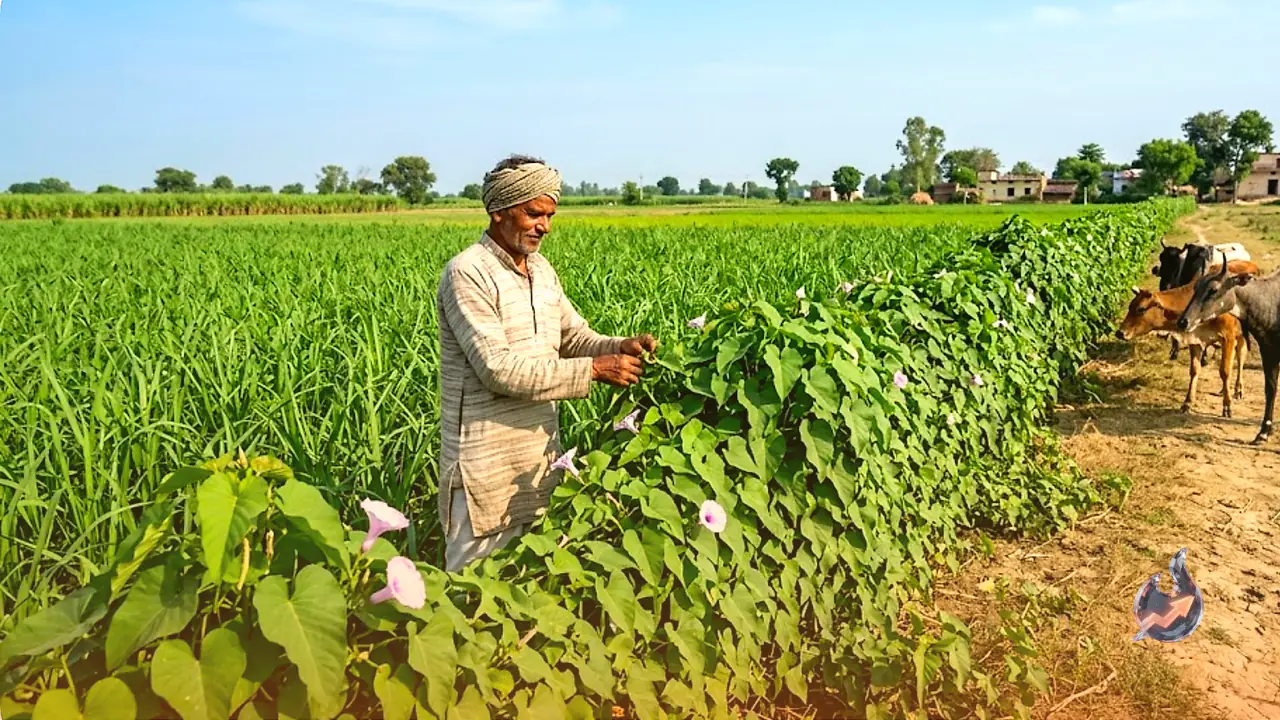

In the Lakhimpur Kheri district of Uttar Pradesh, the growing menace of stray animals destroying standing crops has become a major challenge for local farmers. While farmers have tried numerous methods to safeguard their fields, a highly effective and natural solution involves using a simple plant known as 'Besharam' (or Behaya) along the field boundaries. This plant is not only widely available but also functions as a self-sustaining security barrier once established. The unique advantage of this method is that it creates a natural protective layer that effectively stops animals from trespassing into the fields.
Building a Natural Security Perimeter
The Besharam plant is characterized by its rapid growth, forming dense thickets within just a few months. Its branches intertwine so tightly that it becomes nearly impossible for large animals to penetrate the perimeter. Because of this structural density, many farmers have started utilizing it as a biological fence. This approach acts as a reliable deterrent, effectively blocking the path of stray cattle and other animals that typically graze on agricultural land.
Cost-Effectiveness and Ease of Maintenance
A significant benefit of this plant is the minimal cost associated with it. Unlike conventional iron wire fencing, which is prohibitively expensive for many small-scale farmers, the Besharam plant requires almost no financial investment. Farmers can simply cut healthy stems and plant them directly into the soil. With adequate moisture, these cuttings take root easily. Furthermore, the plant requires very little ongoing maintenance. In addition to securing the boundaries, these bushes help mitigate soil erosion, providing dual benefits to the land.
Reducing the Burden on Farmers
For small farmers, the financial burden of installing a full wire fence around their fields is often unsustainable. The Besharam plant provides a practical alternative that is both affordable and long-lasting. In areas where these hedges have fully developed, farmers have noted a significant decline in stray animal incursions. This has not only improved crop safety but also reduced the exhausting requirement of guarding fields throughout the night.
Steps for Planting
Planting this hedge is straightforward. Farmers should select healthy stems, roughly 1 to 2 feet in length, and plant them along the field boundaries with a spacing of about 2 to 3 feet. The monsoon season is considered ideal for this process, as the soil remains damp, ensuring the stems take root quickly. Providing a little irrigation during the initial period helps the plants flourish. Within a few months, the branches begin to spread, eventually creating a thick, solid hedge around the entire field.
Utility and Environmental Benefits
The plant is remarkably hardy and does not require frequent application of fertilizers or intense care. Periodic trimming is all that is needed to ensure the hedge becomes denser. The cuttings generated during trimming can even be used to grow more plants elsewhere. Beyond its role as a barrier, the Besharam plant contributes to the environment by holding the soil firmly in place, which prevents erosion during heavy rains. Additionally, the dense foliage offers shelter to smaller birds and beneficial insects.
Deterring Animals Naturally
The primary reason this method succeeds is the plant's distinct, pungent odor, which animals find highly repulsive. Known in English as Itamia, the plant serves as a natural repellent for nilgai, wild animals, and stray cattle, none of which will typically venture near it. If farmers surround their land with this plant, it creates a persistent deterrent that keeps the crops safe. However, because the plant grows very quickly, regular pruning is essential to keep it contained and ensure it does not spread uncontrollably inside the fields.