























Sikar District Targets Major Boost in Pulse Cultivation for Kharif 2026 SeasonBusiness
3 hours ago· 2

Sikar District Targets Major Boost in Pulse Cultivation for Kharif 2026 Season

The Agricultural Department in Sikar district has unveiled an ambitious plan to significantly increase pulse cultivation and production for the Kharif 2026 season, aiming to cover over 50,000 hectares. This initiative seeks to empower farmers, boost their income, and promote sustainable agricultural practices.

Ambitious Targets for Pulse Production

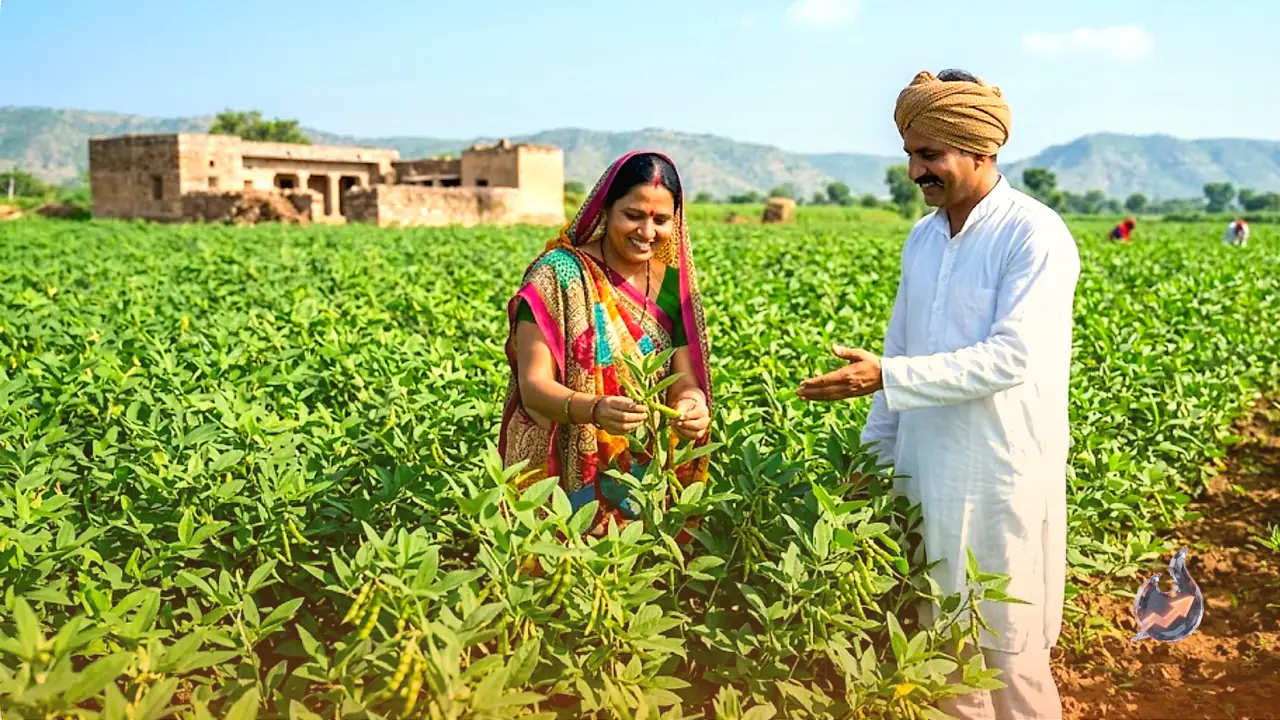
The Agricultural Department in Sikar district, Rajasthan, has outlined an ambitious strategy to substantially expand the area and output of pulse crops for the Kharif 2026 season. The department aims to cultivate pulses across more than 50,000 hectares, with a clear focus on enhancing both production volumes and farmers' incomes. This strategic push involves equipping farmers with advanced seeds, scientific farming techniques, and comprehensive crop demonstration programs.

Empowering Farmers Through Strategic Initiatives

As part of this initiative, the department plans to host crop demonstration programs spanning approximately 9,000 hectares across the district. These demonstrations will serve as crucial platforms for educating farmers on modern agricultural practices. Key areas of focus include the adoption of improved crop varieties, effective seed treatment methods, balanced fertilizer application, and advanced disease and pest management techniques. The department's vision is that by observing tangible positive results in their fields, farmers will be encouraged to embrace and integrate these new technologies into their regular farming routines.

Highlighting Key Pulse Crops and Their Advantages

The campaign will primarily promote the cultivation of Moong, Urad, Arhar, and Moth. According to Agriculture Expert Dinesh Jakhar, these pulse crops are particularly well-suited for regions with limited water resources, as they can yield good production even with less water. Beyond their adaptability, pulse crops play a vital role in enhancing soil fertility. They contribute significantly by fixing atmospheric nitrogen, thereby improving soil quality and reducing the subsequent need for chemical fertilizers for future crops, which in turn helps lower cultivation costs.

Economic and Environmental Benefits

Expanding the cultivation area for pulses is expected to help control overall farming costs. A rise in local pulse production will bolster market supply, creating better economic opportunities for farmers. Furthermore, crop diversification through increased pulse cultivation will develop new income streams for farmers, making the agricultural sector more resilient and sustainable in the long run.

Comprehensive Kharif 2026 Sowing Targets

In addition to pulses, the Agricultural Department has also set specific sowing targets for various other crops in Sikar district for the Kharif 2026 season. These targets are:

  • Bajra: 2 lakh 10 thousand hectares
  • Guar: 1 lakh 22 thousand hectares
  • Groundnut: 37 thousand hectares
  • Moong: 34 thousand hectares
  • Chawla: 18 thousand hectares
  • Moth: 400 hectares
  • Til: 260 hectares

Questions & Answers

What is the primary goal of the Sikar Agricultural Department?
The primary goal of the Sikar Agricultural Department is to increase the area and production of pulse crops by cultivating over 50,000 hectares during the Kharif 2026 season.
Which main pulse crops are being promoted?
The main pulse crops being promoted under this initiative are Moong, Urad, Arhar, and Moth.
How will farmers receive support?
Farmers will be supported with improved seeds, scientific farming techniques, and participation in crop demonstration programs planned across approximately 9,000 hectares.
What are the benefits of cultivating pulse crops?
Pulse crops yield well with less water, enhance soil fertility (through atmospheric nitrogen fixation), reduce the need for chemical fertilizers, and help control farming costs.
What are the targets for Bajra and Guar in Kharif 2026?
The target for Bajra in Kharif 2026 is 2 lakh 10 thousand hectares, and for Guar, it is 1 lakh 22 thousand hectares.
How will this initiative economically benefit farmers?
Increased pulse production will provide farmers with better economic opportunities, help control cultivation costs, and develop new income streams through crop diversification.
TrendKia Rewards

Read the news, earn real rewards

Every article you read earns points — redeem for gifts up to ₹10,000. Free to join.

Register free & start earning
250Mobile Recharge
12,500 · ≈ 12,500 reads
Start earning
500Gift Voucher
25,000 · ≈ 25,000 reads
Start earning
1,000Gift Card
50,000 · ≈ 50,000 reads
Start earning
2,000Gift Card
1,00,000 · ≈ 1,00,000 reads
Start earning
3,000Shopping Voucher
1,50,000 · ≈ 1,50,000 reads
Start earning
5,000Cash / UPI
2,50,000 · ≈ 2,50,000 reads
Start earning
PREMIUM7,500Cash / UPI
3,75,000 · ≈ 3,75,000 reads
Start earning
PREMIUM10,000Cash / UPI
5,00,000 · ≈ 5,00,000 reads
Start earning
PREMIUM15,000Mega Cash
7,50,000 · ≈ 7,50,000 reads
Start earning

Comments 0

No comments yet — be the first.

Citizen journalism

Become a TrendKia journalist

Voice of the people

Share news, photos and videos from your area with TrendKia and let your voice reach the nation. Every citizen a journalist.

Join now
Citizen journalistCitizen journalist
Citizen journalist
Citizen journalist