






















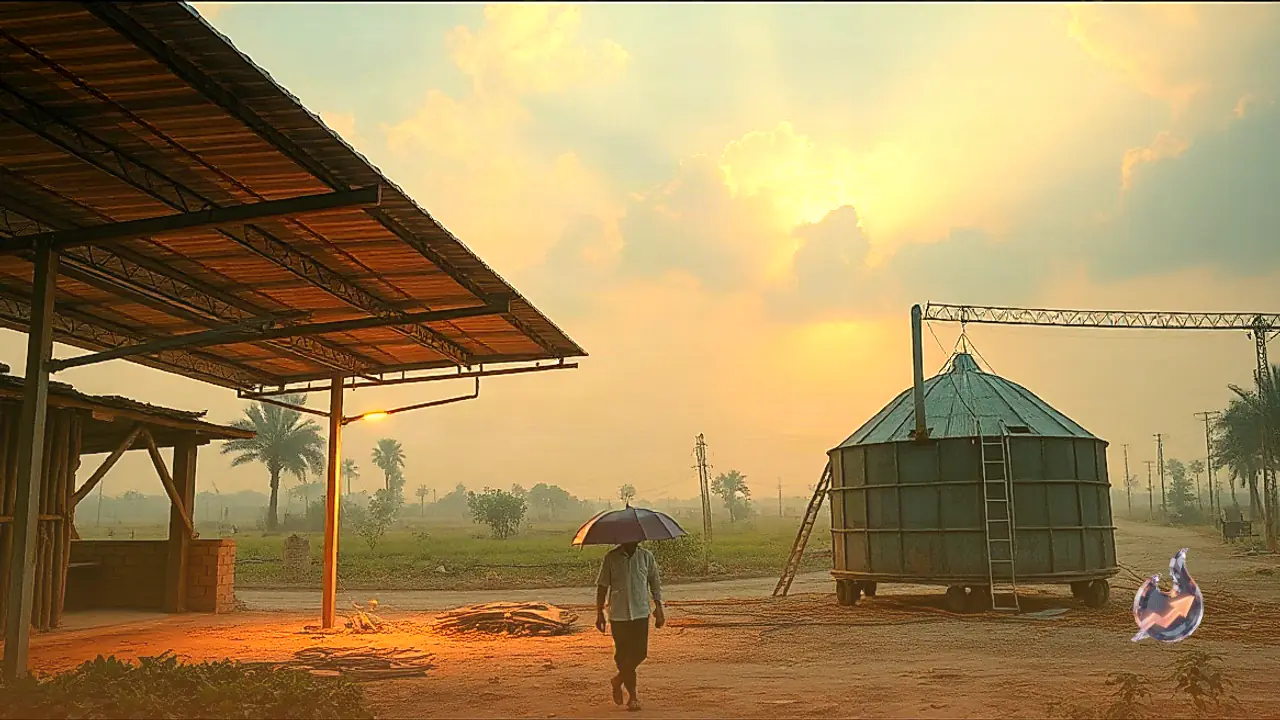

Drying agricultural produce, particularly spices and flower petals, poses a major challenge for farmers during the monsoon season. Unpredictable rainfall, heavy winds, and cloudy weather frequently prevent crops from drying properly in open fields. Conversely, direct exposure to intense sunlight often leads to color fading and the loss of essential aromatic qualities in spices and floral products. To address these persistent issues, the solar dryer system has emerged as a highly efficient and sustainable solution for the farming community. Utilizing natural solar thermal energy, this advanced technology enables the safe and hygienic drying of crops, fruits, vegetables, spices, and delicate flower petals. Unlike traditional open-air drying, the solar dryer system preserves the natural color, distinct flavor, rich aroma, and essential nutritional value of agricultural commodities. By significantly lowering moisture content, it extends the shelf life of produce, allowing farmers to store their yields for longer periods and command superior prices in commercial markets.
Key Advantages of Solar Dryers and Quality Preservation
Traditional methods of spreading harvested crops under direct sunlight leave them exposed to environmental contaminants, including dust, soil, unexpected rain showers, insects, and birds. Solar dryer systems provide a closed, protective environment that shields agricultural items from these external hazards. Eliminating moisture effectively prevents microbial growth and spoilage, allowing stored commodities to remain viable over extended periods. Furthermore, this technology presents a lucrative value-addition opportunity for farmers facing surplus or low market prices for fresh vegetables. By dehydrating leftover or excess produce into processed, value-added forms, agricultural producers can realize financial returns that are three to five times higher than selling raw commodities. For instance, drying red chillies or preserving rose petals for producing sweet gulkand becomes seamless and highly profitable under this clean technology framework.
National Horticulture Mission and Government Subsidy Structure
Explaining the technical and economic benefits of the initiative, Dr. Shankar Singh Rathore, Director of the Horticulture Department within the Agriculture Department, highlighted that the solar dryer system is a unique technology integrated into the National Horticulture Mission Scheme. Produce dried through this mechanism suffers no degradation in quality, whereas items dried in open spaces typically experience a marked decline in market value and essential attributes. To encourage widespread adoption among farmers, the Rajasthan government is providing financial assistance for installing solar dryer units. Under the official scheme, a 40 percent subsidy is available on a 70 kW solar dryer system with an estimated unit cost of 1 lakh rupees. Similarly, for a larger 100 kW solar dryer system carrying a unit cost of 3.5 lakh rupees, the state government offers an equivalent 40 percent subsidy to lighten the financial investment for farmers.
Greenhouse Technology and Solar Exhaust Fan Mechanism
The operational framework of solar dryer systems relies on greenhouse principles and solar collector technology. As sunlight passes into the collector structure, internal temperatures rise in a controlled environment, causing moisture within the crop to evaporate. To maintain constant air circulation and prevent humidity buildup, the system utilizes exhaust fans powered directly by solar panels. These fans continuously draw out the warm, moisture-laden air from inside the drying chamber and vent it outdoors. This continuous ventilation process allows agricultural commodities to dry rapidly, uniformly, and under completely hygienic conditions without consuming conventional grid electricity, ensuring premium product standards for the market.