























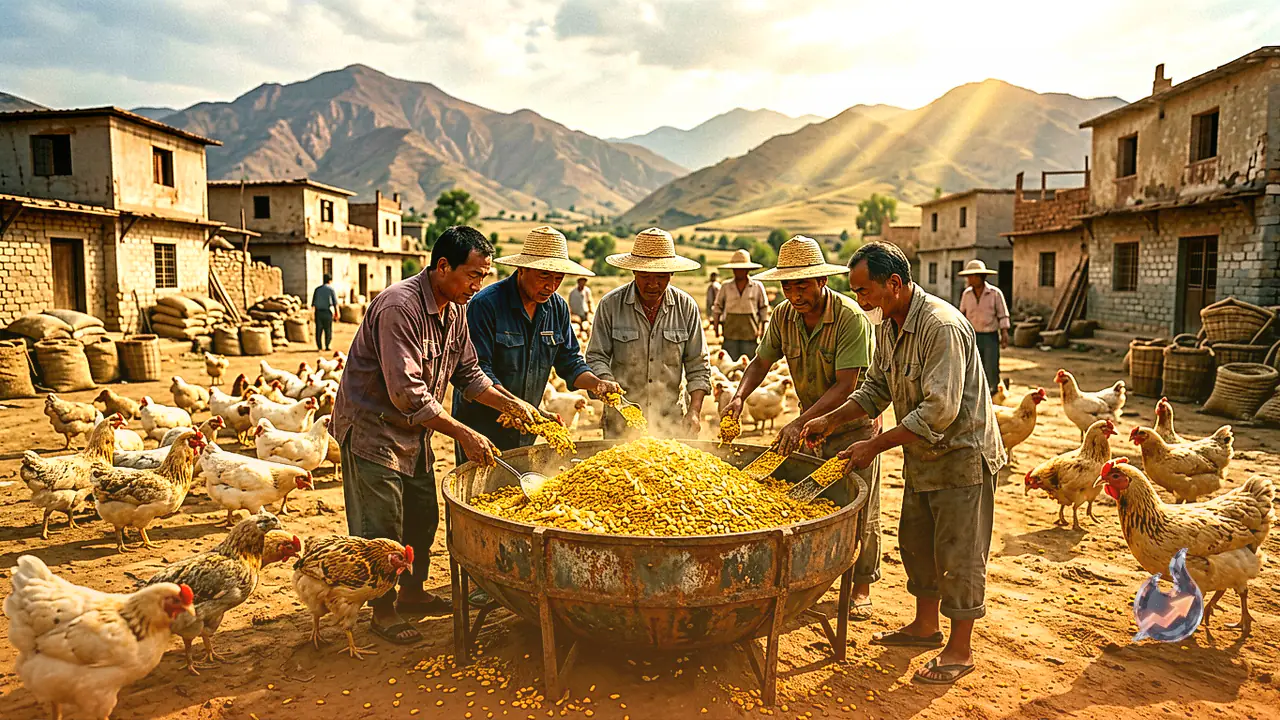

Farmers in Uttar Pradesh are finding new avenues to supplement their agricultural income by venturing into the poultry feed business. With the continuous expansion of poultry farms across the region, the demand for chicken feed remains consistently high throughout the year. Interested farmers can initially start by trading commercially available feed and later scale up by establishing their own small-scale manufacturing units. This emerging sector is transforming rural business opportunities and providing sustainable revenue models for local agricultural communities in Moradabad and surrounding areas.
Government Support and Active Units
Vimal Kumar Tomar, a DRP officer in the horticulture department, shared insights into the existing ecosystem and government backing for this venture. He noted that several functional poultry feed manufacturing units are already operating successfully in the region. To encourage greater participation, the government provides financial assistance through subsidies, ensuring that maximum farmers can reap the benefits of this program. At present, about five dedicated poultry feed production units are fully active and running smoothly in the local area, demonstrating the commercial viability of the sector.
Essential Raw Materials for Quality Feed
Manufacturing a batch of high-grade, nutritious poultry feed requires a specific mix of raw ingredients. The primary components include maize, soybeans, wheat, bran, DORB, mineral mixtures, and various essential vitamins. Blending these raw materials in the correct proportion is crucial to producing a balanced diet that supports healthy poultry growth. Farmers who already manage poultry farms require a steady, daily supply of this nutritional feed to maintain the health and productivity of their birds.
Cutting Costs and Maximizing Profits
Purchasing feed directly from external markets or distant manufacturing companies often adds substantial transportation and freight charges to the final price. These extra expenses significantly increase overhead costs, eating into the hard-earned profits of farm owners. By shifting to self-production, farmers can bypass these middlemen costs and prepare the required feed directly at their own facilities. This approach not only ensures a timely supply of fresh feed for their birds but also drastically reduces overall production expenses. Recognizing the economic potential, the government offers a subsidy of up to 35 percent on the total project cost under this scheme, empowering farmers to become self-reliant.