





















Southern Spain experienced a significant seismic event on Tuesday morning when a magnitude 4.8 earthquake struck near the historic city of Granada. The powerful underground tremor, which occurred at 10:37 local time (08:37 GMT), caused widespread panic across the region, resulted in light injuries to at least three individuals, and damaged multiple vehicles and structures. Local administrative bodies and emergency teams immediately initiated safety protocols across Granada and nearby towns as residents flooded into the streets fearing potential aftershocks.
Seismic Data and Epicentre Location
According to detailed technical evaluations provided by the National Geographic Institute (IGN), the epicentre of the magnitude 4.8 earthquake was pinpointed roughly 10 kilometres (six miles) south of Granada's historic centre, in close proximity to the municipality of Alhendín. The IGN confirmed that the tremor originated at a shallow depth of less than 10 kilometres beneath the Earth's surface. Geologists from the institute noted that this morning quake represents the latest and most intense event in a continuous sequence of very shallow tremors that began shaking the area on Friday. Because shallow earthquakes transfer energy more directly to the surface, the shuddering was felt sharply across a wide geographical perimeter.
Panicked Scenes and Resident Accounts
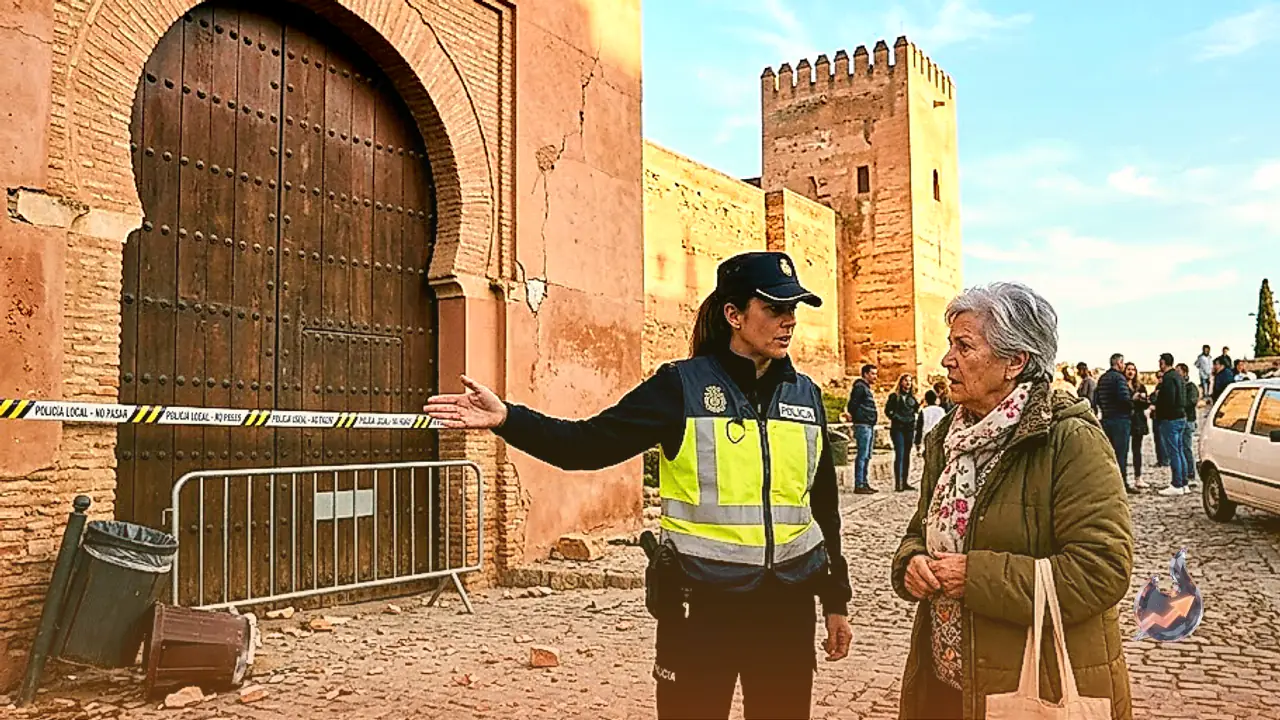
The sudden shaking triggered widespread alarm throughout urban and residential neighborhoods. Panicked citizens abandoned their homes, offices, and commercial establishments, seeking safety in open public spaces and streets. Ground shaking caused architectural debris to break off structural facades, dropping onto parked vehicles below and causing noticeable physical damage.
Eyewitnesses in Granada described intense moments of distress during the quake. Alfonso Malpica, who was inside his ground floor flat when the tremor commenced, noted that the shuddering was significantly stronger than the routine, minor quakes that residents periodically experience in the region. He reported feeling the entire ground floor structure move beneath him. Meanwhile, laboratory worker Cristina Ruiz Lopez described her terrifying experience while shopping inside a local supermarket. She explained that items tumbled off store shelves around her as the facility shook, leaving shoppers shaken as everything came crashing down around them.
Closure of Landmarks and Cultural Institutions
The impact of the seismic activity extended directly to Granada's most critical heritage sites and civic infrastructure. Administrators responsible for the world renowned Alhambra palace announced that the historic complex would remain closed to visitors during the afternoon following the quake. The decision was taken to enable specialized engineering and preservation teams to conduct a comprehensive structural evaluation of the site. The medieval Islamic architectural complex, which holds official UNESCO World Heritage status, welcomes millions of international and domestic tourists annually, making its temporary closure a significant safety precaution.
Beyond the Alhambra, local authorities ordered the temporary shutdown of several municipal administrative buildings, museums, and sports facilities throughout Granada. These precautionary measures aim to ensure structural integrity and guarantee public safety before reopening the sites for public access.
Transit Delays and Regional Precautionary Steps
Transportation services across Granada also adjusted operations to mitigate risks associated with potential aftershocks. Operators of the Granada metro transit network formally announced speed restrictions across the entire railway system. Trains were restricted to a maximum operating speed of 30 kilometres per hour (19 miles per hour) as a direct safety precaution. Transport officials issued warnings to commuters that these reduced operational speeds would inevitably lead to scheduling delays throughout the day.
Regional emergency coordination services continue to monitor the geological situation closely alongside the IGN. Local officials have re-emphasized safety advisories for residents, encouraging caution while ongoing damage assessments proceed across damaged residential properties, public institutions, and transit corridors.