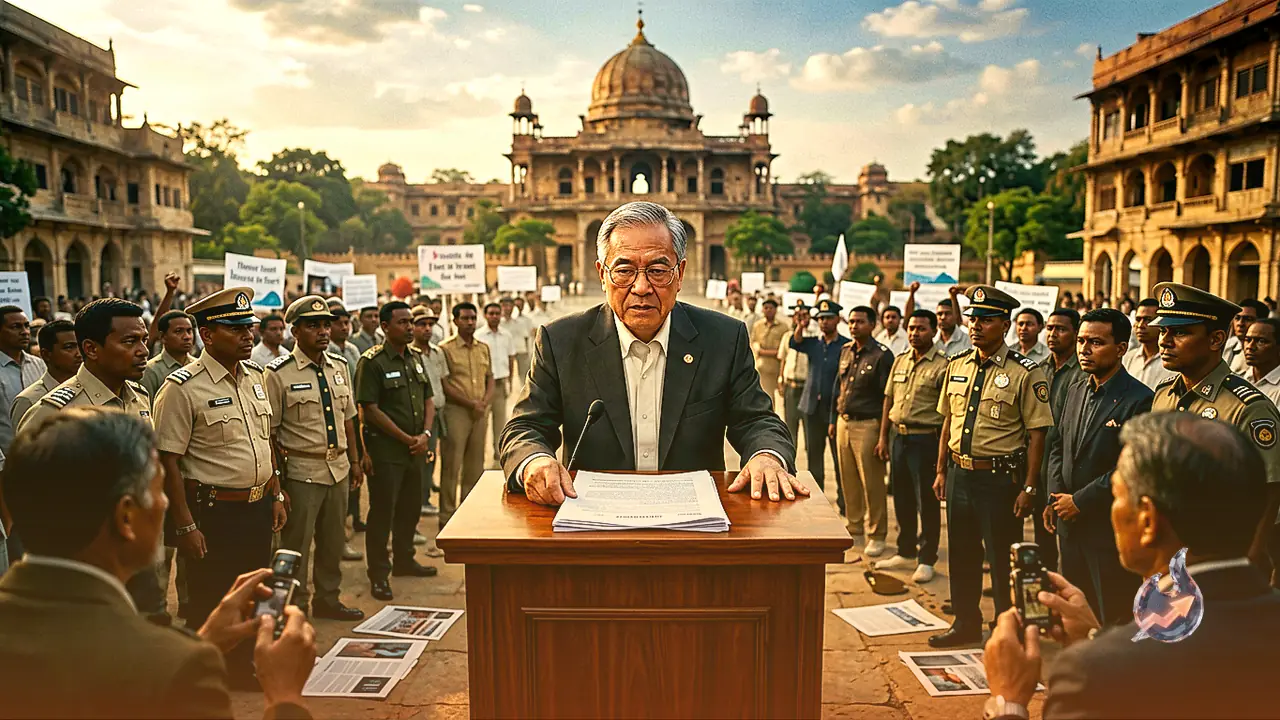



















In a major intelligence-led counter-terrorism operation executed right before Independence Day celebrations, Indian security forces successfully dismantled a multi-state terror network backed by Pakistan's intelligence agency ISI. While political debates and parliamentary commotion led by opposition leaders like Rahul Gandhi were underway regarding police actions at Jantar Mantar, Prime Minister Narendra Modi and Home Minister Amit Shah were engaged in late-night strategic deliberations with top security chiefs. The coordinated crackdown neutralised the Shahzad Bhatti network across 14 states, leading to over 200 arrests and thwarting a series of planned attacks.
Midnight Security Strategy Formulated Amid Parliamentary Clamor
While parliament witnessed heated exchanges over domestic policing issues, high-level national security meetings were being conducted behind closed doors. Home Minister Amit Shah held extended late-night sessions inside Parliament House alongside the Home Secretary, the chief of the Intelligence Bureau (IB), and the head of the Research and Analysis Wing (RAW). The primary focus of these strategy meetings was to monitor real-time intelligence inputs and coordinate a swift, multi-agency strike to guarantee absolute security during the national Independence Day celebrations. The Home Minister personally monitored the operation minute by minute.
Nationwide Raids Across 14 States Lead to Over 200 Arrests
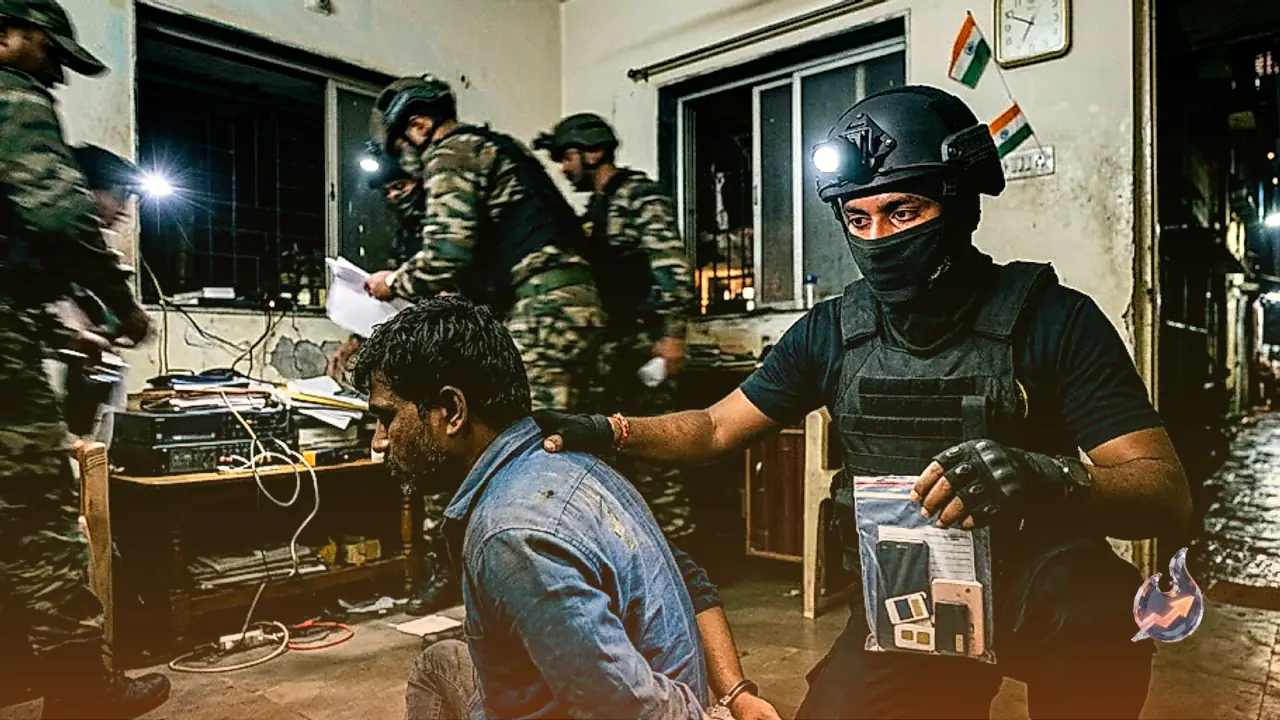
Leveraging a real-time intelligence sharing mechanism, joint security teams executed synchronized raids across 14 states. During the initial phase of the operation, 253 suspects were taken into custody for questioning. Following detailed interrogation and preliminary evidence gathering, law enforcement agencies registered over 80 FIRs and formally arrested more than 200 suspected operatives linked directly to the ISI handler network.
State-Wise Breakdown of Arrests Across India
The terror module had established roots in multiple regions across the country. According to official data, Uttar Pradesh recorded the highest number of suspect apprehensions at 62, followed closely by Haryana with 52, Delhi with 51, Punjab with 44, and Rajasthan with 15. In western and northern regions, 8 suspects were arrested in Maharashtra and 5 in Uttarakhand. Further arrests were made in southern and eastern states, including 3 suspects each in Karnataka, Gujarat, and Bihar, alongside 2 suspects each in Telangana, Himachal Pradesh, Jammu and Kashmir, and Kerala.
The Shahzad Bhatti Network: Modus Operandi and Social Media Recruitment
Investigations revealed that Shahzad Bhatti, who posed publicly as a social media influencer, served as a key operative for Pakistan's ISI. Operating out of a clandestine call center setup in Islamabad, his handlers targeted Indian youths across various social media platforms. After screening profiles, handlers initiated contact through private direct messages before escalating to encrypted video calls with Bhatti's senior coordinators. Recruits were initially tasked with low-level surveillance, such as photographing and filming potential targets, before being inducted into larger terror assignments.
Seizure of Explosives, Grenades, and Surveillance Equipment
Security forces recovered a significant arsenal of arms, ammunition, and explosive materials from the arrested operatives. The seizures included functional Improvised Explosive Devices (IEDs) and military-grade hand grenades bearing distinct markings of the Pakistan Ordnance Factory. In addition to pistols and live ammunition rounds, agencies recovered specialized CCTV cameras that were being deployed by the operatives for covert target reconnaissance and espionage.
Zero Tolerance Policy, Pakistan's Denial, and India's Firm Stance
Following the successful conclusion of Independence Day festivities, Home Minister Amit Shah officially briefed the public on the operation, highlighting it as a prime example of the Modi government's zero-tolerance policy against terrorism. In response to the revelations, Pakistan's Ministry of Foreign Affairs issued a denial rejecting any connection to the arrests and labeling the announcements as political propaganda. However, India's Ministry of External Affairs quickly countered, affirming that counter-terrorism operations to eliminate threats against the nation will proceed without compromise.