





















The Shehbaz Sharif administration in Islamabad spent recent months actively seeking to curry favor with US President Donald Trump and reshape its diplomatic alignment with Washington. Pakistani political leaders had anticipated that this intense diplomatic courting would yield substantial bilateral financial relief, direct US dollar assistance, or an official economic support package. However, those diplomatic expectations have resulted in no official financial bailout or sovereign aid from the US government. Instead, American technology firm Google has laid the foundation for a new administrative office in Pakistan and announced a one-year free trial of its Gemini AI subscription for local students. While the Shehbaz Sharif government is trumpeting this routine corporate expansion as a landmark breakthrough in its foreign policy and digital infrastructure, the country's underlying economic crisis remains acute.
Official Fanfare Surrounding Google's New Office Foundation
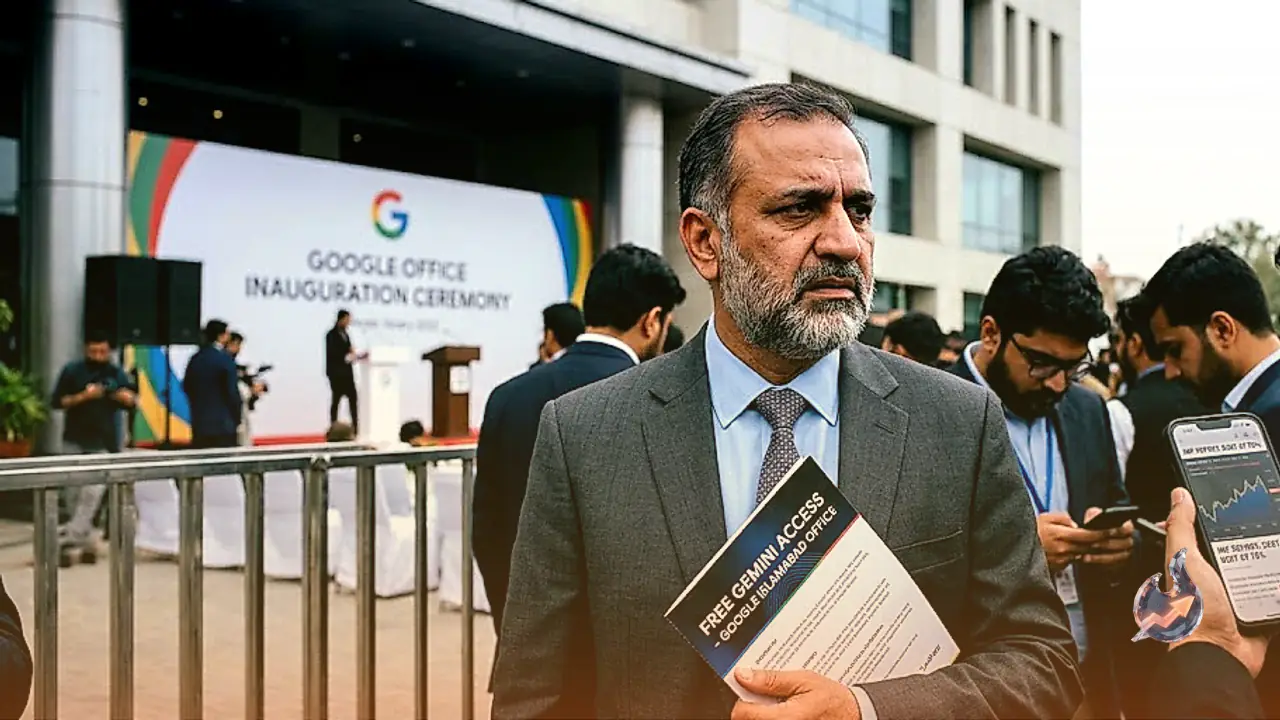
Pakistani Prime Minister Shehbaz Sharif personally unveiled the foundation plaque for Google's new office at a high-profile ceremony marked by traditional music, drumbeats, and state celebrations. Official government statements portrayed the event as a monumental milestone in Pakistan's digital transformation and technological progression. Cabinet officials and ruling party spokespersons framed Google's footprint as tangible proof of successful diplomatic engagement with Washington. However, independent economic analysts emphasize that celebrating a private multinational corporation's routine regional expansion as a national triumph merely underscores the government's lack of genuine economic progress and its reliance on external symbols.
Details of Google's AI Package and Local Footprint Claims
The actual components of Google's announcement in Pakistan involve specific commercial and educational initiatives. Alongside breaking ground on its physical facility in Islamabad, the technology giant committed to offering Pakistani university students free access to its Gemini AI software for a duration of one year. Furthermore, Google highlighted its existing economic metrics within the country, presenting the following figures
- Economic Activity Contribution: Google estimates that its platforms and services have enabled 3.9 trillion rupees in local economic activity within Pakistan.
- Employment Support: The company states that its digital ecosystem supports more than 960,000 direct and indirect jobs across the country.
- Digital Skill Training: Google initiatives have reportedly imparted digital literacy and technical training to over 1,00,0000 individuals in Pakistan.
Although the Shehbaz Sharif government presents these corporate figures and student freebies as fruits of its foreign policy alignment with the Trump administration, tech industry observers note that Google operates as an independent global commercial entity. Establishing local offices and providing promotional software trials to student demographics are standard corporate growth strategies used in developing markets worldwide. Treating standard commercial entry as a strategic geopolitical victory represents a deep misreading of corporate dynamics.
IMF Data Exposes Deep Economic Crisis Amid AI Hype
Beyond the official publicity surrounding free software trials and ribbon-cutting ceremonies, serious questions remain regarding whether digital corporate presence can alleviate Pakistan's structural economic distress. Basic living conditions for ordinary citizens continue to deteriorate under severe fiscal pressure. Latest data and analytical assessments from the International Monetary Fund reveal the harsh economic realities that official celebrations attempt to overshadow.
Stagnant GDP Growth Projects Lingering Poverty
According to official projections released by the IMF, Pakistan's gross domestic product growth rate for the year 2026 is forecast at a modest 3.6 percent. For a developing country experiencing rapid demographic growth, a 3.6 percent expansion rate reflects economic stagnation rather than progress. Such constrained growth is insufficient to generate adequate employment for millions of young citizens entering the workforce or to pull vulnerable populations out of poverty.
High Inflation Strains Everyday Household Budgets
Compounding the growth slowdown is an estimated average annual inflation rate of 7.2 percent. Persistent price increases have severely eroded the purchasing power of average Pakistani households. Essential daily commodities, including wheat flour, pulses, basic food items, and monthly utility bills for electricity, have become increasingly unaffordable for large segments of the population.
Public Debt Reaches Dangerous 70 Percent of GDP
Pakistan's sovereign debt burden has escalated to a precarious level, representing approximately 70 percent of the nation's total GDP. As a consequence of this immense debt accumulation, a dominant share of government revenue is diverted entirely toward servicing interest payments on past borrowing. Rather than funding public infrastructure, healthcare, or education, state revenues remain tied to debt obligations, trapping current and future generations in a cycle of insolvency.
Extreme Susceptibility to External Global Shocks
The IMF report explicitly highlights that Pakistan's fragile economic structure remains highly vulnerable to external volatility. Any sudden increase in international crude oil prices or an escalation in regional geopolitical tensions could trigger immediate fiscal disruption. Given the precarious state of the country's foreign exchange reserves, the economy lacks the necessary buffer to absorb external market shocks.
Reliance on IMF Bailouts and Foreign Borrowing
Pakistan's economic survival currently depends not on robust domestic industrial manufacturing or strong export capacity, but on recurring financial bailouts from the IMF, emergency loans from friendly nations, and external financial aid. The domestic manufacturing sector and physical infrastructure have suffered severe degradation over years of structural inefficiency. The central government frequently relies on external borrowing simply to finance daily essential imports. Furthermore, ongoing political instability and persistent security concerns continue to deter meaningful foreign direct investment.
Against this backdrop of systemic collapse, a one-year promotional offer of free Gemini AI access or a local corporate office is negligible relative to the scale of the crisis. Deprived of major economic achievements to present to the public, the Shehbaz Sharif government has seized upon a standard corporate milestone to construct a narrative of foreign policy success.
Limits of Sycophantic Diplomacy and Structural Realities
Islamabad's diplomatic posture toward Washington reflects a broader attempt to regain geopolitical relevance and demonstrate proximity to the Trump administration. While political messaging seeks to convey that Washington is re-engaging with Pakistan, empirical economic facts demonstrate that free software subscriptions cannot reduce a 70 percent debt-to-GDP ratio or restore fiscal health. True economic recovery requires deep internal structural reforms, decisive action on security challenges, and the development of self-sustaining domestic industries, rather than reliance on corporate promotional gestures.