























Aspirants preparing for the Union Public Service Commission's toughest exams often mix up two of its most prestigious postings, the Indian Administrative Service and the Indian Engineering Service. Both ranks carry enormous prestige, but the way they function, the authority they hold and the responsibilities they carry are entirely different. An IAS officer effectively runs the administration of a district or a government department, while an IES officer leads the country's biggest infrastructure and technical projects. Pay, power and social standing also differ in ways that matter when choosing between the two career paths, so understanding these differences is essential for anyone preparing for the UPSC exams.
How much do salaries and perks actually differ
Under the 7th Pay Commission, both IAS and IES officers start on the same basic pay of Rs 56,100 under Level 10. That means there is no difference in basic salary at the entry level for either service. Even so, in-hand pay can vary a little because it depends on the posting location and allowances such as dearness allowance (DA), house rent allowance (HRA) and special allowances. In the initial years, officers in both services typically take home between Rs 80,000 and Rs 1,00,000 a month.
Promotions follow different tracks too. After years of seniority and experience, an IAS officer can rise to the country's top administrative post, Cabinet Secretary, where the salary is a fixed Rs 2,50,000. In terms of perks, IAS officers usually get a government bungalow, an official car, security personnel and greater administrative clout, while IES officers get strong facilities and considerable respect within their technical domain.
What IAS and IES officers actually do on the job
An IAS officer functions as the administrative head. Serving as a District Magistrate (DM), a secretary or the head of a department, these officers are responsible for maintaining law and order, implementing government schemes on the ground and running the entire administrative machinery of a district or department. In effect, an IAS officer has a direct hand in almost every major decision taken within a district.
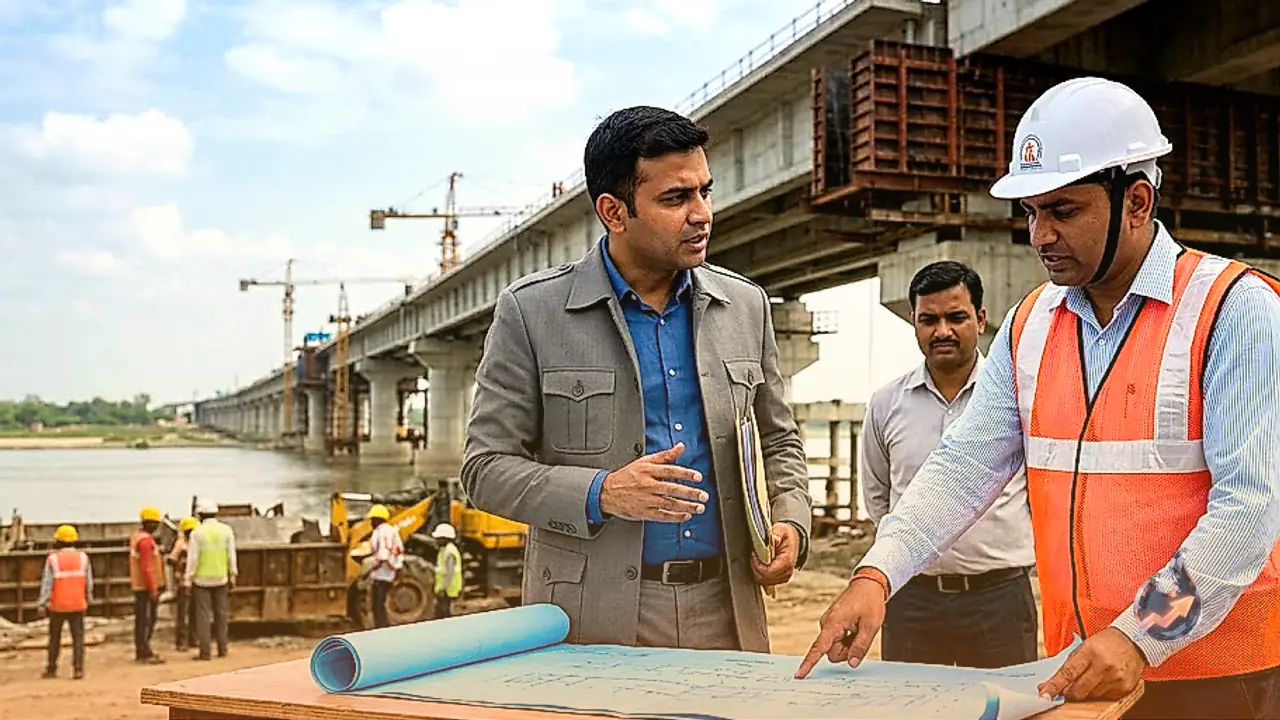
IES officers, on the other hand, work as technical specialists. Posted as chief engineers or directors in ministries such as Railways, CPWD, the Defence naval wing, and Roads and Highways, they are responsible for designing and executing the country's largest construction and technical projects. So while IAS officers operate in the world of administration and policy, IES officers apply their expertise in engineering and technology.
How the selection process differs for the two services
Becoming an IAS officer requires clearing the UPSC Civil Services Examination, which is conducted in three stages, Prelims, Mains and the Interview. Candidates from any academic stream, arts, science or commerce, are eligible to appear for it.
Becoming an IES officer, by contrast, requires clearing a separate UPSC Engineering Services Examination (UPSC ESE). This exam is also held in three stages, Stage 1, Stage 2 and the Interview, but every question is drawn from engineering subjects. That is why candidates with an arts background cannot appear for this particular exam.
Qualification, eligibility and the age limit
On the education front, becoming an IAS officer only requires a graduation degree in any stream, arts, science or commerce. Becoming an IES officer, however, requires an engineering degree (B.E./B.Tech), and specifically in one of the designated branches, civil, mechanical, electrical or electronics and telecommunication engineering.
The age limit rule is identical for both exams. For candidates in the general category, the minimum age is 21 years and the maximum is 32 years. OBC candidates get a 3-year relaxation, while SC/ST candidates are given a 5-year relaxation.
Which government job suits you better
If you want to work directly with communities, be part of policymaking and are drawn to administrative power, the IAS is the better fit. The role ranges from commanding a district's administration to overseeing the rollout of major government schemes.
If, instead, you love core engineering, want to build large infrastructure projects in a relatively calmer environment, and would rather stay away from day-to-day political pressure, the IES could be the perfect choice. Both services ultimately rank among the country's most prestigious government jobs, they simply differ in what the work actually demands.