























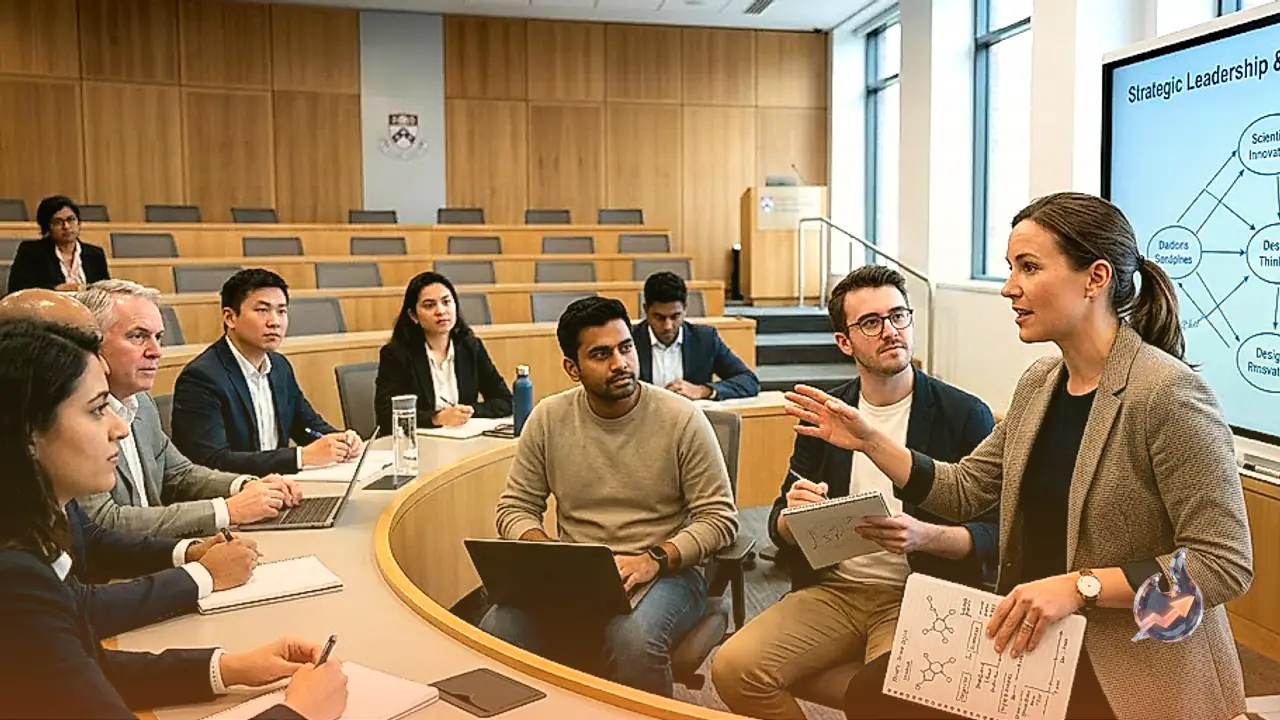

A persistent misconception in professional education suggests that pursuing a Master of Business Administration is relevant only for those with a commerce education or individuals raised in entrepreneurial families. The popular imagination often reduces management studies to balancing financial ledgers, memorizing profit and loss statements, and attending formal corporate board meetings in business attire. Because of this rigid perception, students from science, humanities, arts, and creative backgrounds frequently steer clear of management programmes, believing the curriculum has little relevance to their careers. In reality, modern management extends far beyond traditional trade operations; it represents an essential toolkit for organizing complex processes and solving organizational problems across every discipline.
Expanding Beyond Narrow Notions of Business
Many young professionals question whether a management credential makes sense if they do not intend to launch a startup or spend their days tracking stock movements and corporate margins. Today, an MBA serves as an analytical thinking framework rather than a simple business manual, radically reshaping how professionals approach their daily work. Whether one enjoys writing code, conducting scientific research, or creating artistic content, the necessity of structured planning and effective resource allocation remains constant. The assumption that an individual must possess a pre-existing business background to benefit from this qualification no longer matches the demands of modern multidisciplinary workspaces.
The Value of Management for Engineering and Science Graduates
Engineers, healthcare professionals, and scientific researchers typically possess deep expertise in their respective technical domains. However, as they progress into senior roles requiring them to guide cross-functional teams, allocate budgets, or introduce new offerings into the marketplace, purely technical capabilities often prove insufficient. This gap explains why technical specialists worldwide frequently choose to pursue management qualifications. Combining solid technical foundations with commercial insight allows these professionals to transition from individual technical contributors into strategic leaders who drive organizational success.
Fresh Pathways for Creative and Arts Backgrounds
Graduates specializing in fields like fashion design, content development, or sociology often wonder if a business qualification fits their profile. Modern industries such as advertising, public relations, mass media, and digital marketing require creative vision coupled with a thorough grasp of consumer behavior and brand positioning. Specialized tracks in marketing or media management teach creators how to translate artistic ideas into viable, commercially successful initiatives. When creative ingenuity is backed by disciplined organizational methods, the work gains greater reach and sustainability.
Profiles That Benefit Most From Management Studies
Management programmes welcome diverse backgrounds, offering distinct benefits tailored to different career ambitions
- Graduates targeting career growth: Those completing baseline degrees across arts, science, commerce, or engineering find that advanced management education transforms standard profiles into viable candidates for leadership responsibilities.
- Professionals keen on problem solving: The curriculum moves well past theoretical memorization, relying extensively on real-world case studies to train candidates in breaking down and resolving intricate operational and strategic hurdles.
- Individuals executing a career transition: For professionals who have spent years in a narrow field and wish to shift into consulting, operations, or strategic planning, management credentials serve as a reliable bridging mechanism.
Curricula Evolving Alongside Technological Shifts
Contemporary management coursework is no longer confined to traditional financial accounting and foundational sales strategies. Modern curricula are actively incorporating emerging domains such as artificial intelligence (AI), data analytics, digital product lifecycle management, and sustainable operating practices. Academic programs are evolving in direct response to dynamic industry expectations, equipping candidates with agile problem-solving methods. For any individual eager to learn and committed to optimizing organizational systems, management studies unlock extensive professional pathways across diverse sectors.