





















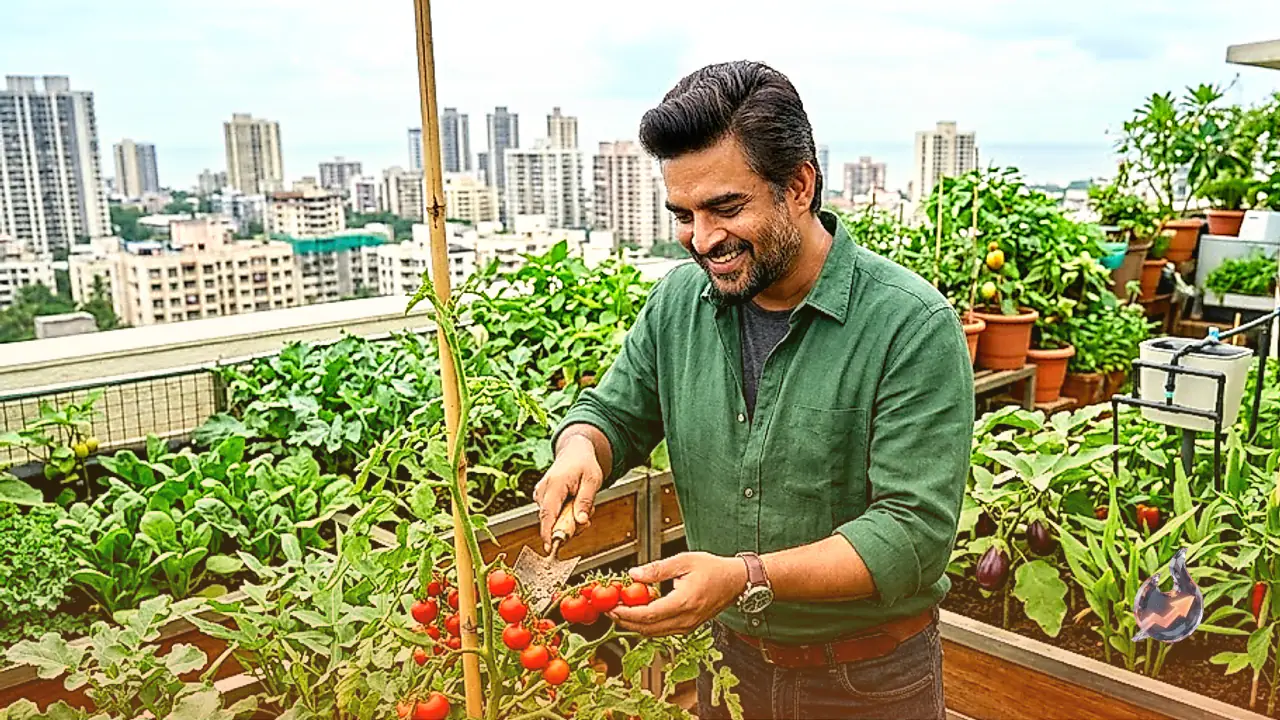

Bollywood actor and filmmaker R Madhavan has transformed his residential balcony and terrace in Mumbai into a flourishing organic garden, turning everyday horticulture into a reliable source of fresh nutrition. While luxurious high-rise apartments often reserve outdoor areas for ornamental plants, Madhavan has demonstrated how domestic spaces can yield substantial harvests of okra, eggplant, cucumber, and ridge gourd. Driven by growing concerns over aggressive chemical usage and declining nutritional density in modern commercial agriculture, the actor committed to growing his own produce right at home.
Extensive Research Behind Urban Cultivation
Rather than treating terrace farming as a casual trial, the actor dedicated considerable time to studying organic farming techniques before sowing his first crop. Madhavan revealed that his carefully cultivated terrace garden now fulfills approximately 70 percent of his household's seasonal vegetable requirements. His urban setup regularly yields crops such as tomatoes, broccoli, brinjal, ladyfinger, and cucumbers. His systematic approach highlights that city dwellers do not need sprawling agricultural acreage to cultivate high-quality, chemical-free greens.
Structural Waterproofing and Drainage Protocols
Establishing an outdoor garden on a concrete terrace or apartment balcony requires diligent structural preparation. The continuous presence of moist soil and irrigation runoff can lead to dampness and water seepage into ceilings below. Consequently, completing a professional waterproofing treatment on the floor surface is a mandatory prerequisite. Furthermore, every planter box, pot, or grow bag must feature unhindered drainage holes at the base so excess moisture escapes freely without accumulating around the roots.
Engineering the Ideal Organic Potting Medium
Using ordinary dense garden soil inside compact containers often leads to soil compaction, starving root systems of vital oxygen. Cultivators achieve far superior outcomes by formulating a well-aerated potting mix containing balanced proportions of soil, vermicompost or compost, coco peat, neem cake powder, and trichoderma. While coco peat retains moisture and keeps the texture porous, vermicompost provides sustained organic nourishment. Concurrently, neem cake powder and trichoderma act as natural antifungal barriers that shield vulnerable root zones from soil-borne pathogens.
Water Management and Natural Pest Defense
Overwatering ranks among the leading causes of plant mortality in domestic gardening setups. Moisture should be introduced only when the upper soil layer feels visibly and tactilely dry. During the monsoon season, elevated ambient humidity significantly amplifies the danger of fungal outbreaks and root rot, demanding strictly regulated irrigation schedules. Gardeners must also inspect foliage regularly, paying special attention to the undersides of leaves where insects congregate. Applying diluted neem oil sprays and traditional organic solutions swiftly arrests infestations before they spread.
Selecting Resilient Crops for Beginners
Individuals stepping into container gardening for the first time should prioritize forgiving, high-yield vegetables that adapt well to local conditions. Varieties such as bottle gourd, ridge gourd, brinjal, okra, French beans, and fresh coriander establish strong root networks with minimal intervention. Aligning planting cycles with prevailing seasonal conditions ensures optimal germination and flowering. As personal experience in soil nutrition, sunlight exposure, and plant cycles deepens, enthusiasts can gradually expand their terrace beds to host exotic greens, root vegetables, and medicinal herbs.