























A vibrant home garden filled with colorful blossoms brings unmatched charm to any household. If you wish to see your outdoor space blooming with rich shades of red, pink, and white during the winter months, your preparation needs to start well in advance. Gardening expert BD Sankhare explains that various rose varieties can be cultivated at home with minimal effort. Planting a fresh sapling or propagating a well-prepared stem cutting during this period ensures that healthy buds and vivid flowers emerge as the temperature drops.
Selecting the Right Spot and Ensuring Proper Drainage
Whether you choose to plant roses directly in garden beds or in containers, water management remains the single most critical factor. Standing water near root systems quickly leads to rot, meaning containers must feature clear drainage holes at the base. To support vigorous growth, the potting soil must remain loose, porous, and enriched with a generous proportion of organic compost rather than dense garden clay.
Soil Proportions for Containers and Seed Sowing
Achieving the right soil consistency depends on balanced ingredients. For potted roses, prepare a growing medium by mixing 50 percent cocopeat with 50 percent vermicompost or fully decomposed cow dung manure. Before filling your pots, spread this prepared mixture under direct sunlight for a short duration. Sunning the soil removes excess dampness and eliminates potential fungal pathogens before planting.
If you prefer raising roses from seeds, the medium requires an even lighter and fluffier texture to promote sprouting. The ideal seed starting blend comprises 60 percent cocopeat, 30 percent vermicompost, and 10 percent sand. This specific balance permits tender emerging rootlets to penetrate without facing physical resistance, establishing a sturdy base for the young seedling.
Branch Selection and Precision Cutting Techniques
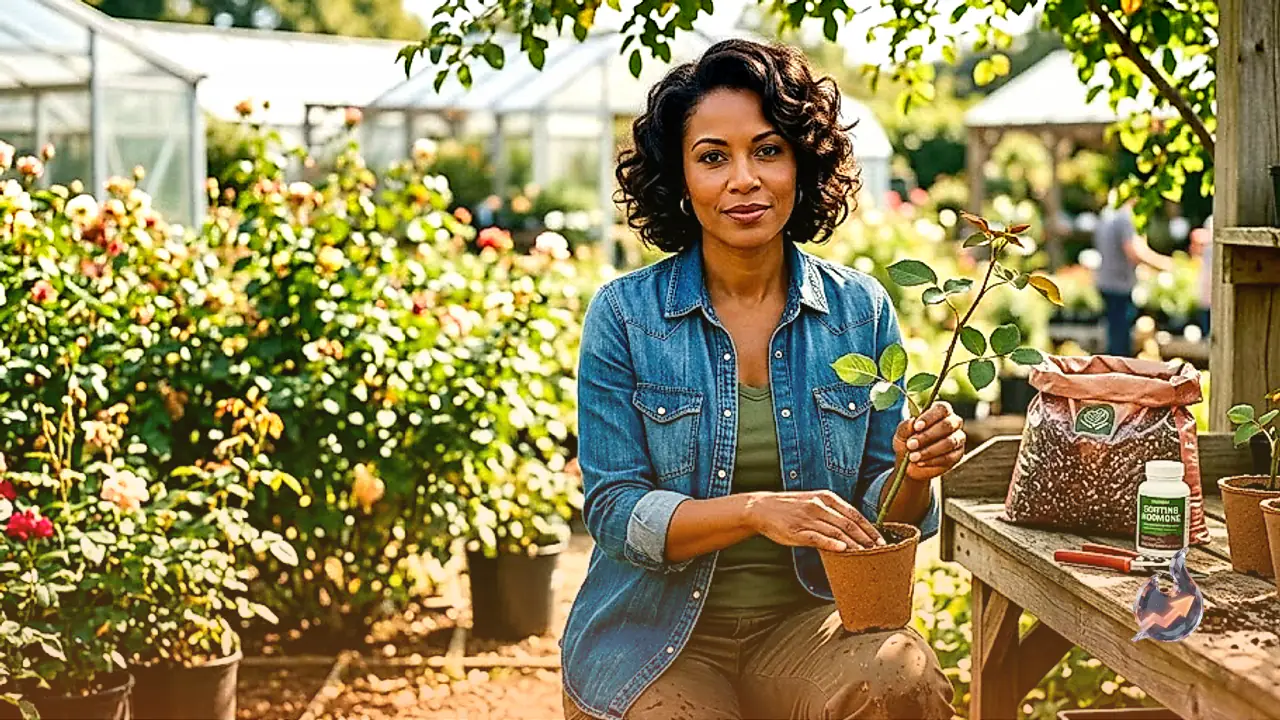
Homeowners who already own established rose plants can multiply them through stem cuttings rather than buying new saplings. Successful propagation hinges on choosing the proper wood. Avoid extremely tender, green shoots as well as thick, woody, mature stems. Look for healthy, semi-mature stems measuring between 6 and 10 millimeters in diameter.
When taking the cutting, use clean and sharp pruning shears to avoid crushing delicate plant tissues. Slice through the base of the stem at an exact 45-degree angle. Strip away the majority of the foliage along the length of the stem, leaving only a few leaves at the very top. Removing excess foliage prevents moisture loss through transpiration and redirects the branch's internal energy toward producing fresh root systems.
Planting Cuttings and Managing Sunlight
Never leave freshly snipped cuttings exposed to the open air or harsh sun, as desiccation happens quickly. Place the stem in a clean area and plant it promptly into your prepared rooting medium. While some gardeners experiment by placing stems in jars of water, many rose cultivars do not root reliably in water alone. Inserting the stem into moist, well-aerated soil remains a far more dependable method for beginners.
Provide a gentle watering right after planting. Keep the container in a well-lit location that receives ample ambient brightness, but shield the delicate cutting from intense midday sun during the initial weeks. Once roots establish, ensure the plant receives several hours of direct daily sunlight, which is necessary for flower development.
Watering Discipline and Routine Pruning
Maintaining moisture without overwatering requires attentiveness. Soil should never remain waterlogged or soggy throughout the day. Check the surface layer, and provide water only when the topsoil feels dry to the touch. In addition, regularly remove withered flowers and dried leaves from the plant. This simple sanitation routine prevents disease spread and encourages continuous bud formation. Keep in mind that the timing and volume of blooms will ultimately depend on the chosen variety, sun exposure, and seasonal conditions.