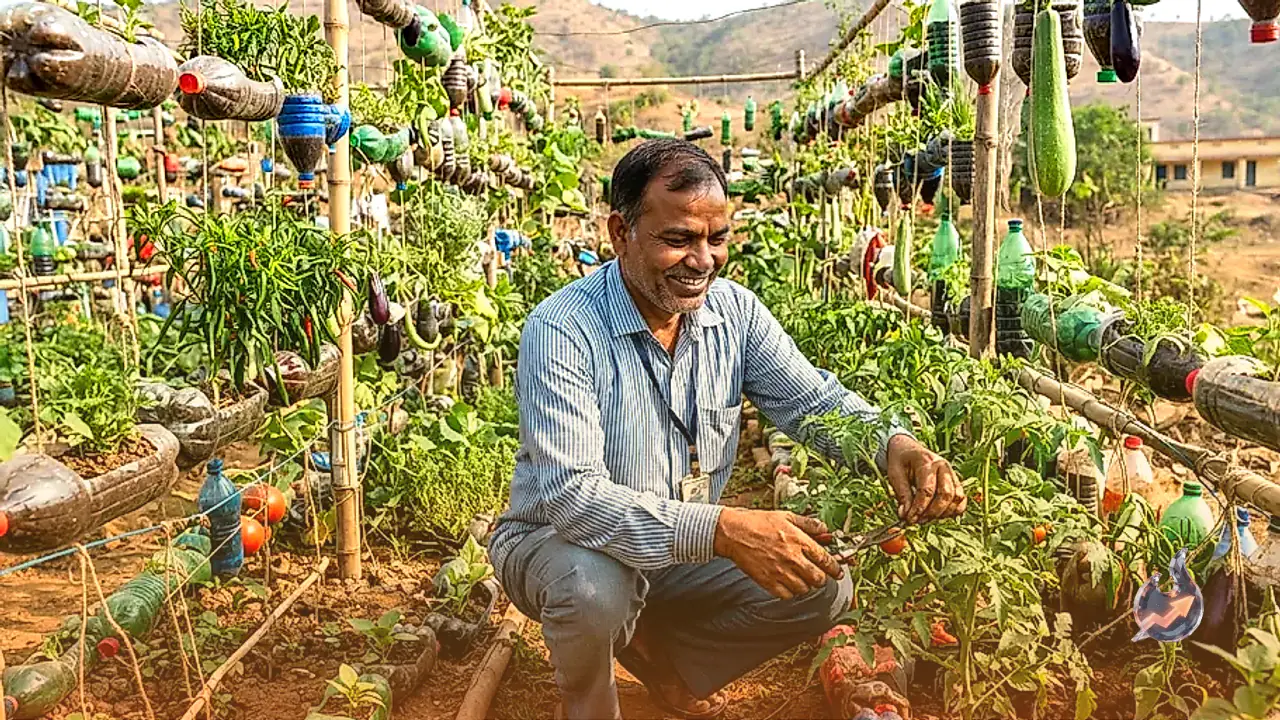

Farmers across the Bastar region are increasingly turning towards profitable vegetable farming as the winter season sets in, giving a major boost to local agricultural activities. Following this trend, a local farmer named Padam Kashyap has cultivated kundru on approximately half an acre of land. The winter weather is considered highly favorable for this crop, and the grower expects to generate a handsome profit ranging between one and a half to two lakh rupees from the harvest.
Methodical Field Preparation and Plant Spacing
The farming process begins with thorough preparation of the land, which involves ploughing the field twice to loosen the soil. A rotavator is then used to pulverize the earth before forming structured raised beds. The distance between consecutive beds is maintained at four feet, while the gap between individual plants is also kept at four feet. Instead of traditional seeds, vine cuttings are planted in the soil, and the crop is nourished using fertilizers such as DAP, urea, along with organic cow dung manure.
Extended Lifespan and Low Maintenance Requirements
Once planted, the kundru crop continues to yield produce for a prolonged period of one and a half to two years while demanding minimal supervision and care. To ensure optimal production and support the sprawling vines, farmers use bamboo sticks and sturdy ropes to keep the plants upright. The crop reaches maturity within roughly two and a half months, translating to 75 to 90 days, after which the plants begin bearing fruit consistently.
Managing Common Pests and Plant Diseases
While kundru farming generally experiences fewer disease outbreaks compared to other seasonal vegetables, certain issues like root rot, fruit rot, and powdery mildew can occasionally harm the plants. To protect the crop from these agricultural challenges, timely spraying of preventive medicines and protective sprays is carried out to maintain plant health and secure the overall yield.
Total Investment and Financial Returns
The overall expenditure required for this farming venture, which includes land preparation, mulching, and other operational costs, ranges between 30,000 and 40,000 rupees. Against this modest input, the anticipated financial return is projected to reach up to two lakh rupees, largely driven by the extended production lifecycle and consistent market demand.