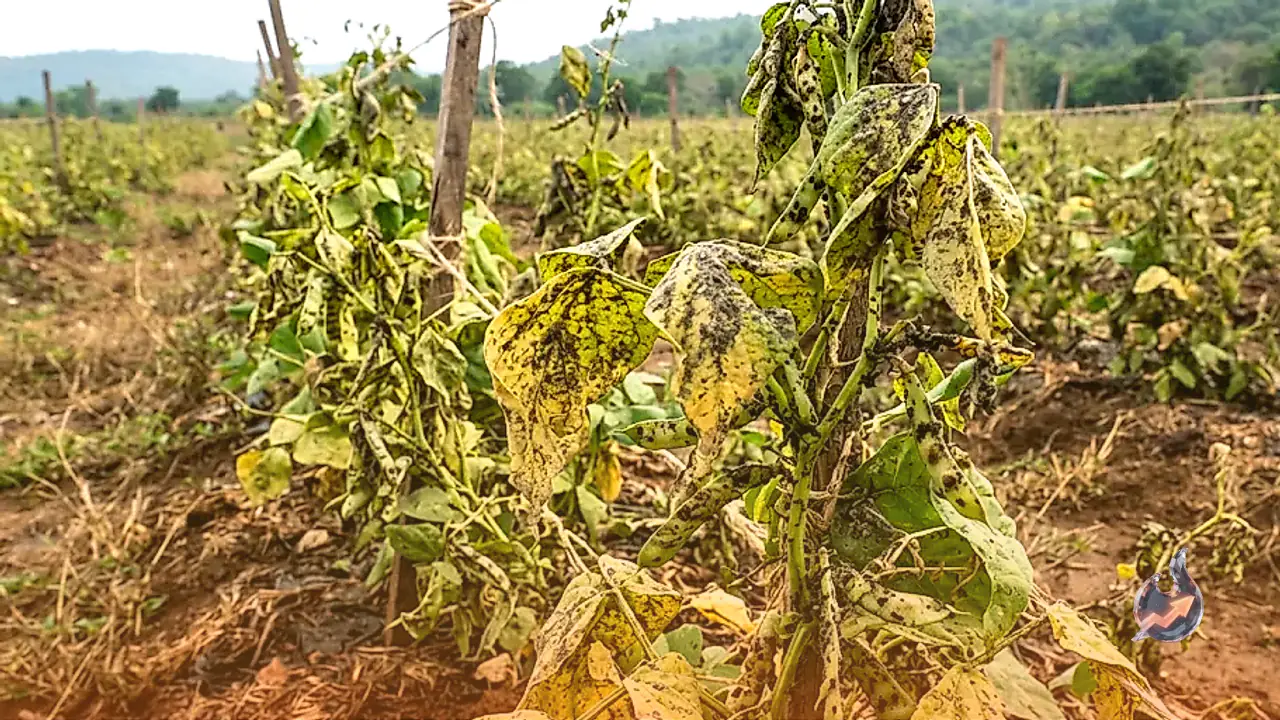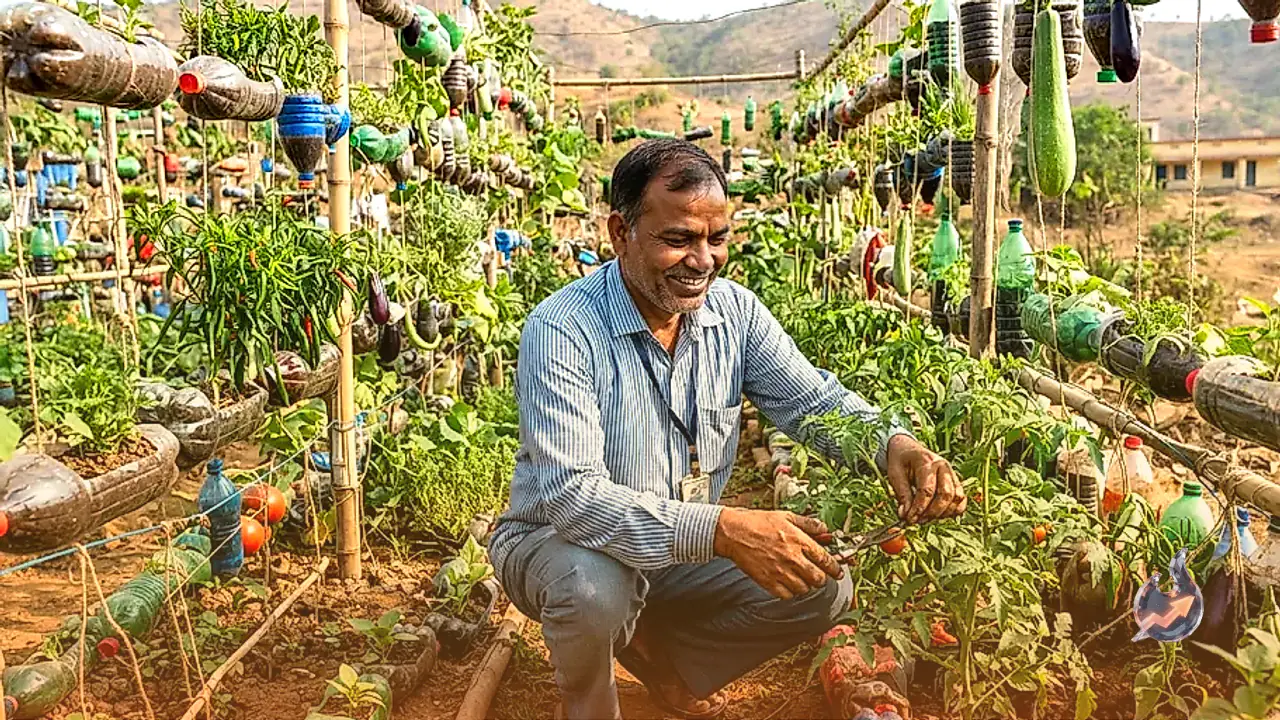

In the Bagwahapara area of Ambikapur, the headquarters of the Surguja division in Chhattisgarh, a government teacher named Kamlesh Singh has set a remarkable example through sheer hard work and determination. He has successfully converted a completely barren and desolate patch of land into a lush green garden laden with fruits, flowers, and vegetables. As part of this unique initiative, more than 100 plants and over two dozen varieties of trees have been planted within the school premises, and all of them are thriving and fully alive. What makes this effort special is that he took inspiration from the internet and made creative use of discarded plastic bottles to build garden beds, successfully utilizing unused plastic. The garden features mango, guava, jackfruit, neem, tea, coffee, and cadamba trees, with the entire project funded from his own pocket. This proves that with a strong desire to do something good, a new chapter of greenery can be written even on barren soil.
Transforming Barren Soil with Fifty Tractors of Earth
Kamlesh Singh shared during a conversation that the spot where a lush green garden now stands was once entirely barren land. The school premises lacked boundary walls as well as any favorable conditions for planting trees, and the rear section of the school looked unappealing. This sparked the idea to make the school green and vibrant. Inspired by instructions from the education department and with the cooperation of the school family, more than 50 tractors of soil were brought in to enrich the land. Following this, boundary walls were constructed using private funds, and garden beds were prepared to kickstart the plantation drive.
From Tea and Coffee to Mangoes, Guavas, and Avocados
Today, more than two dozen varieties of plants have been established within the school compound, with over 100 plants surviving in excellent condition. A specific location was chosen for tea and coffee plants. According to the teacher, the shade provided by the Sal trees located at the back of the school creates an ideal environment for the growth of tea and coffee. In addition, plants of lemon, mango, neem, jackfruit, drumstick, avocado, guava, mulberry, ramphal, custard apple, and sandalwood have also been planted. Notably, a cadamba tree is also being nurtured on the premises.
Attractive Garden Beds Crafted from Waste Plastic Bottles
Another highlight of this garden is the bottle beds constructed here. Kamlesh Singh stated that around 400 to 500 empty plastic bottles were lying around his house. Drawing inspiration from the internet, he utilized these waste bottles to construct garden beds. This served a dual purpose: it recycled the plastic and prevented soil erosion on the sloping terrain. Organic cow dung manure is being utilized in these beds, where vegetables like cauliflower, tomatoes, eggplants, beans, and ivy gourds are successfully being cultivated.
Continuing the Work Through Summer Vacations
Kamlesh Singh noted that he continued working to develop the school premises even during the summer vacation. He believes that a school should not merely be a place for academics, but a medium to connect children with nature and the environment. He has appealed to other teachers to green their school campuses as well, offering his complete guidance and support to any teacher in the Surguja district willing to build a similar garden in their school. This initiative by Kamlesh Singh demonstrates that willpower and hard work can completely transform a school environment. Today, this garden built on barren land stands as an exemplary model of environmental conservation, organic farming, and a positive educational atmosphere.