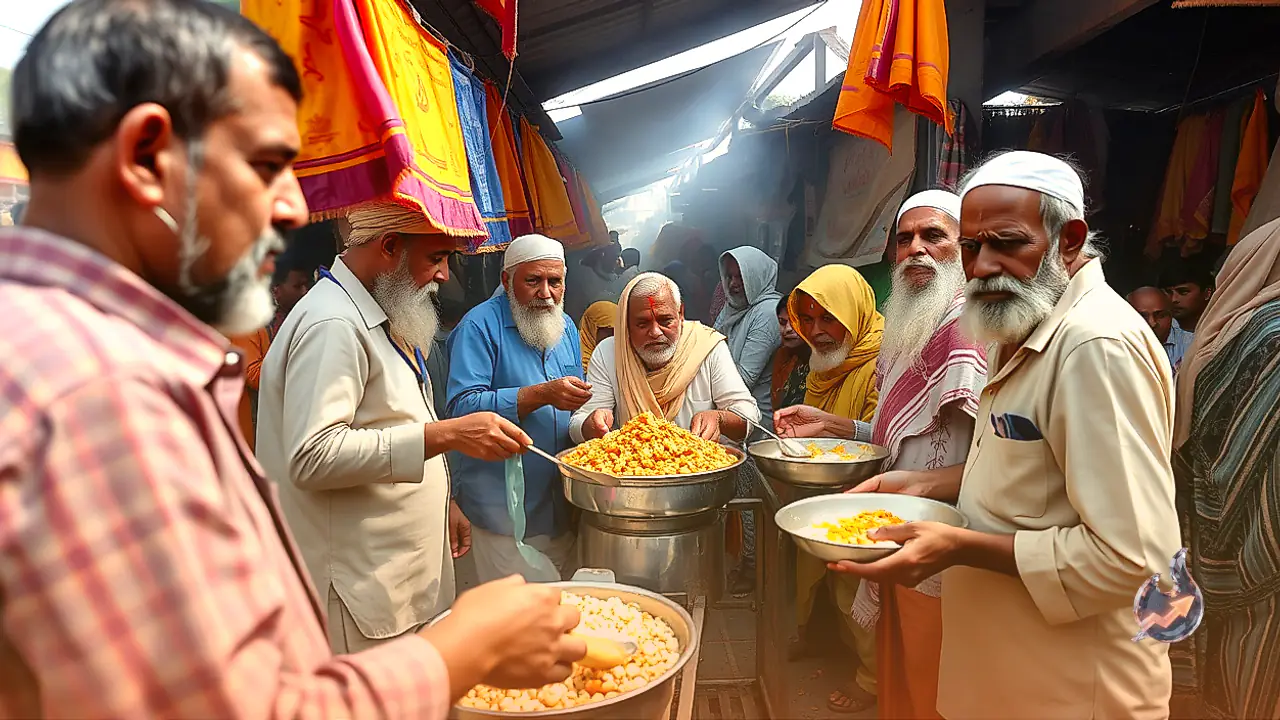























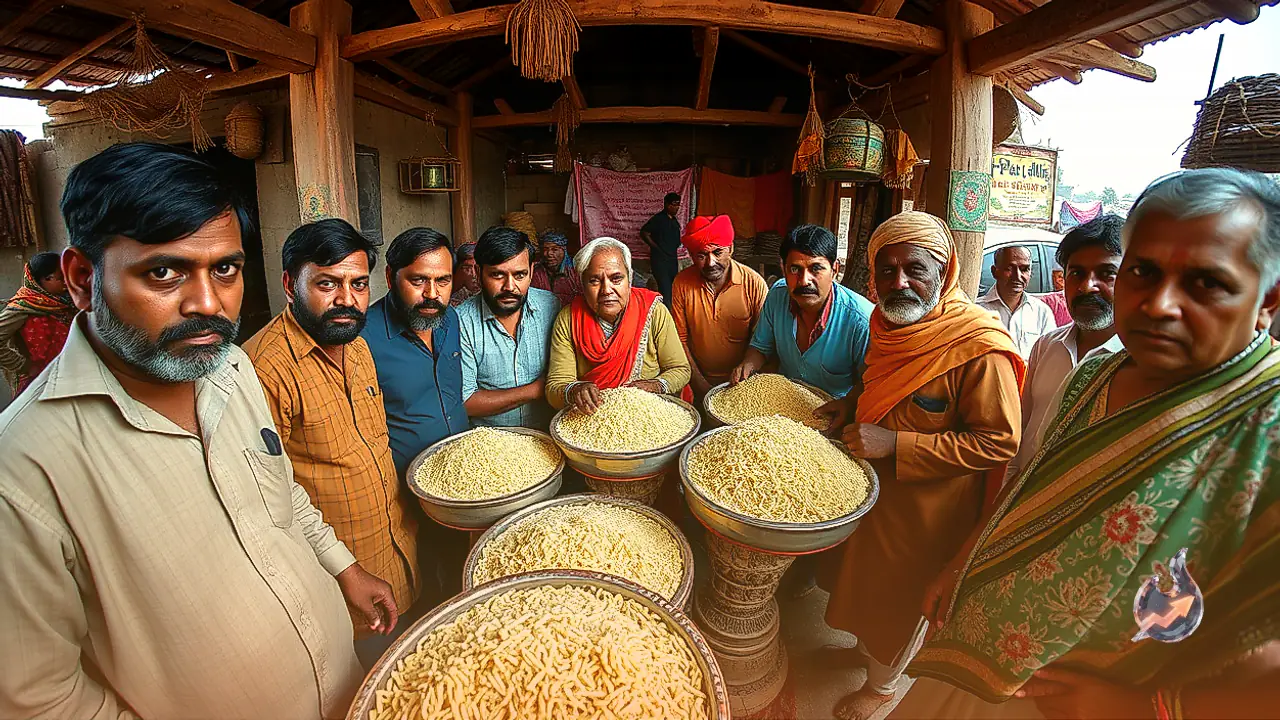

A modest village in Bihar's Sitamarhi district, Bhutahi has carved out an exceptional reputation that extends well past regional borders into international kitchens. Central to this distinction is a traditional delicacy known as balushahi, a sweet crafted here for over 150 to 200 years. What began as an unpretentious cottage operation housed within a thatched mud hut has evolved through five continuous generations of makers. Remarkably, this sweet retains its original texture and freshness for up to 10 days without artificial additives, standing out as a preferred choice across generations of sweet lovers.
Preserving a Five-Generation Confectionery Heritage
Operating in the core of Bhutahi market, Sunder Mishthan Bhandar stands as the oldest establishment associated with this traditional craft. The shop is currently managed by Pawan Kumar, a fourth-generation descendant of the late Lakshmi Sah. Speaking about the enterprise, Pawan Kumar noted that the venture was founded by his great-grandfather under modest circumstances, crafting sweets inside a simple hut. Through rigorous adherence to purity and word-of-mouth acclaim, the sweet shop gradually established widespread prominence.
Pawan Kumar also reflected on how the commercial landscape has transformed over time. In its early period, the delicacy was sold for just 15 to 20 rupees per kilogram. By the 1980-85 timeframe, the retail rate hovered between 40 and 45 rupees per kilogram. Today, keeping pace with broader economic factors, the sweet sells at 200 rupees per kilogram. Despite these adjustments across decades, the core character, balance, and preparation methods have been maintained without compromise.
Pure Chhena Replaces Flour in an Era of Counterfeit Sweets
Conventional balushahi across major confectionery markets relies primarily on refined flour and semolina as base materials, which are subsequently deep-fried in fat. Bhutahi balushahi follows a fundamentally different formula centered around fresh chhena. Rajkumar Sah, a master confectioner who has been preparing sweets at this workshop for two decades, stated that they categorically avoid milk powder or adulterated substances. The entire batch relies strictly on fresh chhena extracted from buffalo milk.
The formulation requires precise balance: for every 7 kilograms of chhena, confectioners introduce only 200 to 300 grams of semolina, which assists in expanding the structure correctly. The thermal process is equally traditional. Instead of adopting commercial LPG setups, cooking relies on clay hearths fueled by coal and dry cow-dung cakes. This deliberate choice of slow, natural combustion imparts a distinctive earthy aroma that defines the finished confection.
Processing 800 Litres of Fresh Milk Daily in Bubbling Syrup
The daily production volume highlights the strong regional appetite for this delicacy, with the shop utilizing approximately 8 quintals (800 litres) of fresh milk every single day. Milkmen from adjacent rural pockets, including Bisanpur and Sanpur, arrive at the workshop every morning to supply fresh raw milk. Driven by meticulous handcrafting, the team produces and dispatches between 6 and 7 quintals of balushahi each day to waiting customers.
Unlike standard Indian confections, this variant involves no oil or clarified butter and undergoes no frying whatsoever. Instead, roughly 20 kilograms of concentrated sugar syrup is prepared to process every 10 kilograms of raw chhena dough. The portions simmer thoroughly within the boiling syrup until fully cooked through. This oil-free technique prevents greasiness while ensuring that the syrup fully permeates the core of each piece.
Global Reach Fuelled by an Extended Natural Shelf Life
A notable technical property of Bhutahi balushahi is its enduring shelf stability. Remaining consumable for up to 10 days without synthetic preservatives makes it remarkably resilient for transport. Consequently, residents heading out to visit relatives elsewhere routinely purchase packs as traditional regional gifts. Visitors traveling through Sitamarhi as well as non-resident Indians frequently purchase dedicated packages to carry across different parts of the country and overseas, cementing this culinary heirloom as an enduring symbol of Bihar's heritage.