























With the onset of cooler weather, farming opportunities that rely on seasonal temperatures become highly attractive for growers. Button mushroom cultivation stands out as a promising venture capable of generating dependable revenue during the winter months. Agricultural expert Dr Veer Singh points out that anyone planning to grow button mushrooms should begin preparing compost immediately. Because the composting cycle takes nearly a month to mature, initiating it now allows growers to start the actual sowing or spawning phase in October or November.
Natural Climate Advantage and Setup Without Air Conditioning
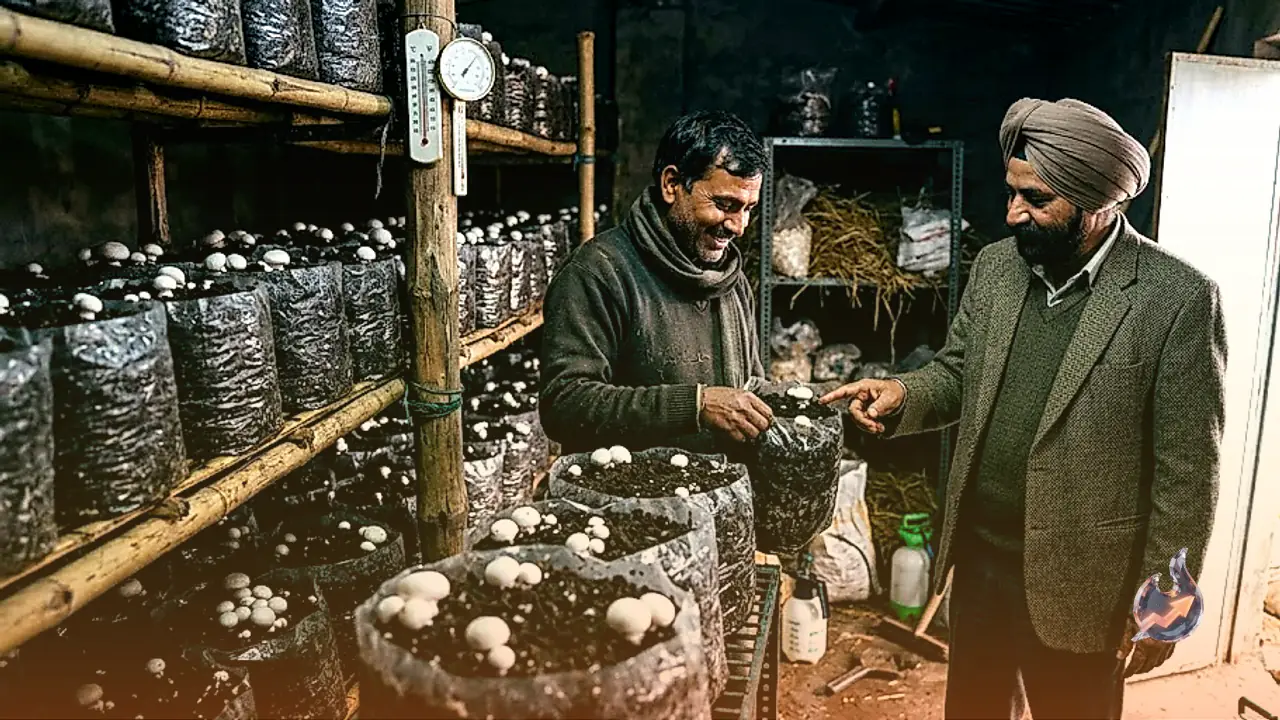
The naturally cold weather in Ambikapur and neighboring territories creates ideal environmental conditions for mushroom growth. Contrary to the widespread assumption that button mushrooms require expensive, climate-controlled commercial infrastructure, small-scale farmers can cultivate them using basic indoor setups. During this period, there is no need for air conditioning units or costly temperature regulators. Growers can make effective use of limited spaces by setting up multi-tiered bamboo or wooden racks, or by hanging and stacking plastic bags measuring around 18 by 24 inches.
Compost Ingredients and Systematic Turning Process
The overall yield and success of button mushroom cultivation depend heavily on the standard of the substrate. The compost requires clean, dry wheat straw or paddy straw as its base, ensuring that decayed or contaminated raw material is strictly avoided. Key additives include wheat bran, urea, gypsum, and calcium ammonium nitrate, which provide the vital nutrients needed for decomposition.
The compost pile must be accumulated in a substantial volume. A small heap fails to generate the internal biological heat necessary for proper microbial breakdown, which slows down the entire decomposition cycle. To ensure uniform decomposition and adequate aeration, the pile must be turned over thoroughly every two to three days. Regular turning prevents overheating in isolated spots and ensures that all materials transform into high-grade compost evenly.
Compost Quality Indicators and Production Expenses
After roughly one month of managed decomposition, the compost is ready for seeding. Properly finished compost exhibits a distinct brown color and maintains a moisture level between 30 and 40 percent. It must be completely free from pungent smells or ammonia gas fumes. Dr Veer Singh notes that compost preparation costs for button mushrooms can be slightly higher than those for other mushroom varieties. Generating approximately three quintals of compost involves an investment of roughly 3000 to 4000 rupees. However, strong market value compensates for these upfront costs.
Local Market Demand and Revenue Channels
Market avenues for button mushrooms extend well beyond wholesale mandis. In retail markets, a 200-gram packet typically sells for around 50 rupees. Growers can supply directly to local dairy outlets, grocery stores, hotels, and restaurants. Furthermore, commercial demand rises significantly during the winter wedding season, birthday celebrations, and community banquets, ensuring consistent sales and profitable returns for small growers.