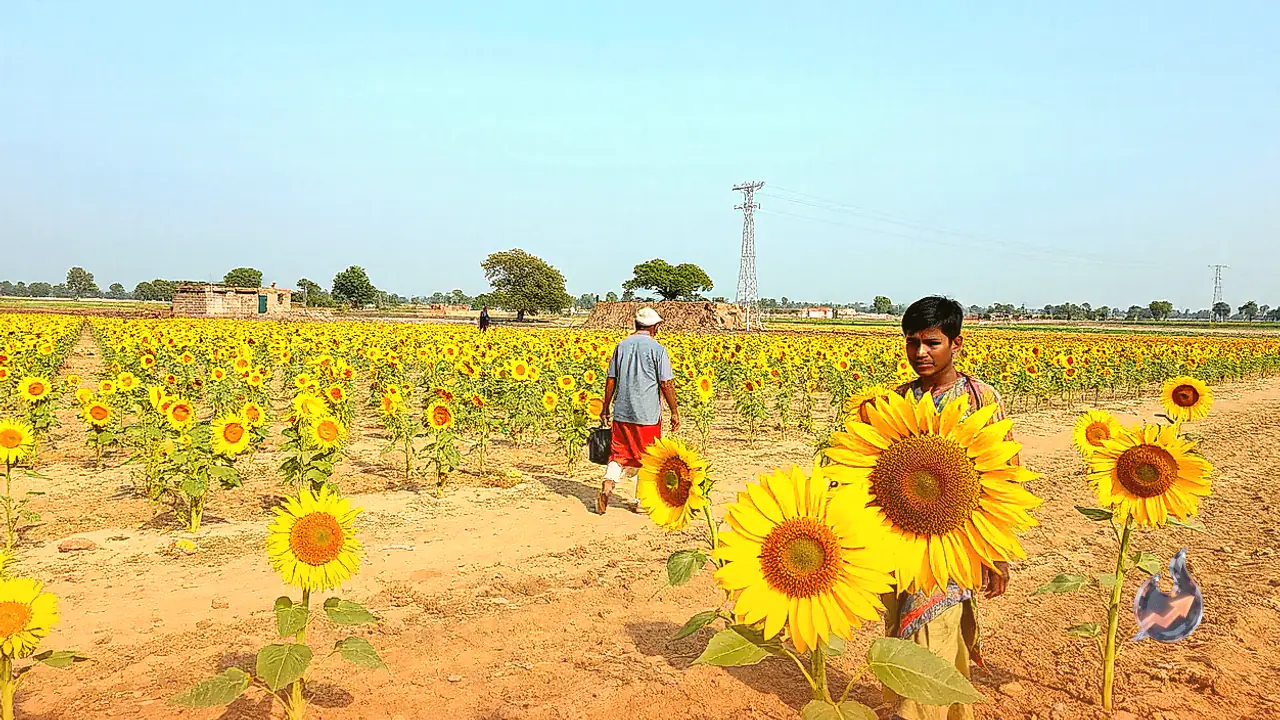




















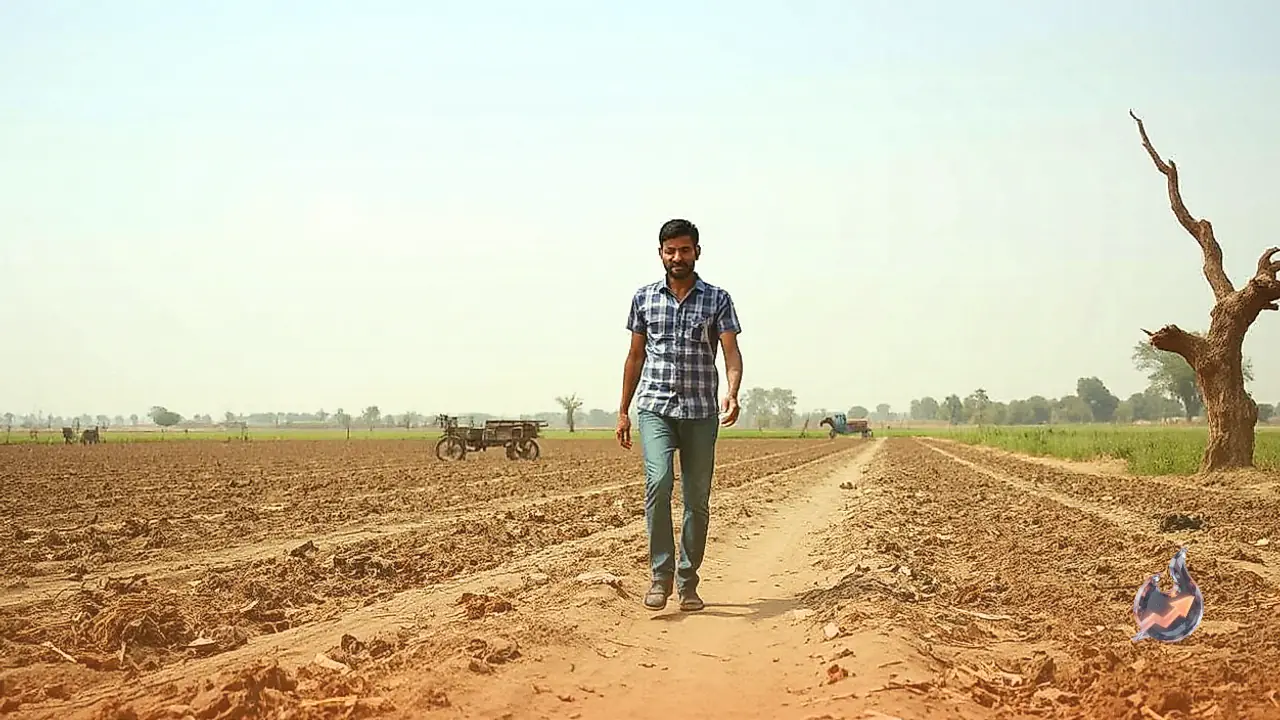

Proving that modern education and calculated agricultural strategies can turn farming into a lucrative career, Vivek Goswami from Ambikapur, the divisional headquarters of Surguja in Chhattisgarh, has set a remarkable benchmark. Leaving behind a stable urban routine and multinational corporate employment in Madhya Pradesh, he returned to his roots to develop an eight-acre farm where he now grows 12 to 13 different crop and vegetable varieties. Backed by an investment running into lakhs of rupees, his diversified model illustrates how planned multi-cropping, solar-powered systems, and modern horticulture can mitigate agricultural uncertainties.
From Teleperformance and Tech Business to the Fields
Vivek pursued higher education in commerce, successfully finishing his M.Com degree before heading to Indore, the commercial capital of Madhya Pradesh. There, he worked for roughly two years at Teleperformance, a prominent multinational enterprise. Gaining valuable professional experience in corporate workflows, he subsequently branched out on his own to launch an information technology venture centered around computer sales and services. That business sustained him for about 15 years.
Even during his decade and a half as an urban entrepreneur, the desire to work outdoors and generate tangible value from the land persisted. Observing successful agrarian practices elsewhere, he initially began experimenting on his family land with traditional regional grains including tau, madiya, and paddy. As his interest deepened and he found the local agro-climatic conditions favorable, he took the decisive step to close his technology operations in Indore and embrace agriculture as a dedicated full-time occupation.
Structured Division of an Eight-Acre Agricultural Canvas
Stepping onto Vivek Goswami's eight-acre plot reveals a meticulously organized cropping layout rather than a single uniform crop. He allocated two acres specifically for high-yielding brinjal, while another two acres remain reserved for paddy. One acre is dedicated to flat beans, locally known as semi, and another single acre is planted with green chillies.
The remaining portions of the land accommodate a rolling cycle of fast-growing green vegetables, including radish, cabbage, spinach, and other leafy greens. Interspersed in strategic sections are permanent fruit-bearing trees such as jackfruit and guava, which are projected to yield regular harvests in upcoming seasons. Vivek deliberately avoided sowing everything at the exact same time. Instead, he staggered plantings based on vegetative duration, maturity curves, and seasonal market pricing. The brinjal and chilli stands have completed nearly four months of growth, the bean crop is roughly one and a half to two months old, and short-cycle green vegetables were planted recently to generate ongoing cash flow.
Spreading Financial Risk Through Multi-Crop Architecture
The core motivation driving Vivek's adoption of multi-cropping lies in risk mitigation. Relying on a single monoculture exposes farmers to extreme vulnerability whenever climate conditions fluctuate, pest outbreaks occur, or wholesale market prices plunge abruptly. A crop failure under such single-crop dependencies often wipes out an entire year of working capital.
By spreading production across roughly a dozen crops, Vivek created a natural insurance buffer. If unpredictable weather or pest infestation suppresses the yield of green chillies, the income generated from brinjal or broad beans bridges the gap. Should one vegetable drop in market value, another in-demand vegetable cushions the blow. This calculated distribution shields his operational capital, avoids catastrophic financial loss, and guarantees regular liquidity throughout the year.
Harnessing Solar Energy for Daytime Farm Irrigation
Securing consistent water supply without incurring heavy utility expenses can make or break a farming enterprise. Vivek addressed this challenge by investing in green infrastructure on his property, installing photovoltaic solar panels connected directly to a solar water pump.
Operating during peak daylight hours, the solar setup draws water efficiently without relying on an erratic rural electrical grid or expensive diesel generators. Eliminating recurring fuel expenses significantly reduces operational overhead while lowering the farm's carbon footprint. The reliable pumping mechanism allows Vivek to manage water schedules smoothly across all eight acres according to the individual irrigation requirements of each vegetable patch.
Adopting Grafting Techniques for Enhanced Plant Resilience
Beyond crop diversification, Vivek has actively incorporated advanced horticultural practices into his daily farming routines. Several blocks on his property feature grafted saplings, produced by combining scions and rootstocks to increase resistance to soil-borne pathogens and boost overall vigor. His brinjal plots include grafted plants, and the newly planted guava and jackfruit orchards rely on grafted varieties designed to accelerate fruit production.
Certain chilli plots also utilize grafted specimens alongside traditionally raised plants, enabling him to compare pest tolerance, growth speed, and yields side by side. By merging traditional knowledge of local soils with contemporary agronomic tools, commercial foresight, and renewable energy, Vivek Goswami demonstrates how post-graduates and returning professionals can transform agriculture into a sustainable and profitable modern enterprise.