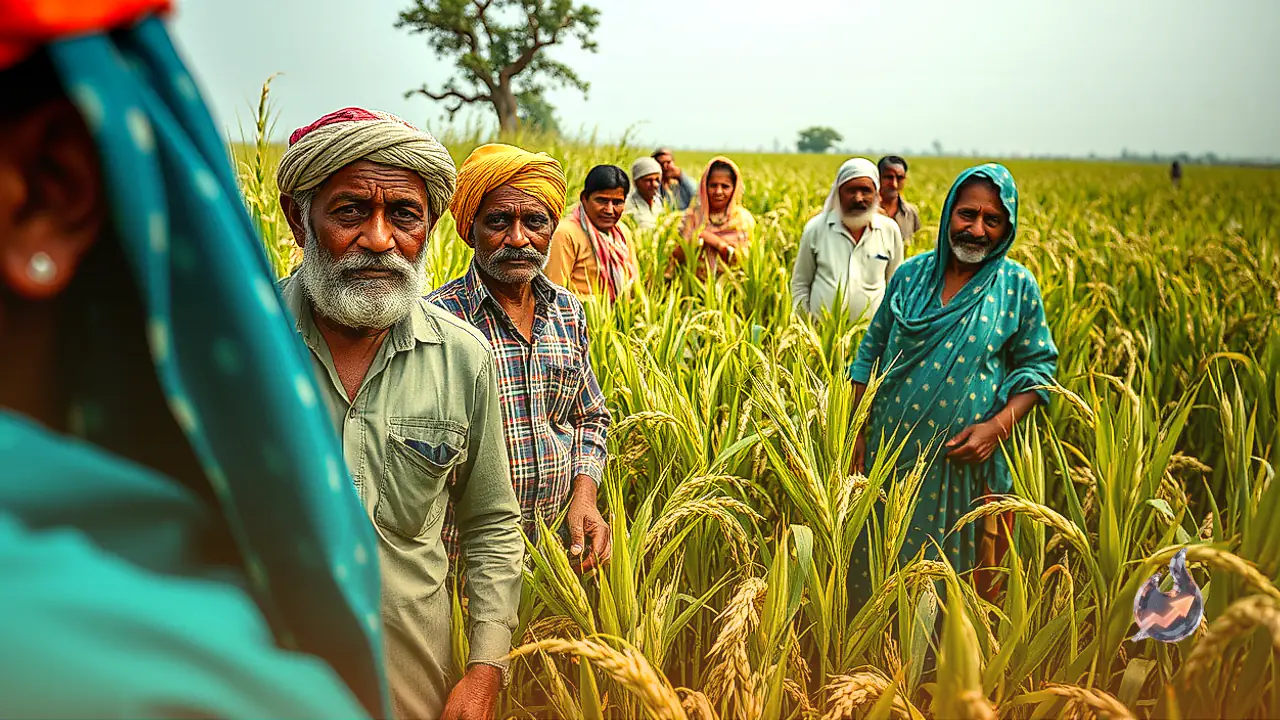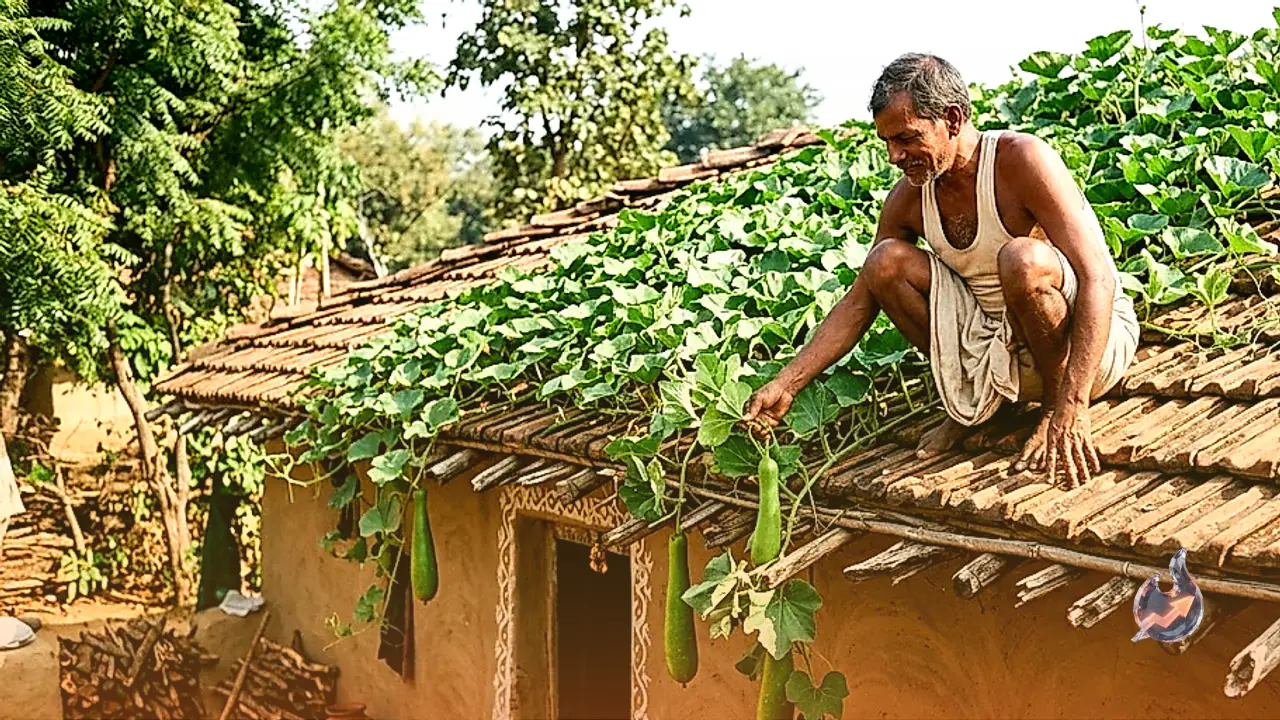





















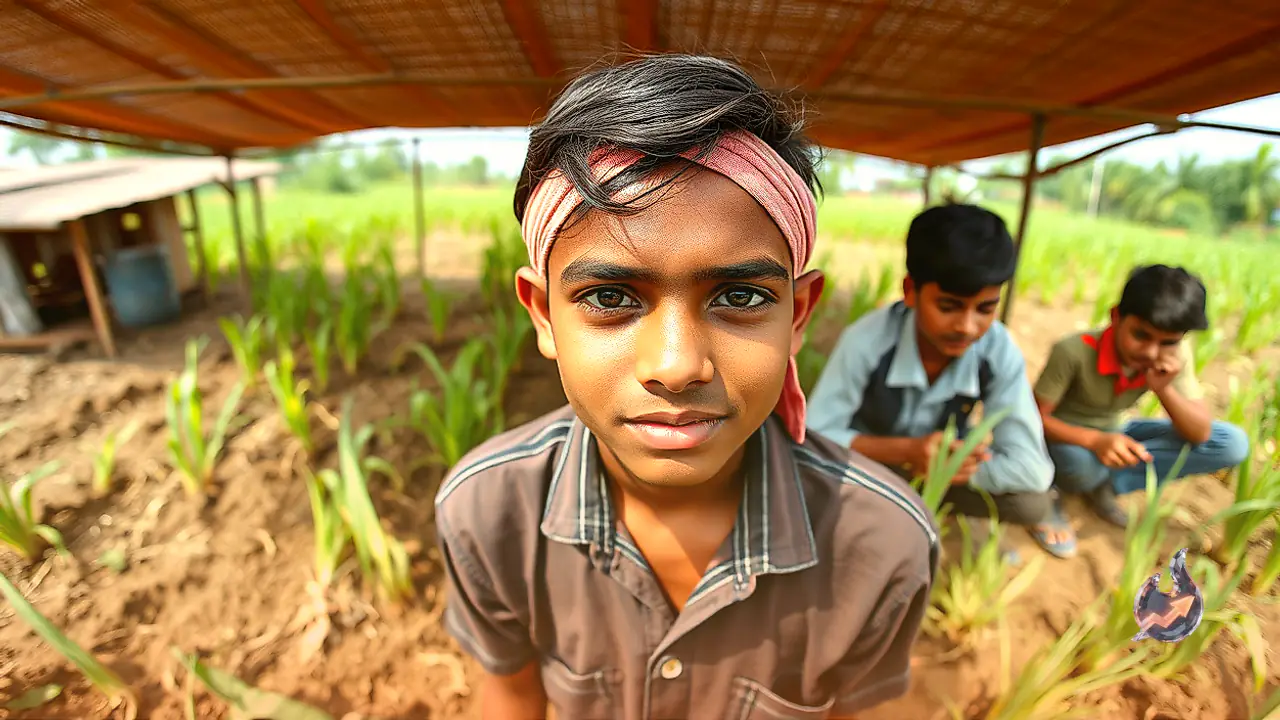

A young farmer residing in Ropakhar village within the Surguja district of Chhattisgarh is currently making waves in the agricultural sector through a unique farming venture. Named Samme Alam, this young agriculturalist is only 19 years old and is currently pursuing his education as a first-year college student. At a time when most youngsters tend to distance themselves from traditional farming in search of urban employment, Samme Alam made the bold decision to embrace agriculture as his primary career alongside his studies. Instead of relying on mobile phones or the internet to learn farming techniques, he observed his father and ancestors working in the fields and absorbed all the essential intricacies of agriculture. Armed with this traditional wisdom and experience, he decided to cultivate Tau on a massive scale of nearly 10 acres of land for the very first time in his life.
Drawing Agricultural Inspiration From Family Tradition
Samme Alam firmly believes that practical experience outweighs textbook knowledge when it comes to farming. Right after successfully passing his twelfth-grade examinations, he made up his mind to carry forward his family's agricultural legacy. Rather than seeking digital tutorials online, he watched his father toil in the fields and picked up his core farming skills directly from that firsthand observation. The traditional wisdom passed down through generations in his family served as his primary guide. Relying on this inherited knowledge, he took the plunge into cultivating Tau on a large scale and immersed himself completely in understanding every single phase of crop production by working hands-on in the soil.
Avoiding Chemical Fertilizers in Favor of Organic Cow Dung Manure
Amidst an era dominated by heavy chemical fertilizers where numerous farmers rely blindly on synthetic inputs for quick yields, young farmer Samme Alam chose a completely distinct path. He applied natural cow dung manure to his fields for the Tau crop while intentionally keeping all other chemical substances away. His core objective is to observe how the crop performs and yields under purely traditional methods combined with organic manuring. Since this represents his maiden agricultural experiment, he is carefully monitoring every single aspect from early crop growth to final output so that he can strategize his future farming plans based on these firsthand findings.
Crops Currently Bearing Flowers While Awaiting Grain Formation
According to Samme Alam, his Tau crop has currently reached the flowering stage and the plants are growing steadily. He is now patiently waiting for the blossoms to mature and the grains to form fully inside the crop. Once this growth cycle concludes, harvesting and threshing operations will be carried out to extract the final Tau grains. Although exact production figures are not yet available, the actual final yield can only be accurately calculated after the completion of the harvesting and threshing processes, leaving the young farmer hopeful that his hard work will bear fruit.
Incurring Around Two Lakh Rupees in Costs With Hopes of Solid Profits
To execute the cultivation of Tau across 10 acres of land, Samme Alam has invested approximately two lakh rupees in total expenses so far. He harbors strong expectations of generating a net profit ranging between three lakh and four lakh rupees from the harvest. However, he clearly noted that because this is his maiden farming venture, he lacks a precise estimate regarding the exact volume of production and final financial returns. He heard stories from his father and family members indicating that Tau farming yields high productivity and lucrative earnings, prompting him to initiate this experiment. The ultimate success of his efforts now depends entirely on the crop yield and the market prices he manages to secure.
Utilizing the Crop for Daily Food Preparations and Roti Making
Tau is a crop utilized in preparing various edible food items for daily consumption. Samme Alam explains that Tau is regularly consumed within his own household, where it is used to make food items like rotis. Given that its produce has a demand that extends beyond local circles, he recognized this crop as a viable income opportunity. If he achieves a strong harvest and favorable market rates this season, he intends to expand Tau cultivation on an even larger scale in the coming years.
Balancing College Studies with Agricultural Responsibilities
Samme Alam does not limit his agricultural activities to Tau alone, as he also regularly cultivates traditional crops like paddy and wheat on his family land. Managing the heavy responsibilities of farming alongside his first-year college studies has proven to be a refreshing and demanding experience for him. At present, his entire focus remains centered on providing proper care to the growing crop and achieving the best possible yield. Should this initial experiment yield positive results, he plans to dedicate more attention to this specific crop in the future and scale up production significantly.