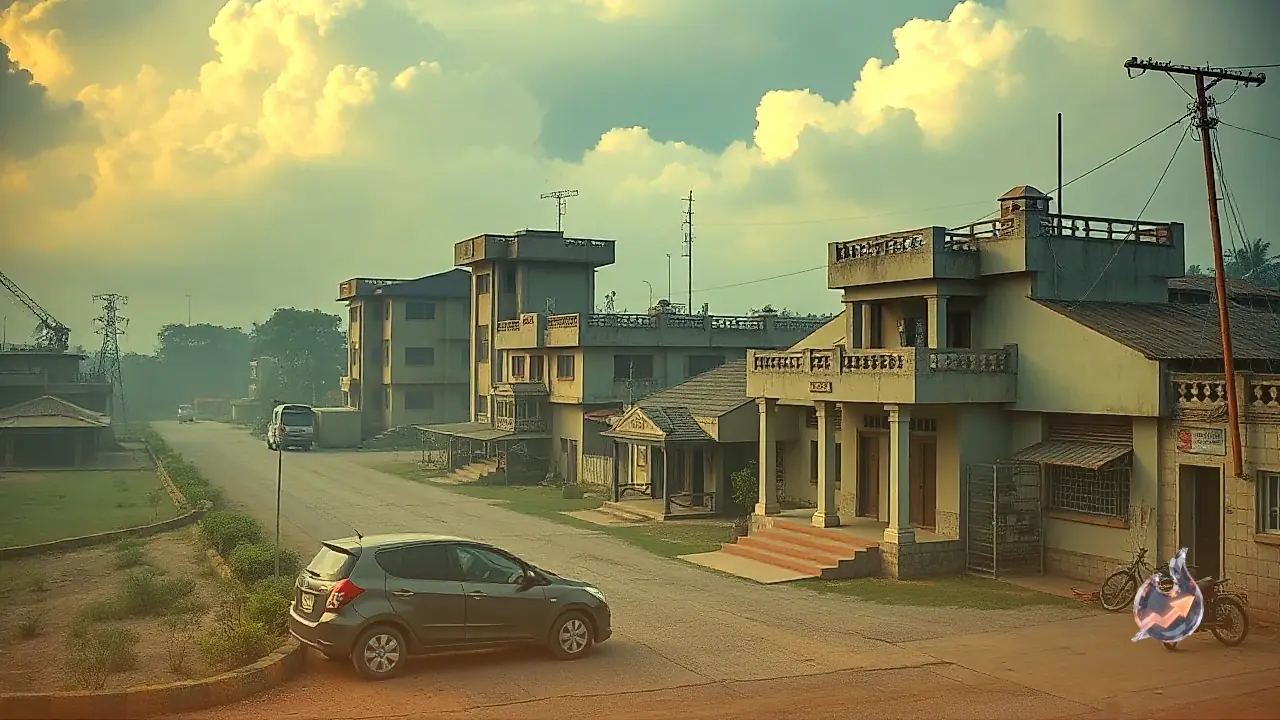























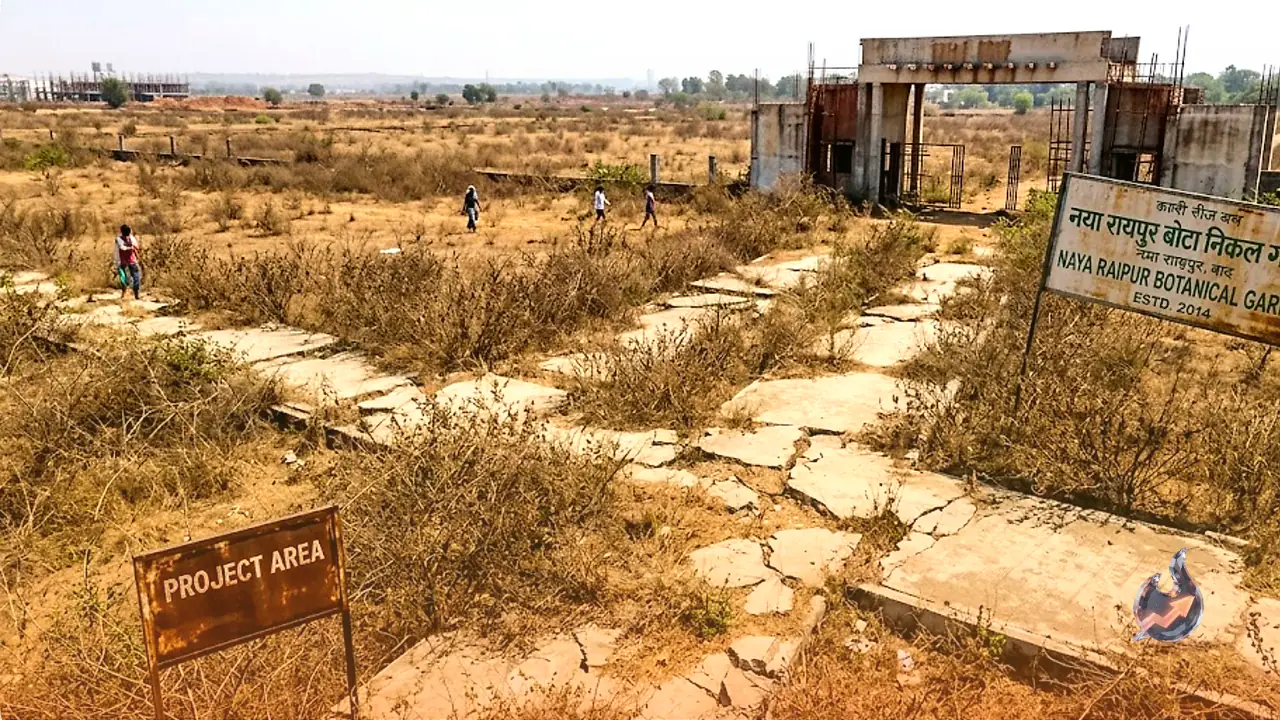

Twelve years ago, a patch of land in Naya Raipur, on the outskirts of Chhattisgarh's capital Raipur, was announced as the site of Asia's largest botanical garden. Today, that same stretch of land is choked with dry shrubs and broken footpaths. The project, launched in 2014, cost the state government close to Rs 30 crore, yet more than a decade later there is little to show for it on the ground.
What the project was meant to achieve
The garden was planned to be upgraded across 153 hectares of land. The goal was to conserve Chhattisgarh's rare and medicinal plant species, promote botanical research, and create a study centre for students. According to the original plan, the site was to house a germplasm bank, a research centre, a palm house, a cactus house and a bonsai house. There were also plans for a butterfly garden and ponds to preserve aquatic plants. To draw tourists, the project envisioned scenic vegetation trails, along with water sports facilities for children.
What actually stands there today
The reality on the ground is starkly different from that vision. Only a single board marks the site, while the rest of the area is overrun with dry grass, thorny bushes and crumbling walking trails. The entire garden has been fenced off with barbed wire, and it remains shut to the public for the most part, opening only when a newly posted officer arrives for an inspection. Both ponds that were built to preserve aquatic plants have dried up halfway. In the spot where a scientifically developed botanical garden was supposed to stand, there are not even ordinary flower beds visible anymore. No research, education or conservation activity of any kind appears to be taking place at the site.
A plan that stayed on paper
When the project was launched, officials had claimed that plant species found across every district of Chhattisgarh would be scientifically conserved at the garden. A germplasm bank was to be set up specifically to safeguard extremely rare and endangered species. That plan, however, never moved beyond paper.
What officials are saying
Principal Chief Conservator of Forests (PCCF) Arun Pandey said he did not know why the project had come to an abrupt halt. He said plans are now underway to redevelop the botanical garden, this time under a public-private partnership, or PPP, model. According to him, a pre-tender meeting will be held soon, where private companies will be asked to suggest how, and in what timeframe, they could complete the project. Further steps will follow only after that consultation.