





















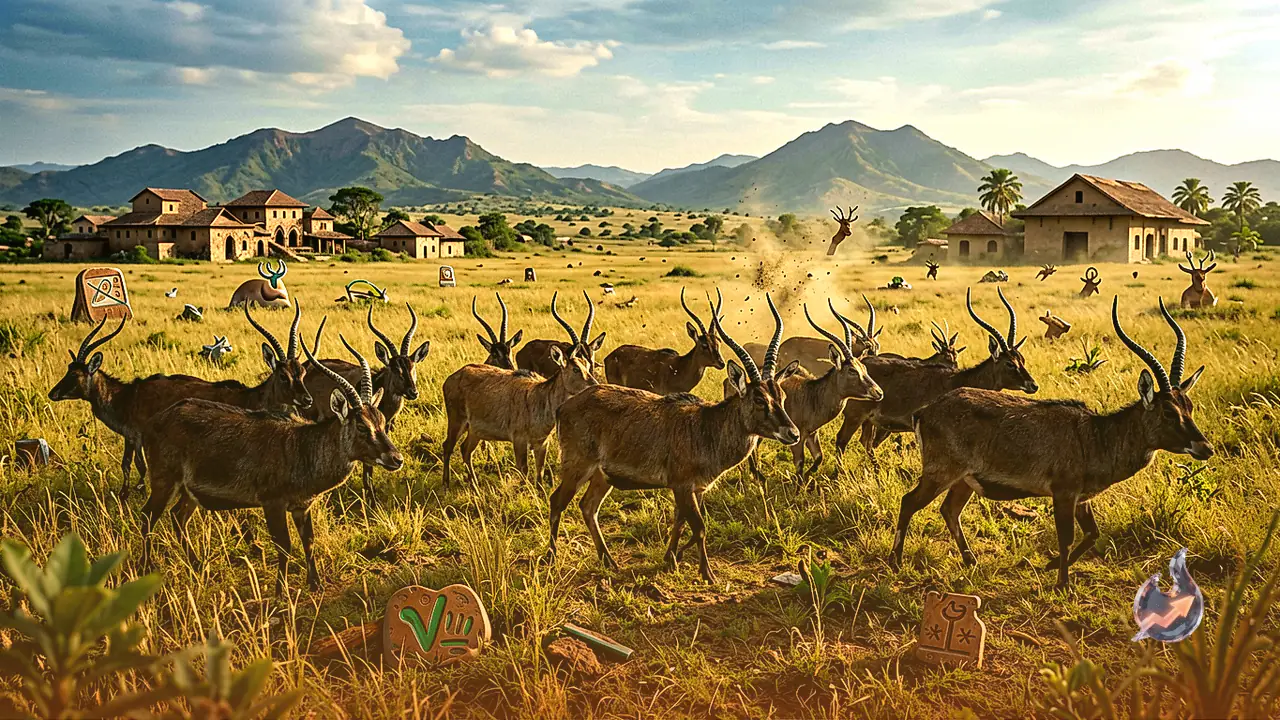

On the historic occasion of India's 80th Independence Day, 20 blackbucks were successfully released into the famous Banni grasslands of Kutch district in Gujarat. Executed by the Gujarat Forest Department, this specialized wildlife restoration initiative received comprehensive technical assistance from the Greens Zoological Rescue and Rehabilitation Centre (Vantara). Transferred from Vantara's facility in Jamnagar, the herd comprised 5 male and 15 female blackbucks. Prior to executing the translocation, mandatory statutory and scientific approvals were obtained from Gujarat's Chief Wildlife Warden and the Central Zoo Authority (CZA). The entire operation adhered strictly to established protocols encompassing health screening, quarantine, disease surveillance, humane transportation, and structured release.
Health Protocols and Safe Translocation Procedures
Translocating wild animals requires rigorous scientific precision and extreme care to avoid capture myopathy and stress. Before the herd set out from Jamnagar toward Kutch, specialized vehicles designed specifically for ungulate transport were deployed. Veterinary experts from Vantara conducted thorough health examinations and pathological screenings for every animal. During the mandatory quarantine period, intensive disease monitoring was maintained to ensure no pathogens were introduced into the wild ecosystem of Banni. Restoring native herbivore populations plays a crucial role in revitalizing the delicate ecological food web and improving soil and vegetation dynamics across the region.
The Ecological Signicance of Banni Grasslands
Banni is recognized as one of the largest and most ecologically vital grassland habitats in Asia. For generations, it has supported the pastoral livelihoods of local Maldhari communities alongside a rich array of endemic wildlife. Historically, the herbivore assemblage of Banni was dominated by blackbuck, chinkara, nilgai, and wild boar. Over recent decades, habitat degradation and environmental shifts resulted in a decline of native herbivore numbers. Through scientific grassland management, habitat restoration, and regulated species reintroduction, the forest department aims to restore the historical biodiversity and ecological character of this unique landscape.
Alignment with National Conservation Strategy and Project Cheetah
The release of blackbucks in Banni directly mirrors India's broader national commitment toward ecosystem restoration and species recovery. Spearheaded under the vision of Prime Minister Narendra Modi, national wildlife policy has increasingly prioritized repairing fragile grassland biomes and bolstering prey bases. Under this national framework, initiatives like Project Cheetah have positioned scientific wildlife management, prey enhancement, habitat recovery, and local community engagement at the core of biodiversity conservation. The reintroduction effort in Banni serves as a practical demonstration of this vision, reconnecting natural predator-prey balances in grassland ecosystems.
Statements from Wildlife Officials and Vantara Leadership
Highlighting the importance of the initiative, Gujarat's Chief Wildlife Warden, IFS Dr. Jaipal Singh, noted that restoring native wildlife species is essential for maintaining resilient landscapes. He stated that releasing these 20 blackbucks into Banni on the 80th Independence Day marks a pivotal milestone in ongoing state conservation efforts. Dr. Singh emphasized that successful ecological restoration requires a combination of robust science, structured management, and multi-institutional collaboration, expressing appreciation for Vantara's adherence to scientific protocols and technical execution throughout the program.
Reflecting on the operation, Ajeet Kulkarni, Special Director of Compliance and Due Diligence at Vantara, expressed that contributing to the return of native species on Independence Day is a profound privilege. He explained that species reintroduction extends far beyond merely releasing animals into the wild; it demands a deep understanding of habitat carrying capacity, population dynamics, and active involvement from local communities to achieve long-term sustainability. Kulkarni added that Vantara takes immense pride in supporting the Gujarat Forest Department's conservation roadmap and lending its technical capabilities to bolster India's wildlife heritage.
Gujarat's Statewide Native Herbivore Restoration Program
The release in Banni forms an integral part of a larger state-wide herbivore management framework authorized by the central government. The Union Ministry of Environment, Forest and Climate Change has sanctioned the translocation of 500 blackbucks and 100 chinkaras across Gujarat, with implementation directives issued by the Chief Wildlife Warden. While some aspects of the broader translocation program support prey base augmentation for cheetah reintroduction projects, the Banni release carries a distinct conservation goal: re-establishing self-sustaining wild herbivore populations in historic grassland habitats. To facilitate this massive effort, the Banni Grassland Forest Division engaged Vantara for specialized technical equipment, including customized transport vehicles, portable boma systems, animal handling knowhow, and telemetry monitoring.
Collaborative Conservation Framework and Barda Precedent
This joint initiative builds upon an established collaborative conservation model between the Gujarat Forest Department and Vantara. Previously, under the authorization of the Chief Wildlife Warden, Vantara assisted the forest department in re-wilding approximately 80 spotted deer within the Barda Wildlife Sanctuary. That initiative successfully strengthened the prey base and overall biodiversity within the broader Asiatic lion conservation landscape. Under this collaborative model, the state government provides regulatory oversight and strategic direction, while Vantara contributes specialized expertise in veterinary medicine, capture techniques, translocation logistics, and post-release tracking. On India's 80th Independence Day, the return of blackbucks to Banni reinforces the message that protecting natural heritage means restoring wild places where species can truly thrive.