




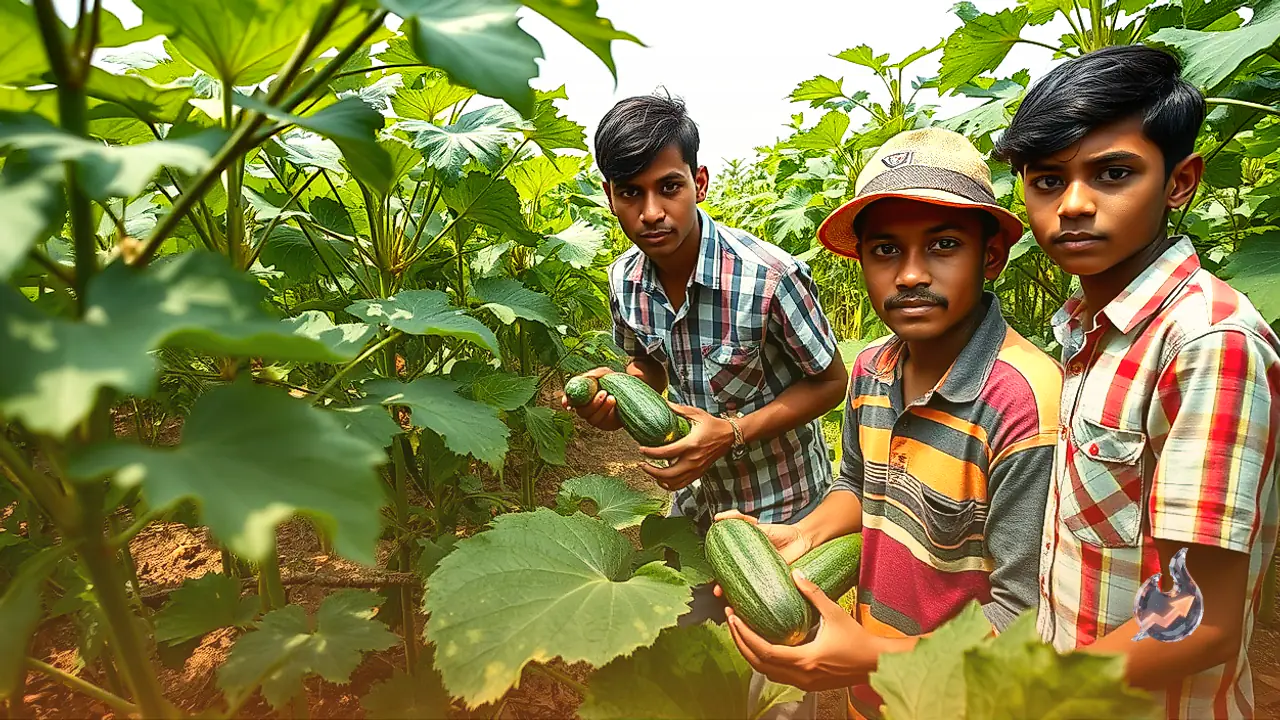
















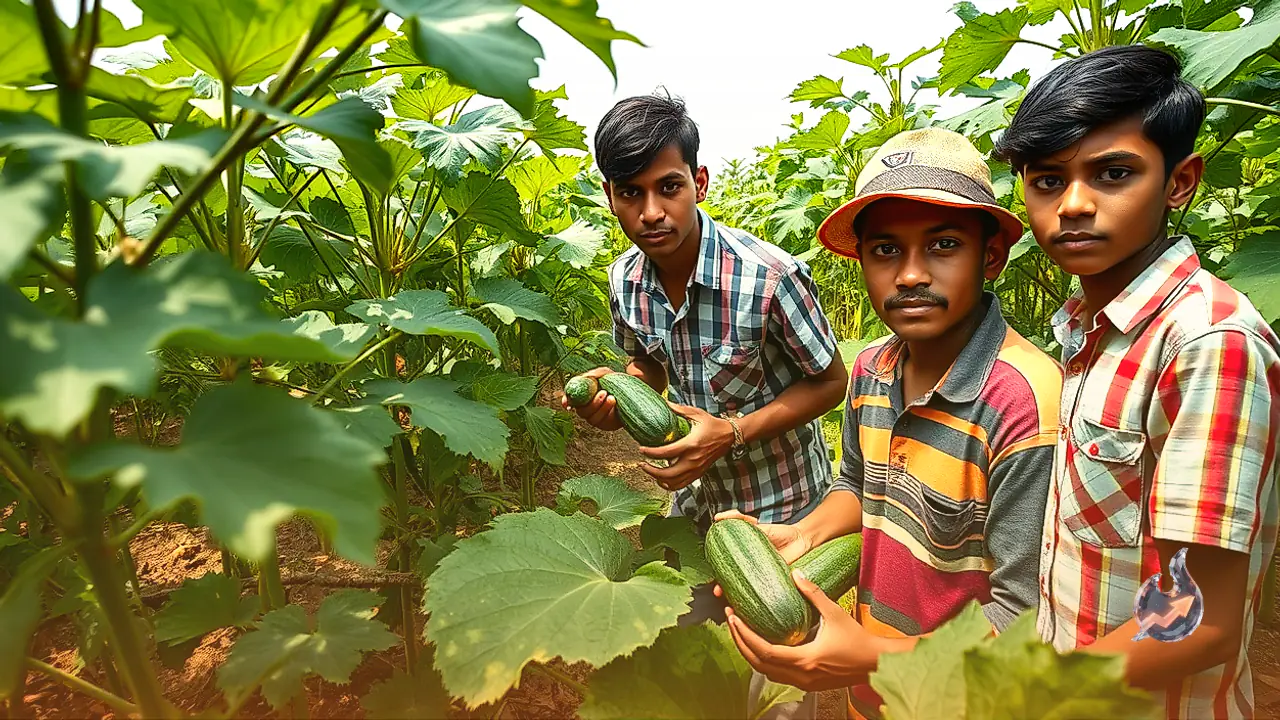

Amil, a resident of the rural area Supalaga in the Surguja district of Chhattisgarh, has carved a remarkable path in agriculture by blending traditional knowledge with modern techniques. Hailing from a farming family, Amil has been deeply familiar with agricultural practices since his childhood. When he completed his twelfth-grade education, he did not consider pursuing further studies solely for a conventional job; instead, he chose farming as his primary profession. Today, he cultivates organic cucumbers across two acres of land, where he is actively harvesting the produce and yielding a high output. Due to this abundant yield, the demand for his cucumbers extends well beyond Chhattisgarh into neighboring states such as Uttar Pradesh, Bihar, and Jharkhand. With the ongoing Navratri festival, the market demand for cucumbers has surged rapidly, which is expected to fetch him better market rates and significantly higher profits.
Choosing Farming as a Livelihood After Twelfth Grade
Amil shared with local reporters that he has been engaged in farming for about two to three years. After completing his twelfth-grade studies, he did not have a fixed or guaranteed source of income. Consequently, he made a firm decision to cultivate his own land. Since agriculture had already been practiced in his family for generations, he had spent his childhood observing and understanding various farming methods. Drawing upon this accumulated practical experience, he chose farming as the sustainable livelihood for his future.
An Estimated Production Cost of Around One Lakh Rupees Per Acre
According to Amil, cultivating cucumbers requires an expenditure of approximately one lakh rupees per acre. This estimated cost encompasses everything from field preparation and crop maintenance to other essential farming expenses. However, the exact revenue generated after selling the harvested crop depends entirely on the prevailing market prices. He believes that securing the right price in the market holds the promise of yielding a very lucrative income from agricultural operations.
Strong Market Demand in Bihar and Uttar Pradesh
Amil noted that the primary demand for his cucumbers originates from states like Bihar and Uttar Pradesh. Market demand naturally spikes during festive seasons, and occasions like Navratri further boost consumer demand, increasing the likelihood of securing better prices for the produce. Currently, the harvesting of cucumbers has commenced in his fields, and he is actively engaged in preparing the harvest to be transported to the markets.
Practicing Organic Farming Using Cow Dung Manure
Amil places a strong emphasis on implementing organic methods in his fields. He explained that the crop is nourished using traditional cow dung manure. To stay informed about suitable fertilizers and other essential agricultural inputs, he frequently consults local agricultural supply store owners. Alongside this expert input, he continually applies innovative farming techniques derived from his own hands-on experience.
Mulching and Drip Irrigation Simplify Daily Farm Work
In the past, irrigating the cucumber field required a substantial amount of time and strenuous effort, but Amil now utilizes advanced mulching and drip irrigation technologies. According to him, traditional irrigation methods used to take roughly one to one and a half days to water the entire field, whereas the modern drip irrigation system completes the exact same task in just about one to two hours. This remarkable technological shift saves both valuable time and physical labor for farm operations.
Blending Traditional Family Experience with Modern Techniques
Amil explains that he learned a great deal about agriculture directly from his family. Witnessing farming activities from a very young age gave him a clear understanding of the methods required to achieve superior agricultural outcomes. Presently, he combines his foundational traditional experience with contemporary farming technologies. He firmly believes that integrating technology into agriculture makes daily chores much easier, enabling farmers to complete essential tasks like irrigation in a fraction of the time.