
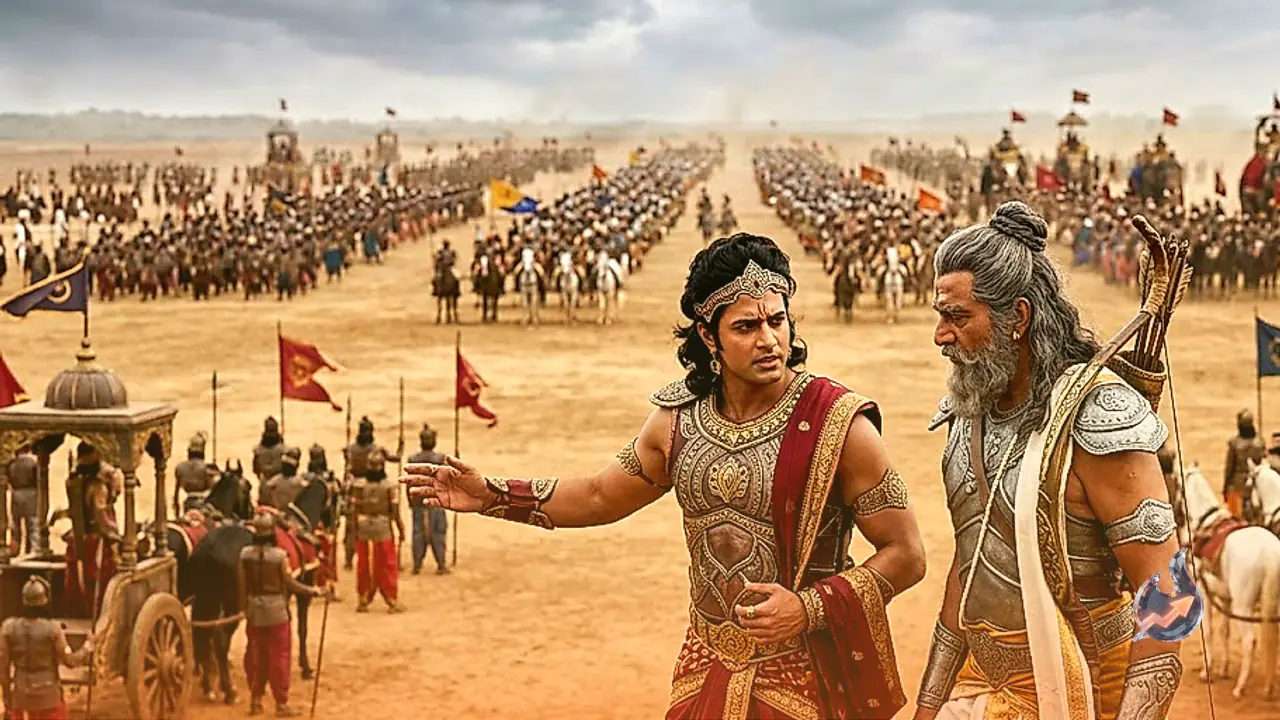




















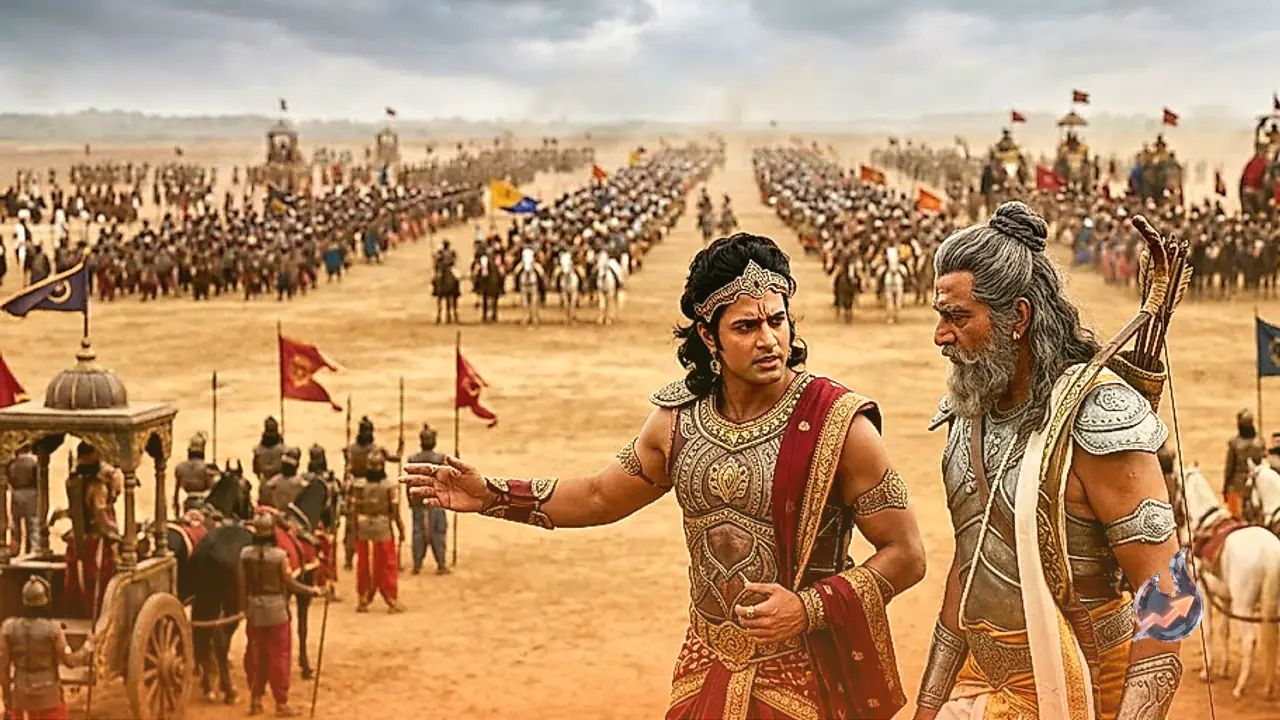

Every single verse of the Shrimad Bhagavad Gita provides a fresh perspective and depth to understanding human life. In the very first chapter of the Gita, the armies of the Kauravas and the Pandavas stand face-to-face on the battlefield of Kurukshetra. During this tense and decisive moment, Duryodhana looks at the battle formation of the Pandava army, which was meticulously arranged for combat, and immediately approaches his teacher Dronacharya.
The second verse of the Gita describes this exact historical event. This verse highlights the activities of Duryodhana and the psychological state right before the commencement of the war. Let us understand the recitation of the second verse of the Gita, its simple and clear meaning, along with the vital messages it imparts.
The Second Verse Of The Shrimad Bhagavad Gita And Its Meaning
Drishtva tu Pandvanikam Vyudham Duryodhanastada.
Acharyamupasangamya Raja Vachanamabravit II 2 II
In this episode of the Mahabharata war, Sanjaya explains elaborately to King Dhritarashtra that seeing the vast army of the Pandavas fully prepared and arrayed for battle, King Duryodhana directly approaches his preceptor Dronacharya and speaks to him. Understanding the Sanskrit terms in this verse, 'Pandvanikam' refers to the Pandava army, while 'Acharyam' denotes the revered teacher Dron. Additionally, the word 'Vyudham' signifies a specially crafted military formation designed for warfare. This verse brings to light the exact ground reality prevailing just before the onset of the great war of Mahabharata.
Life Lessons Derived From The Second Verse Of The Gita
This verse does not present a direct sermon or instruction, but rather narrates a specific event preceding the war. Analyzing this situation deeply brings forth three very important takeaways for our daily lives. The first crucial point is that before taking any major decision or confronting a massive challenge, one must carefully observe and understand the ground realities. The second point is that Duryodhana's visit to his teacher Dronacharya teaches us the importance of seeking advice from experienced individuals during difficult times. The third and most significant lesson is that when faced with a challenge, rather than panicking and acting in haste, it is far better to understand the situation calmly and proceed with caution. However, these are general life lessons drawn from this specific event, and the verse itself does not state these points as direct commandments.
A Simple Method To Read The Gita Verse In The Morning
If you wish to begin your day by reading a verse from the Gita, there is no need to follow rigid or complicated rules. You can adopt this simple routine according to your convenience. First, wake up in the morning and sit down in a quiet place. Next, read the second verse of the Shrimad Bhagavad Gita with full attention. Recite the verse slowly and try to absorb its inherent meaning. Spend a few minutes reflecting on what lessons this episode holds for you. Furthermore, while facing any challenge throughout the day, try to remain calm and comprehend the situation thoroughly. According to religious beliefs, reading the Gita in the morning can serve as an effective way to direct the mind toward positivity and carve out moments for spiritual contemplation, though personal experiences may vary for each individual.
Major Benefits Of Reading The Second Verse Of The Gita
The primary purpose of reading the verses of the Gita is to grasp their underlying meaning and contemplate them in life. Regular recitation offers individuals an opportunity to focus closely on their own thoughts, spend some peaceful moments away from chaos, and understand religious literature in a much better way.