




















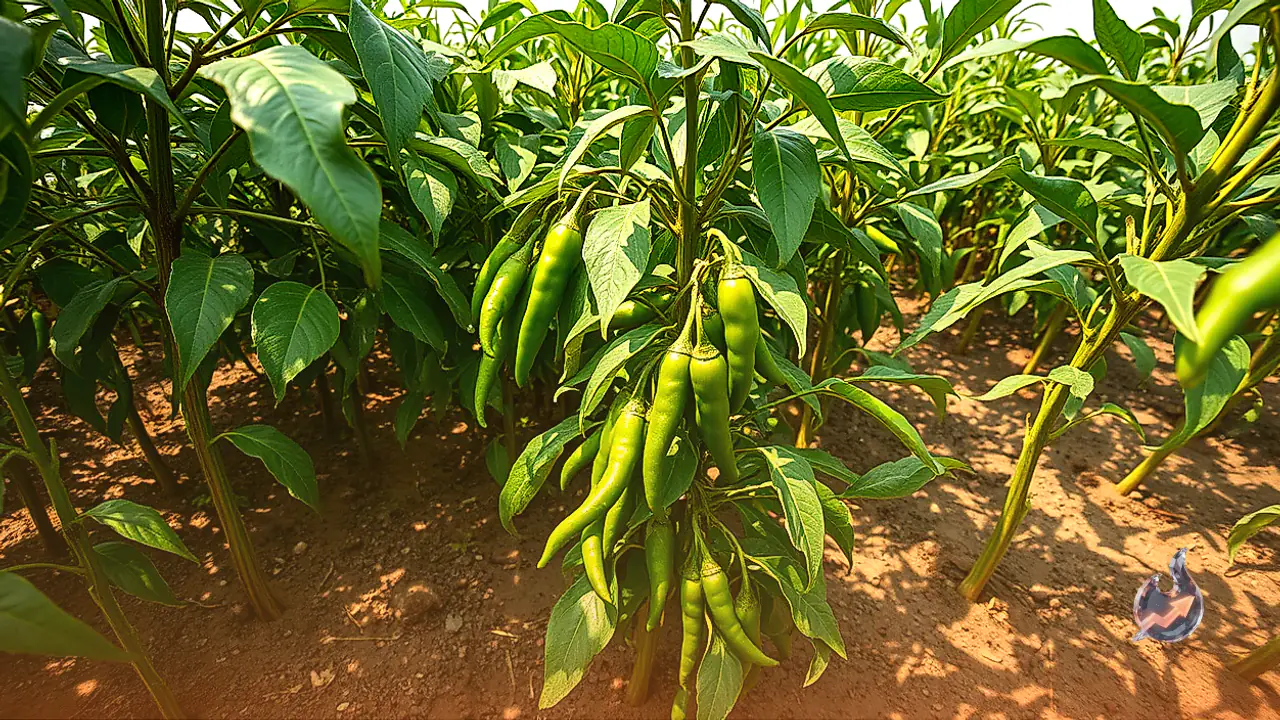

Across Bihar, agriculture remains the economic backbone for the majority of rural households. However, steadily rising input costs and shrinking profit margins in conventional cropping systems have prompted farmers to seek higher-value agricultural alternatives. Among these options, commercial vegetable farming has emerged as an exceptionally viable path. Green chilli in particular stands out as a short-duration crop capable of generating returns several times higher than the initial expenditure. Agricultural specialists point out that through meticulous variety selection and disciplined agronomic management, growers can multiply their returns from even modest plots of land, provided they manage the critical production risks effectively.
Off-Season Harvesting Advantage and Varieties for Bhagalpur
Agronomists highlight that timing harvest cycles during low-supply periods or off-season months allows growers to capture significantly higher market prices. The agro-climatic conditions across Bhagalpur and neighboring districts are well suited for high-density chilli production. Taking local soil and weather patterns into consideration, specialists recommend specific advanced varieties that provide superior field performance, most notably VNR-332, BSS-453, and Kashi Gaurav-338.
These hybrid strains are characterized by large, uniform, and visually appealing fruit. Because the chillies carry good individual weight, the cumulative harvest yield per unit of land rises substantially compared to standard local varieties. Furthermore, these cultivars offer extended post-harvest shelf life, ensuring produce withstands transit without losing firmness or color. In wholesale vegetable markets, consignments showing premium physical finish and weight consistently command top rates, translating directly into higher net income for producers.
Managing the Threat of Fungal Outbreaks and Yellow Mosaic Virus
Despite strong profit potential, many cultivators remain hesitant to take up chilli farming due to destructive pest and disease cycles. The crop remains particularly vulnerable to both fungal infections and debilitating viral pathogens. If an outbreak is not addressed swiftly at its earliest stage, entire fields can suffer irreversible damage, inflicting severe financial strain on growers.
Addressing these field challenges, Sujeet Pal, an official with the Plant Protection Department, pointed out that yellow mosaic virus represents one of the most destructive threats in chilli fields. When crops contract this pathogen, vegetative growth stalls almost completely. Leaves turn pale, plant vigor collapses, and fruit set drops drastically, driving harvest yields down sharply and wiping out seasonal investments for unwary farmers.
Protective Measures: Neem Oil, Sticky Traps, and Timed Treatments
To shield crops against pest vectors and fungal pathogens, agronomists advocate vigilant field inspections and early preventative action. Applying neem oil sprays at regular intervals offers a strong primary barrier against soft-bodied insect pests. Additionally, installing yellow and blue sticky traps across the plot captures flying vectors physically, cutting down the transmission vectors of dangerous viral pathogens.
Whenever insect pressure or fungal symptoms escalate beyond cultural controls, farmers should apply recommended chemical insecticides and fungicides strictly at prescribed dosages. Keeping sap-feeding insect populations under control halts the rapid dissemination of yellow mosaic virus across healthy plants. Agricultural authorities emphasize that by pairing productive cultivars with strict sanitation and pest management, green chilli cultivation can serve as a dependable, highly profitable cash crop even across small landholdings.