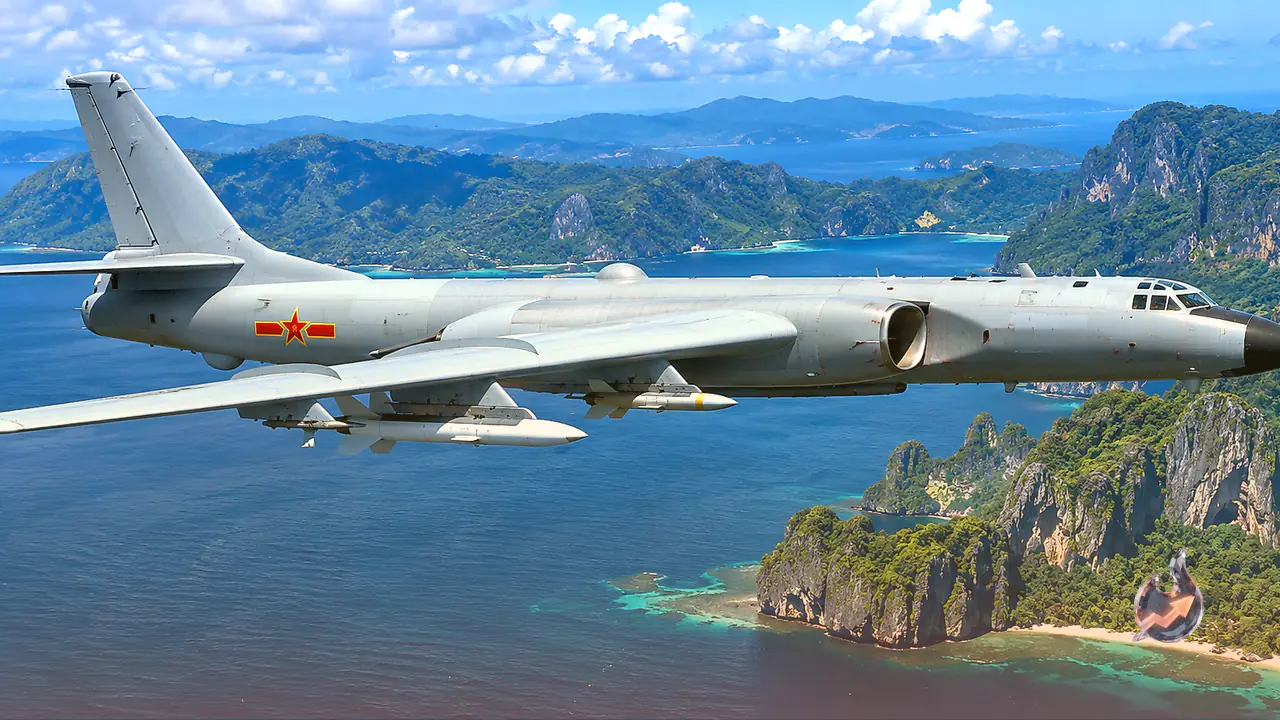

In modern military conflicts, the side that possesses the power to execute long-range strikes from the skies is widely considered to hold the upper hand. Continuing this pursuit of dominance, Beijing recently sought to demonstrate its formidable capabilities to the global community. The Dragon showcased this exact strength through its most trusted and heavy-duty strategic asset, the H-6 bomber. Capable of cruising at speeds around 1050 kilometers per hour and accurately launching missiles up to 240 kilometers away, calling this aircraft a giant aerial weapon would be entirely accurate. The plane intentionally allowed itself to be visible on flight trackers to deliver a direct message regarding its operational range and destructive potential to the entire world.
Executing An Orbital Loop Near Manila
According to flight tracking data, this Chinese air force H-6 bomber was spotted flying in the South China Sea between Scarborough Shoal and Luzon Island. The aircraft displayed no visible call sign on radar screens, and its digital flight record remained extremely brief. Despite these measures, its specific flight pattern successfully drew the keen attention of defense experts.
The tracking record revealed that the aircraft approached from the northwest and sharply turned toward the coastline of the Philippines. Following this maneuver, it completed a small circular loop in the airspace and headed back along its original route. The bomber executed this entire turning movement merely 170 kilometers away from the Philippine capital of Manila.
Simulating Missile Strikes And Strategic Messaging
This looping maneuver in the skies has sparked a fresh debate among defense analysts worldwide. Questions are being raised over whether this was merely a routine patrol or a formal rehearsal for launching air-to-surface missiles. The primary reason behind this concern lies within the operational range of the missiles carried by this platform. The KD-63B missile integrated into the H-6 bomber can hit targets accurately at a distance of about 240 kilometers. Consequently, turning back just 170 kilometers away from Manila clearly implies that if the need arises, this Chinese aircraft could strike from a safe distance without ever breaching the sovereign airspace of another nation.
Unpacking The True Power Of The H-6 Bomber
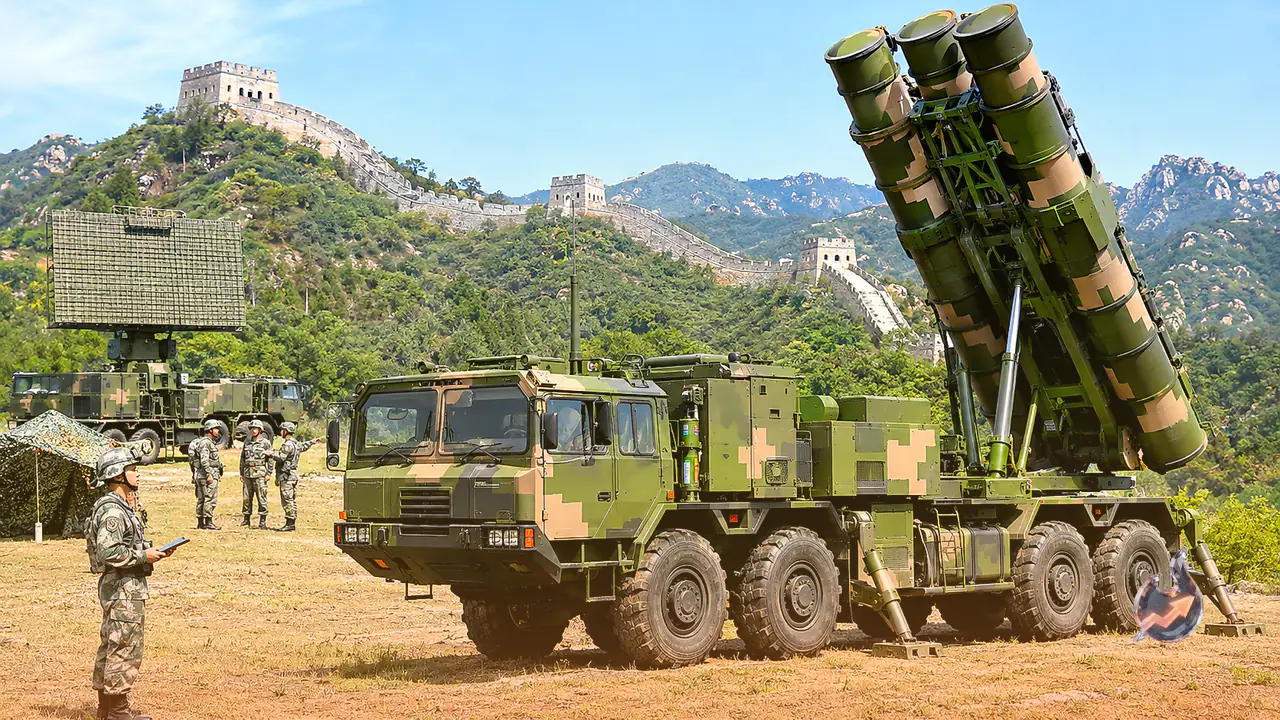
The H-6 stands as the most widely utilized strategic bomber across the globe. Estimates indicate that the Chinese air force currently operates approximately 270 active H-6 units. Flying at rapid speeds of nearly 1050 kilometers per hour, the aircraft is as hazardous as it is massive. Over time, Beijing has incorporated numerous technological upgrades into its design. Modern variants no longer serve merely as conventional drop-bomb aircraft; instead, they function effectively as airborne missile-launching platforms.
The advanced H-6K variant has been specifically engineered to annihilate massive enemy warships and aircraft carriers stationed at sea. It deploys YJ-12 anti-ship cruise missiles, which were developed during the 2010s to penetrate naval air defense architectures. This missile can strike targets up to 400 kilometers away while carrying a heavy 200-kilogram explosive payload. Its most remarkable trait is its velocity, which exceeds three times the speed of sound at more than 3,700 kilometers per hour.
Reports indicate that the standoff range of the YJ-12 vastly outstrips comparable Western weaponry, allowing it to be fired from well outside the defensive umbrella of enemy warships. This ensures the projectile completes its objective before the shipboard defense systems can fully comprehend the threat. Furthermore, Beijing has expanded this aircraft's payload capabilities beyond the YJ-12 by incorporating advanced YJ-18 missiles alongside high-speed YJ-21 hypersonic ballistic missiles. Hypersonic projectiles descend at multiple times the speed of sound, making interception by any existing air defense network an extremely difficult task.
Electronic Warfare Capabilities In The Region
Contested minor islands situated in the South China Sea have long served as a major flashpoint for geopolitical friction between Beijing and regional adversaries. Specifically, heightened military maneuvers near Second Thomas Shoal within the Spratly Islands have repeatedly created tense standoffs. However, Chinese military power is not restricted solely to combat aircraft and conventional munitions.
During naval maneuvers near northern regions, opposing forces previously engaged in intense electronic warfare operations. Naval vessels reportedly encountered unprecedented environmental interference, leaving radar displays flickering and GPS signals completely jammed. With communication and navigation networks thoroughly disrupted, fleets were forced to recalibrate their tactical positions. Observers noted that standard electronic countermeasures on opposing vessels lagged significantly behind advanced jamming systems.