























Marking a notable milestone in international space diplomacy, China has officially transferred lunar soil and rock samples gathered from the moon's hidden far side to the United Nations. This concealed hemisphere remains permanently turned away from terrestrial observation, preventing direct views from the ground. The material was secured during the Chang'e-6 expedition, which successfully targeted the lunar south polar region. With this achievement, the country became the first in human exploration history to collect and return physical fragments from this remote quadrant of the lunar surface.
Official Unveiling Ceremony at Vienna Headquarters
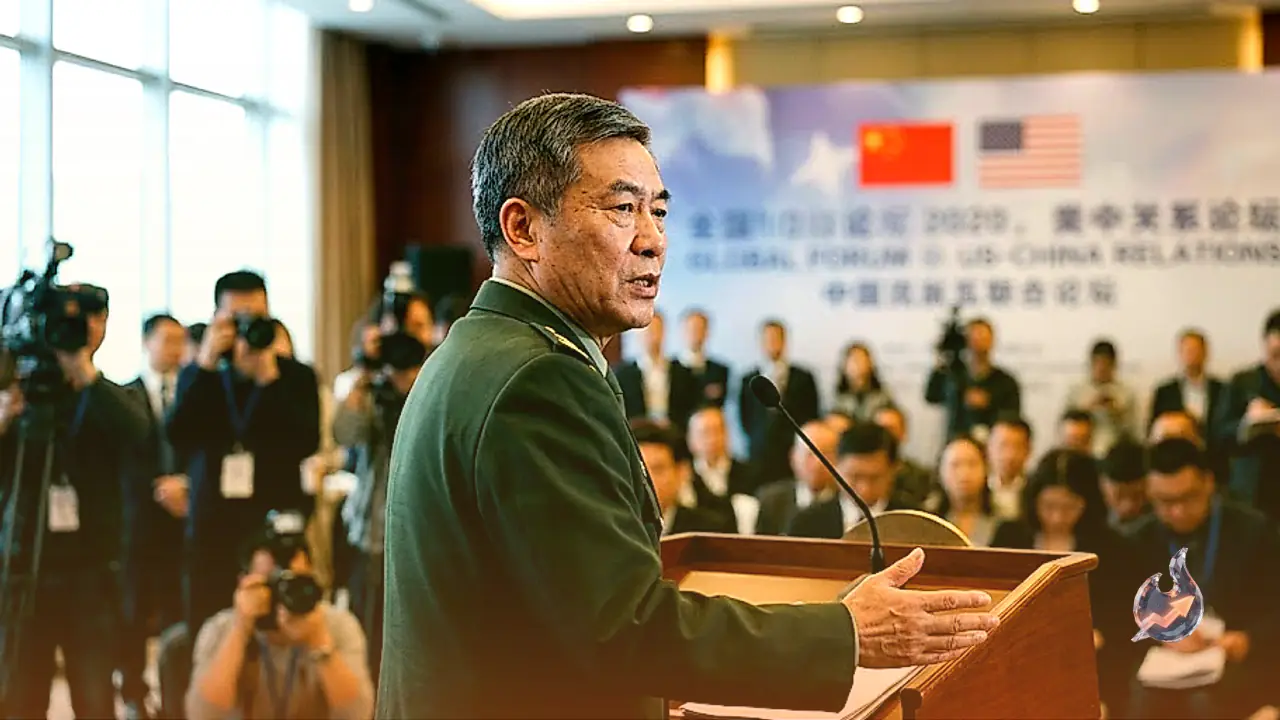
The handover concluded during a formal ceremony hosted at the United Nations complex located in Vienna. Prominent delegates representing the Chinese government and various senior United Nations dignitaries attended the gathering. Following this presentation, the space samples will remain on permanent public exhibition within the international organization's Vienna premises.
Addressing the gathering, Shan Zhongde of the China National Space Administration stressed that cosmic exploration represents a collective ambition belonging to the whole human race. He pointed out that the achievements realized through the Chang'e missions transcend national boundaries, contributing directly to the global scientific community's quest for fundamental knowledge.
Commitment to Peaceful Use and International Science
The gesture is viewed as an explicit signal supporting multilateral cooperation and the dedicated peaceful exploitation of outer space. Welcoming the handover, United Nations official Ghada Waly commended the initiative, describing it as an inspiring illustration of modern engineering competence and humanity's enduring drive to decipher the universe.
Aarti Holla-Maini, who serves as the director of the United Nations Office for Outer Space Affairs, emphasized that such joint steps fortify the concept of outer space being a shared heritage and an obligation held in common by all nations. This approach offers valuable momentum for global scientific partnerships across borders.
Chang'e-6 Mission and Its 380,000-Kilometer Journey
The Chang'e-6 mission touched down in 2024 within the expansive South Pole-Aitken Basin, securing approximately 1,935.3 grams of diverse lunar ground matter. This collection then undertook an intricate voyage traversing more than 380,000 kilometers from the moon to make a safe return to Earth.
Because gravitational locking keeps one side of the lunar sphere permanently concealed from terrestrial view, researchers have historically faced steep hurdles studying its geological formations. Planetary scientists expect that structural and chemical evaluations of these pristine specimens will clarify longstanding questions regarding the moon's primordial formation, internal evolutionary timeline, and past volcanic behavior. Beyond pure laboratory value, sharing these discoveries through the world body stands as an influential development in international aerospace diplomacy.