






















The historic Golconda Fort in Hyderabad stands as an extraordinary testament to ancient engineering and architectural grandeur. Constructed during the 16th and 17th centuries under the Qutb Shahi dynasty, this grand fortress features sophisticated systems that were centuries ahead of their time. Among its most remarkable structures is a royal hammam, or bathhouse, designed to function much like a modern jacuzzi. This historic complex demonstrates how advanced water management and luxury bathing facilities were established long before the advent of electricity.
Persian Architecture and Precise Temperature Control
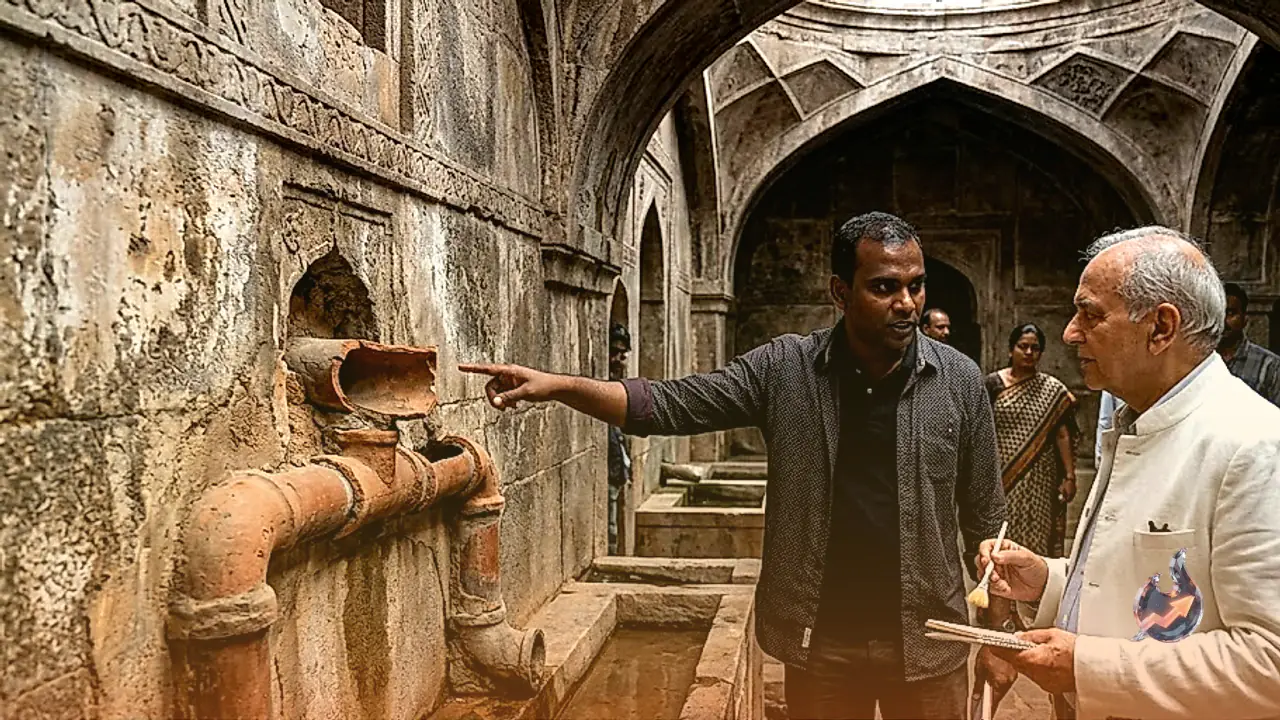
The primary highlight of the royal hammam was its sophisticated arrangement for regulating water temperature for the royal queens. According to architectural archaeologists, the design of these bathing chambers was heavily influenced by traditional Persian architecture. To maintain an ideal water temperature, specialized wall outlets and channels were built into the structure. Scalding hot water flowed from one set of openings while cool water was released from another. Both streams converged into a central tank, allowing the water temperature to be adjusted perfectly according to preference.
Underground Terracotta Pipe Network and Siphon Technology
To ensure the seamless operation of this intricate bathing setup, an extensive underground network of clay pipelines was constructed beneath the fort. What makes this engineering feat so remarkable is that it functioned entirely without modern machinery or electrical power. Engineers utilized the fundamental principles of gravity and siphoning to lift water from lower reservoirs, such as Durgam Cheruvu, to royal palaces situated nearly 400 feet above. Through these durable clay pipes, water was first heated and then safely conveyed directly into the bathhouse chambers.
A Focal Point for Modern Visitors and Researchers
In an era dominated by automated modern amenities, this nearly 500-year-old hydraulic system continues to amaze visitors and experts alike. Preserved today under the stewardship of the Archaeological Survey of India, the royal hammam at Golconda Fort remains a major topic of study and fascination for domestic and international tourists, historians, and researchers. The structure offers clear evidence that medieval Indian architecture and hydraulic science possessed an extraordinarily high level of sophistication.