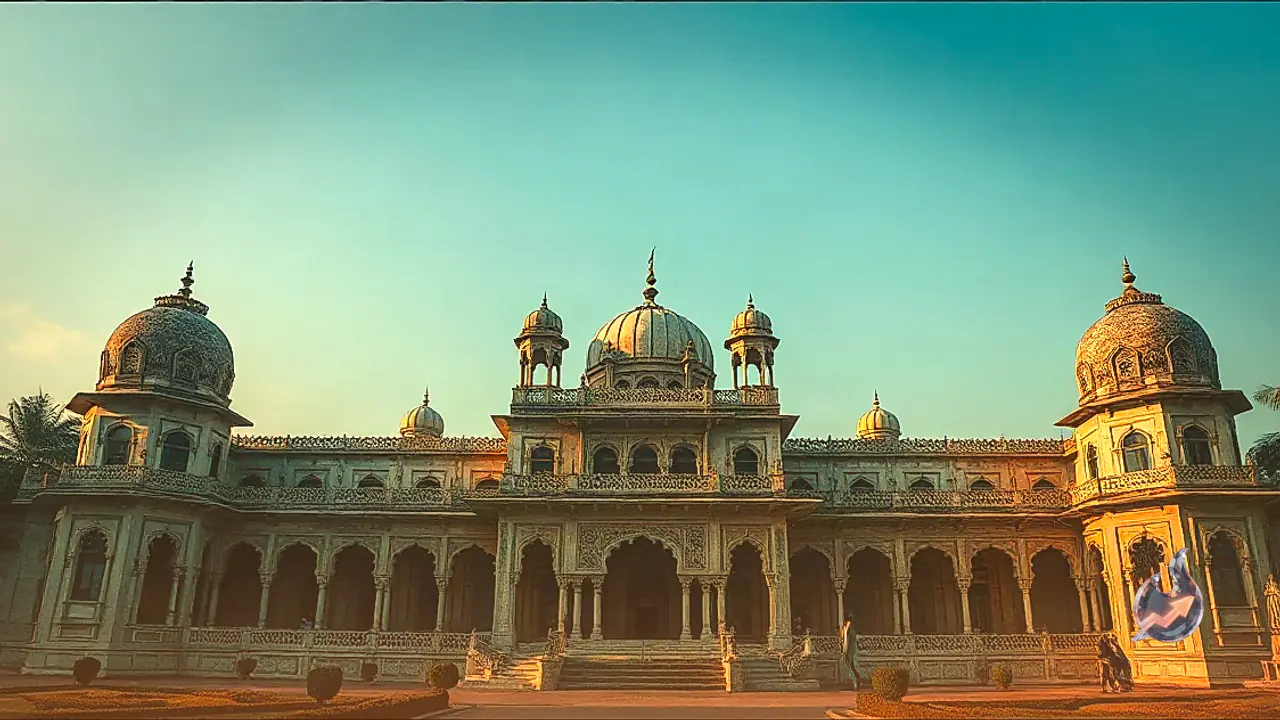


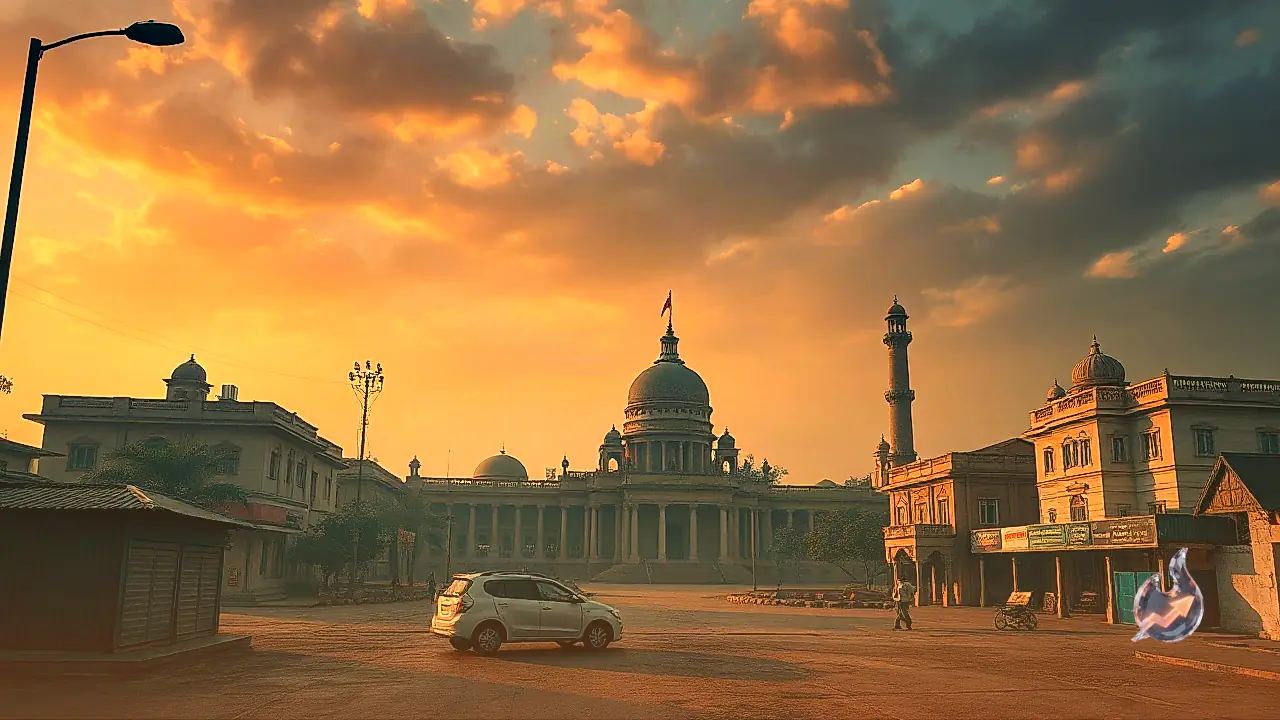

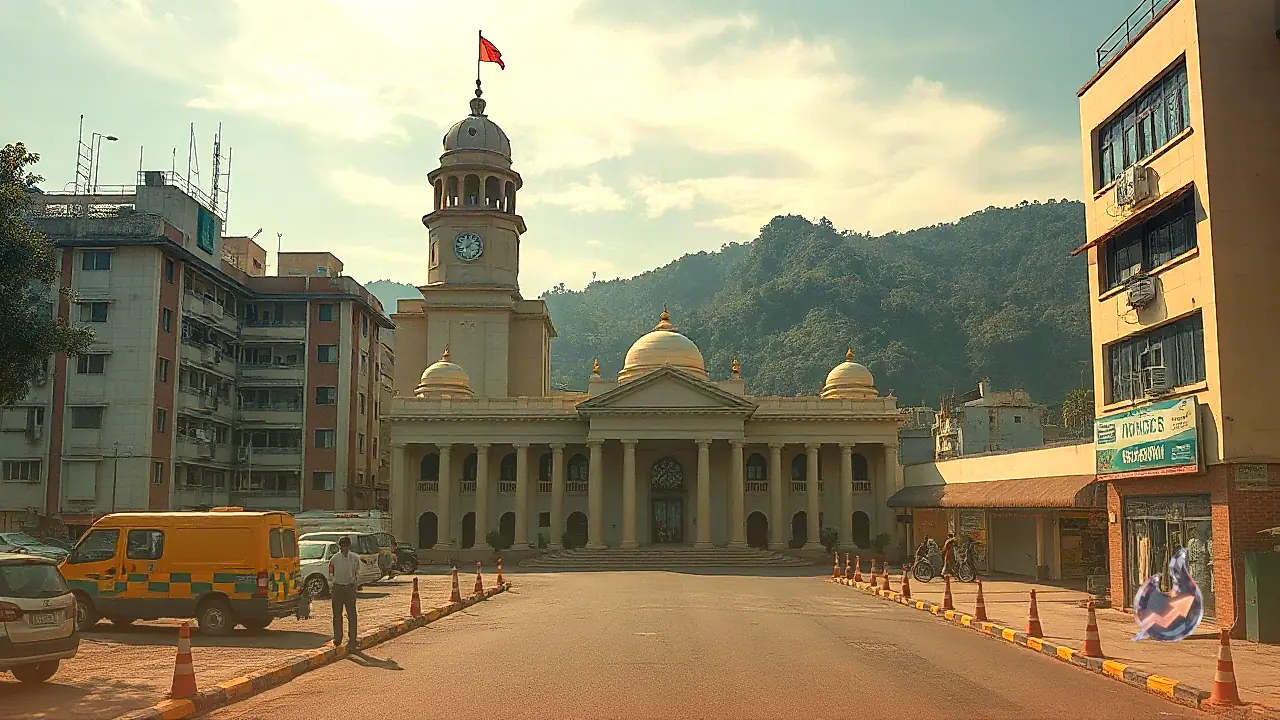
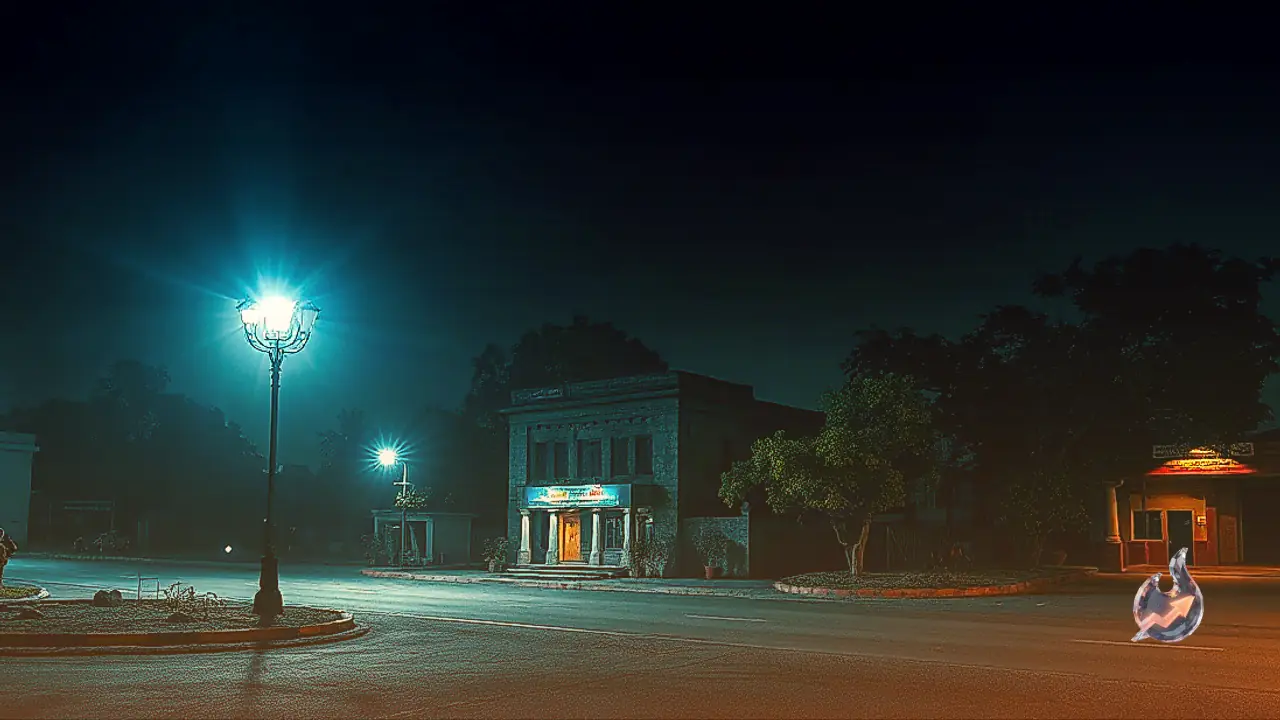














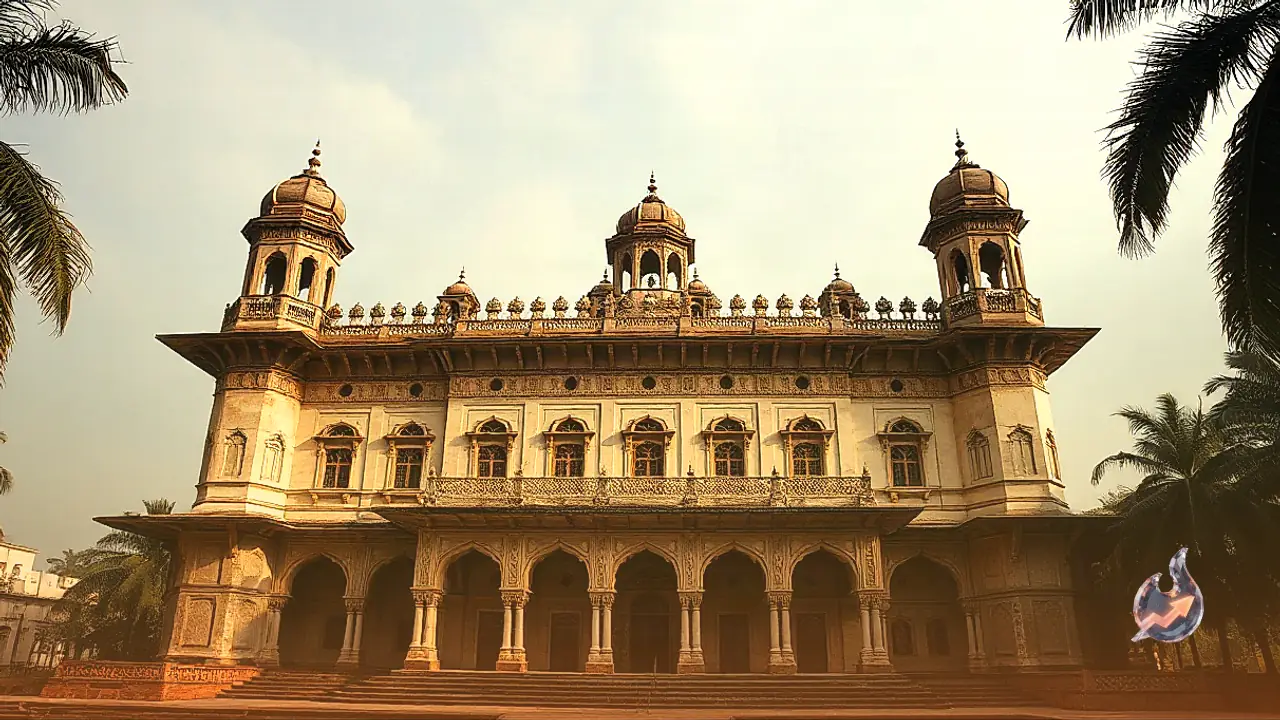

Ask about Hyderabad and most people picture the Charminar or the Golconda fort, but a quieter neighbourhood called Gosha Mahal carries its own four-century tale of empires rising and falling. Where wide roads and traffic now flow, a grand royal complex once stood, quietly witnessing the fortunes of several dynasties. This is the story of that vanished palace and the fragment of it that still survives.
Where the name comes from
In Urdu and Persian, the word gosha refers to seclusion or staying veiled from view. During Qutb Shahi rule, this complex was built specifically as a private retreat for the women of the royal household, a place where they could spend their time freely and without restriction. The idea reflected the royal customs of the time, when women's quarters were kept away from public view and closely guarded. That purpose is why both the complex and, eventually, the surrounding locality came to be known as Gosha Mahal.
A palace of nearly 1,000 halls
Historical records describe this as no ordinary structure. The palace reportedly contained close to a thousand halls, along with lush gardens and a large pond at its centre. Construction began during the reign of Sultan Abdullah Qutb Shah and was finally completed under Abul Hasan Tana Shah, the last ruler of the Qutb Shahi dynasty. That means the project spanned the reigns of more than one ruler from the same dynasty, underlining just how significant it was considered.
Aurangzeb's army and the fall of a dynasty
In 1687, the army of Mughal emperor Aurangzeb seized the Golconda fort, bringing an end to Qutb Shahi rule for good. That political shift also changed the fate of Gosha Mahal. During the Deccan campaign, Aurangzeb's son Shah Alam set up camp at the site, after which the building became part of military operations and the functioning of the Mughal court. A retreat built for royal women had effectively turned into a piece of the Mughal empire's military machinery.
From ruins to a surviving Baradari
By the time the Nizams came to power in Hyderabad following Mughal rule, most of the palace had already crumbled into ruin, though its Baradari remained standing. In 1931, Hyderabad's Freemasons organisation approached the Nizam's government seeking permission to use this Baradari. The structure was subsequently repaired, and on 8 February 1933 it was formally reopened as a hub for social and public welfare activities. Roughly two and a half centuries after the fall of Golconda, the site had travelled from royal retreat to ruin to a place of public use. Time may have reduced the once-sprawling palace to a fraction of itself, but the surviving Baradari still stands today as living evidence of Hyderabad's golden era.