



















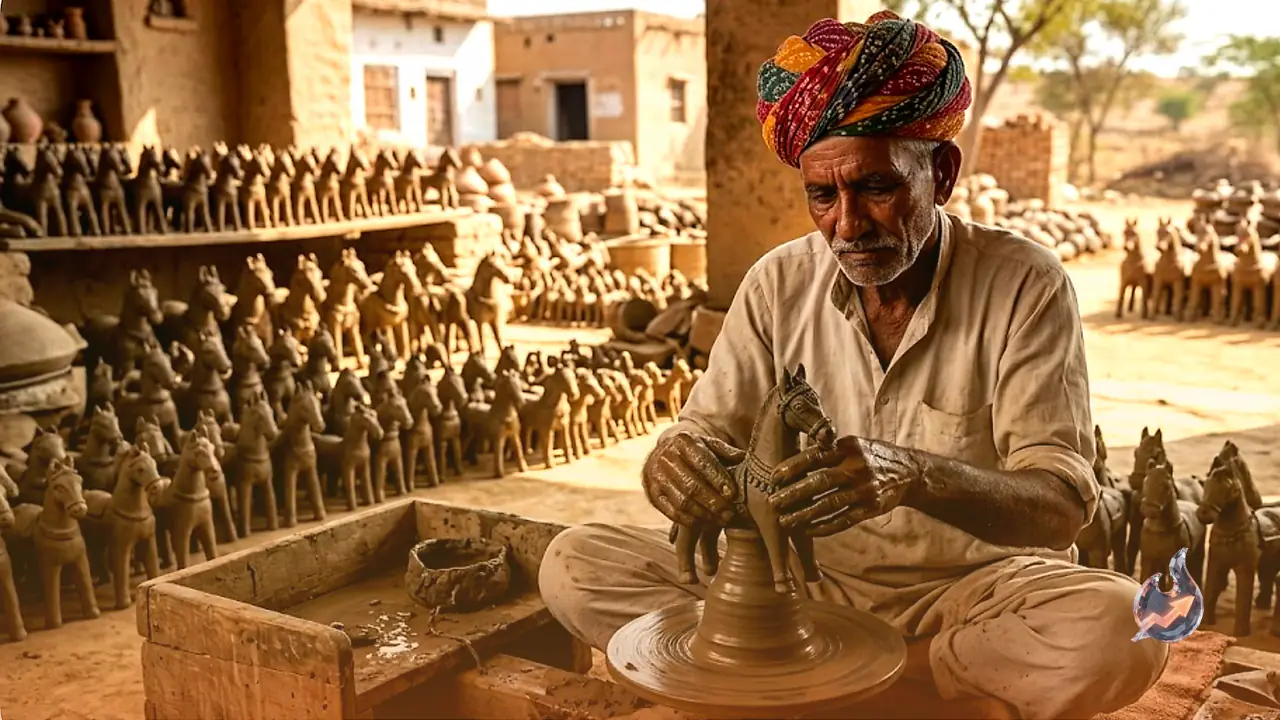

Harji village in Rajasthan's Jalore district is far more than a dot on the map. It is a living heritage moulded out of clay and bound up with faith. Located in the Aahor tehsil, the village has been known for nearly 60 years for its 'Mamaji ke ghode', the clay horses. These figures are not just pieces of craft but symbols of devotion and belief, which people offer at temples and shrines once a vow they made has been fulfilled.
Around seven potter families still keep this tradition alive in the village. What sets the work apart is that no modern machine is used to make these horses. They take shape purely from the labour of skilled hands and years of experience, which is exactly why their form and colouring stand out from anything else. A single horse can take several days to complete, and the whole process demands both patience and a careful eye.
How a Mamaji horse takes shape
According to craftsman Pukhraj Prajapat, the clay is brought in first and kneaded thoroughly until it is ready. The horseshoes are then prepared outside the village. After that, the different parts of the horse are moulded separately in their own shapes and joined together to build the complete figure. The horse is then fired properly and finally painted. Once it is ready, devotees travel from far and wide to carry one home. In different regions the horses are worshipped as Mamaji, Jhunjharji or Mallinathji, and they are named accordingly. Prajapat added that tourists from America once took these clay horses back with them, which earned this folk art an international recognition as well.
Demand that stretches from Jalore to Gujarat
The appeal of these horses is not confined to Jalore district. Devotees arrive here from Barmer, Balotra, Sirohi and several nearby areas, as well as from Gujarat. People who place their faith in the folk deity Mamaji buy the horses from here and offer them when their wishes are granted. This is why the tradition of Harji village has continued unbroken for years and remains just as strong today.
A legacy carried across generations
Craftsman Ramlal says his family has been doing this work for generations. The horses he makes are sent not only to Jalore, Barmer, Balotra and Sirohi but all the way to Gujarat. People make a vow and, when it is fulfilled, come here to take a horse away. That has become the village's true identity. For the artisans here, this is not merely a source of livelihood but also their tradition and cultural identity. At a time when machines have left many traditional crafts behind, the craftsmen of Harji village continue to keep this heritage alive with the skill of their own hands.