






















In the rural heartlands of Surguja district in Chhattisgarh, the age-old practice of crafting authentic buttermilk and clarified butter using traditional wooden equipment remains alive and thriving. Bypassing modern industrial churners, artisans continue to rely on hand-carved wooden tools and ropes to separate butter from curd. Health-conscious consumers and local residents overwhelmingly prefer this traditional method, valuing the purity, rich flavor, and nutritional benefits that modern processing often lacks.
Ancestral Craftsmanship and Rare Wooden Tools
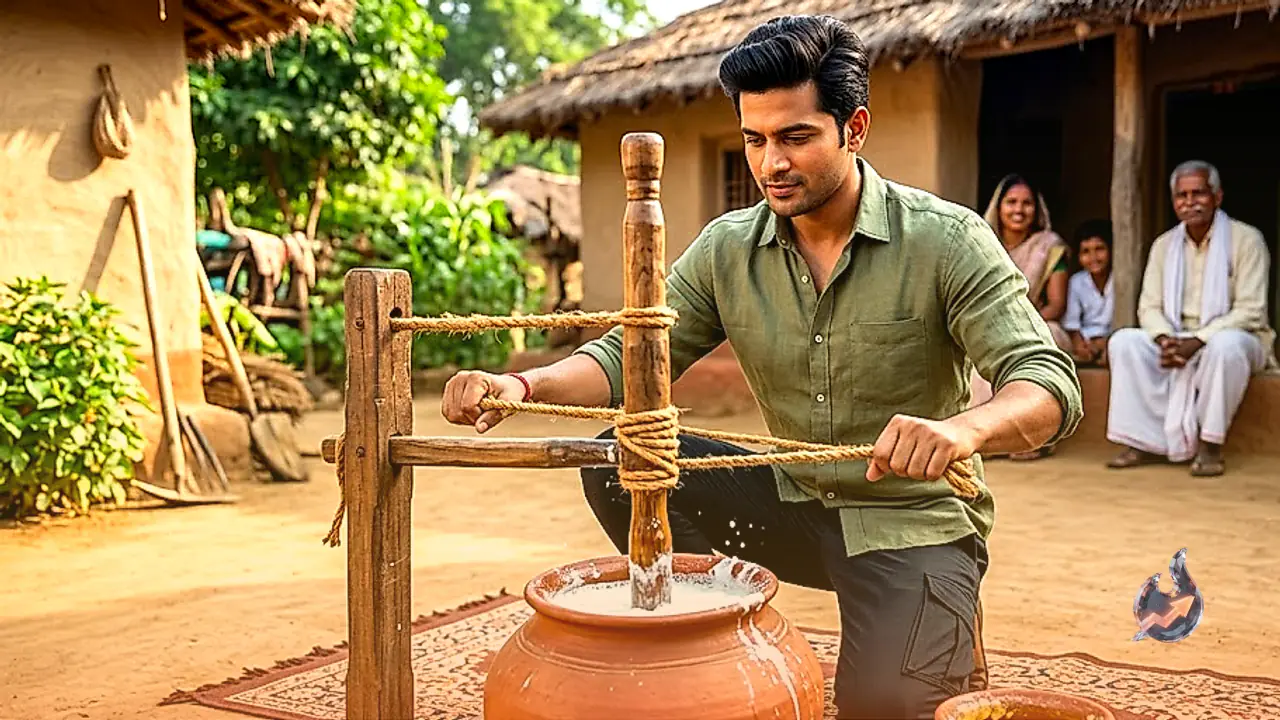
Ratan Manjhi, a practitioner of this craft, explains that the traditional churning rod, known locally as a mathni, is painstakingly carved from a wooden pole with distinct structural supports on both ends. Handmade wooden churners of this design have become increasingly rare in contemporary times. Manjhi notes that he inherited this specialized technique directly from his ancestors, preserving an essential element of regional heritage.
Health Benefits and Superior Taste Profile
Addressing the quality of the final product, Ratan Manjhi emphasizes that preparing buttermilk using iron implements or metal tools compromises both flavor and healthfulness. Conversely, curd churned slowly with a wooden mathni retains its natural goodness, producing a rich, smooth, and highly palatable drink. This exceptional quality drives strong demand across the village, where traditionally processed buttermilk is widely praised.
Decades of Heritage and Seasonal Production Dynamics
Having sustained this traditional practice for 10 to 20 years, Ratan Manjhi has successfully turned ancestral knowledge into a rewarding craft that earns both steady financial benefits and widespread community appreciation. Although buttermilk is produced continuously across all seasons of the year, production naturally expands during the rainy monsoon season due to an increased supply of milk. As the wooden churner is rotated rapidly using a rope, pure butter floats gracefully to the top surface, leaving clean, nutrient-dense buttermilk at the bottom of the container.