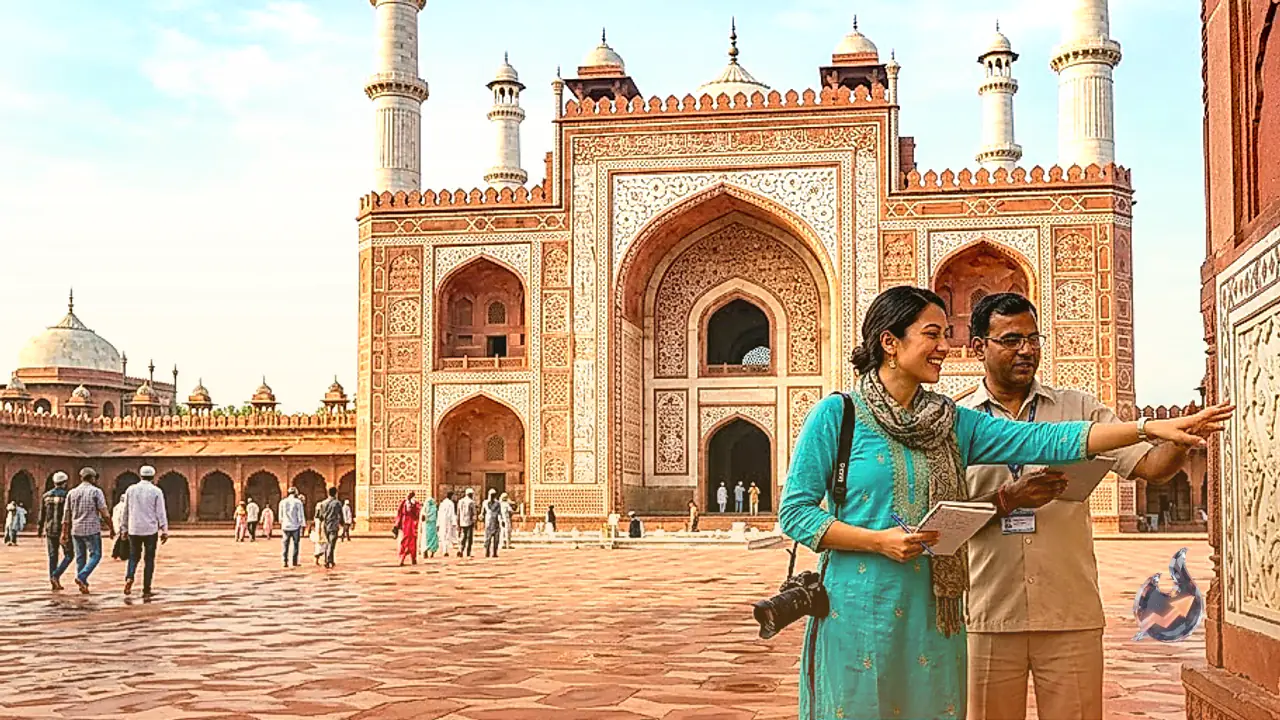

























Situated along the banks of the Yamuna River in the historic city of Agra, Uttar Pradesh, Chini Ka Rauza stands as a remarkable example of 17th-century Mughal architecture. Dedicated to the memory of a prominent scholar and imperial official, this funerary monument is globally distinguished by its vibrant glazed tilework, exquisite Persian craftsmanship, and deep historical resonance. Although frequently overshadowed by famous sites like the Taj Mahal and Agra Fort, it remains an indispensable treasure for students of history and architectural design.
A 17th-Century Monument to Prime Minister Afzal Khan
According to senior Agra historian and professor Anurag Paliwal, this mausoleum was constructed during the 17th century under the reign of Mughal Emperor Shah Jahan. The monument honors Afzal Khan Mulla, a celebrated Persian poet and scholar who rose to become the Prime Minister and one of the most trusted advisors to Emperor Shah Jahan.
Afzal Khan was held in high esteem throughout the imperial court for his intellectual depth, administrative acumen, and diplomatic counsel. Historical accounts note that Emperor Shah Jahan rarely finalized major state decisions without consulting him. To commemorate his contributions and high standing within the empire, this grand mausoleum was commissioned upon his passing.
The True Meaning Behind 'Chini' and Persian Glazed Tiles
A common misconception among visitors is that the word 'Chini' in the monument's name references China. Historian Anurag Paliwal clarifies that the name has no direct connection to the country. In the linguistic usage of that era, the term 'Chini' referred to glazed ceramic chinaware tiles crafted in the traditional Persian style.
The defining feature of the monument was its outer facade, which was entirely covered with luminous tiles imported directly from Persia. These tiles showcased intricate floral and geometric patterns rendered in rich hues of blue, green, yellow, and turquoise. When sunlight hit these glazed surfaces, the structure radiated a striking colorful gleam visible from a distance, earning it the popular name Chini Ka Rauza.
Riverbank Setting along the Yamuna and Royal Traditions
In Mughal architectural planning, placing major monuments alongside rivers was considered both auspicious and symbolic of royal status. Chini Ka Rauza was intentionally sited on the banks of the Yamuna River to align with this imperial tradition. During the 17th century, the Yamuna flowed directly adjacent to the mausoleum's foundation.
Dignitaries and visitors frequently traveled to the site by boat, arriving directly at the riverfront steps of the complex. The reflection of the brilliantly tiled facade on the flowing water created a captivating visual effect. Over the centuries, the river's course has shifted, but the monument continues to mark the historical riverfront landscape of Mughal Agra.
Effects of Weather, Invasions, and Historical Neglect
The original visual grandeur of Chini Ka Rauza has suffered significant degradation over time. Professor Anurag Paliwal points out that centuries of weathering, atmospheric exposure, historical conflicts, and periods of maintenance neglect led to the loss or damage of most original tiles.
The surviving tile panels offer a glimpse into the sophisticated tile-glazing techniques of the period. Architectural scholars suggest that had its original tiled envelope remained intact, Chini Ka Rauza would rank alongside the Taj Mahal as one of Agra's most vibrant and colorful historic structures. The remaining artwork continues to draw praise from specialists.
An Incomplete Architectural Master Plan
Historical research indicates that Chini Ka Rauza was originally envisioned as part of a much larger architectural complex. The initial master plan likely included an extensive Persian-style charbagh garden, monumental gateway structures, and complementary perimeter buildings.
Due to changing historical circumstances, the complete layout was never fully realized. The structure standing today represents only the central core of that broader vision. Despite its incomplete state, the surviving mausoleum retains exceptional artistic and structural significance within Mughal architectural history.
A Hidden Gem Beside Agra's Major Landmarks
Because the vast majority of tourists visiting Agra focus their itineraries on the Taj Mahal and Agra Fort, Chini Ka Rauza receives relatively low footfall and promotional coverage. This lack of publicity has kept the monument relatively obscure among mainstream travel itineraries.
However, travelers and historians who visit the site appreciate its tranquil atmosphere, distinct Persian proportions, and surviving embellishments. It remains one of Agra's most peaceful historical spots, offering an intimate look at Mughal craftsmanship away from heavy tourist crowds.
The Need for Heritage Conservation
Chini Ka Rauza is more than a tomb; it is an enduring historical testament to the cultural and artistic synthesis between India and Persia during the Mughal era. Historian Anurag Paliwal emphasizes that timely scientific conservation and active promotion by tourism authorities could elevate its status on the national heritage circuit.
Preserving its remaining glazed tilework and delicate masonry is vital for safeguarding regional history for future generations. Protecting this monument ensures that an important chapter of India's architectural heritage remains accessible to all.