
















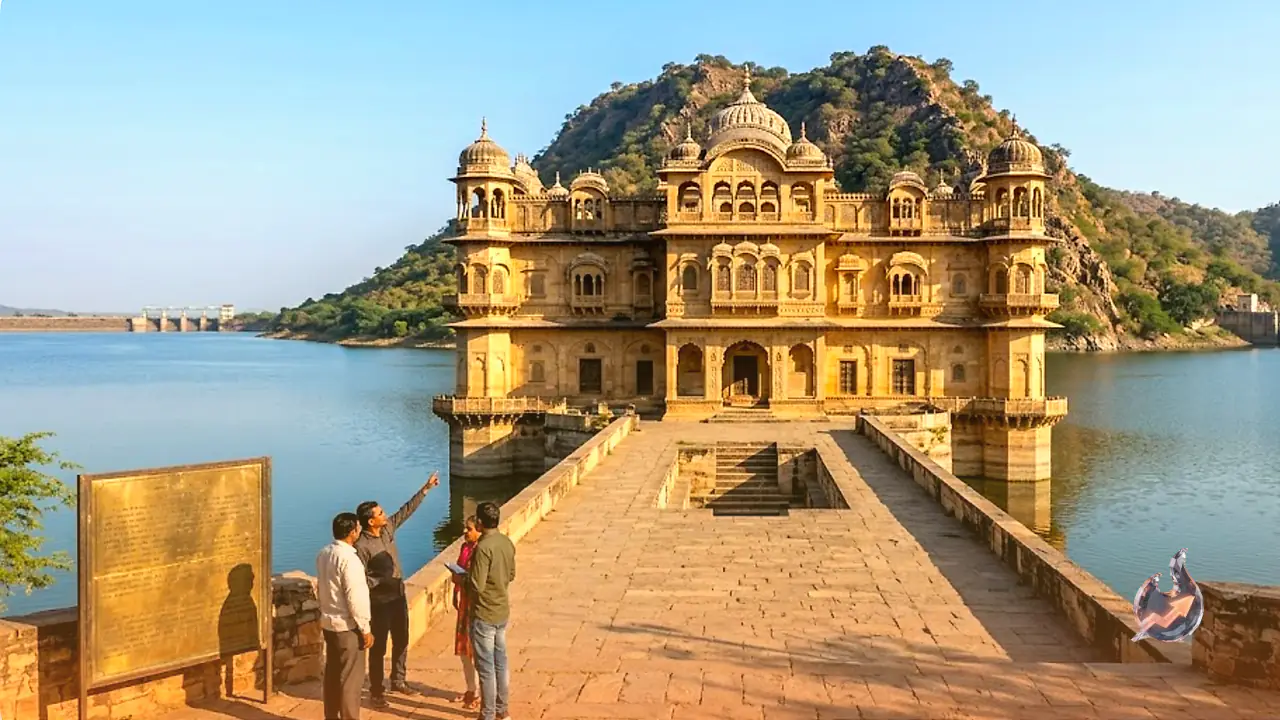

Among the old monuments scattered across the land of Hadoti, Mahu's Moti Mahal still quietly tells the story of its proud past. Standing in the lap of a hill on the eastern bank of Bhimsagar, the palace continues to convey the splendour of princely life centuries later. The pages of history record that it was established around 1478 AD by Dhirajdev ji Khinchi, son of the valiant Khinchi ruler of Gagron, Achaldas ji Khinchi.
Dhirajdev gave this newly founded town the status of his capital, and the region soon grew into a major hub of political, administrative and cultural activity. In that era, the state of Mahu held sway over roughly fourteen hundred villages, a figure that alone speaks of its prosperity and influence.
A Grand Palace Built in Three Sections
Mahu's identity is tied to the magnificent Moti Mahal that stands here. Built in three sections, the palace is regarded as a peerless example of the architecture of its time. About one hundred and seventy-five feet long and sixty feet high, it announces its height and grandeur from a distance. Its huge entrance gate, tall ramparts and sturdy construction testify to the remarkable artistic vision of the craftsmen of that age.
The Puzzle of the Inscription
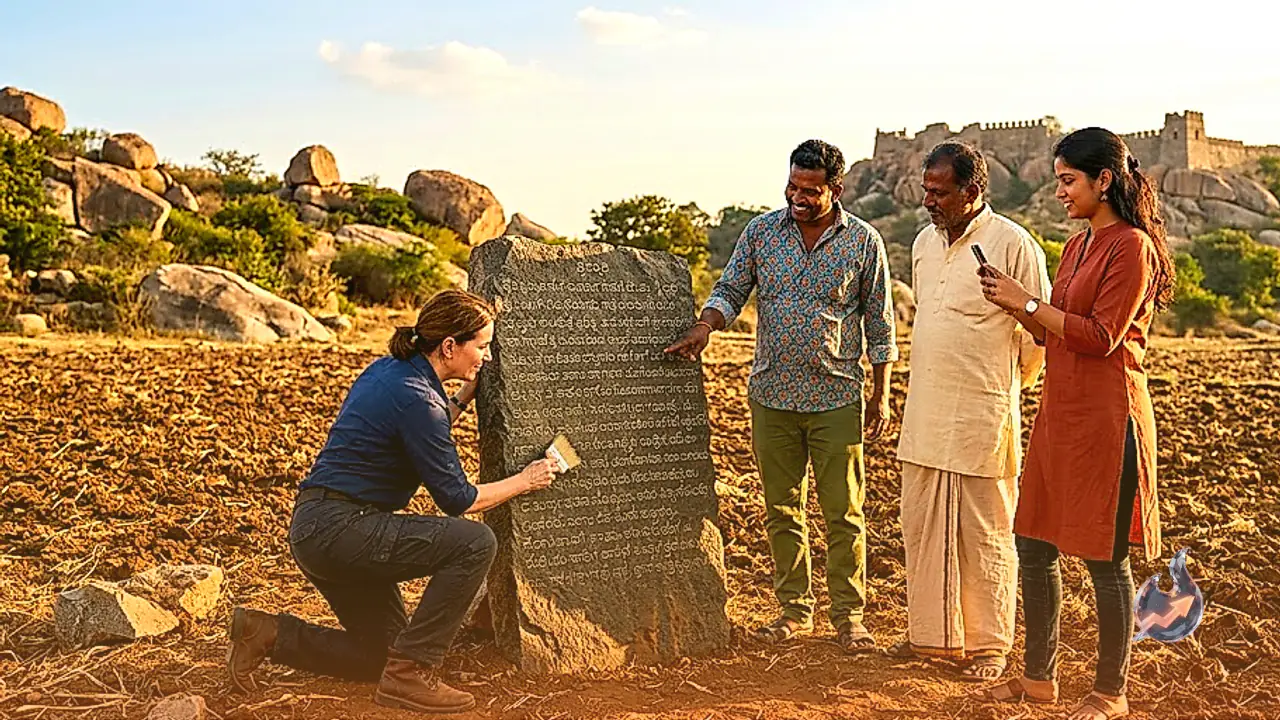
On one of the palace gates is an inscription carved in the Nagari script, mentioning Vikram Samvat 1768. Scholars believe this inscription may relate to some reconstruction, expansion or renovation of the palace, since Mahu is held to have been founded long before that date. This is precisely why the inscription remains a subject of special interest for historians and researchers.
The ravages of time may have reduced this royal palace partly to ruins, but its surviving remains still evoke the vibrancy of that era. Within the complex, the grand entrance gate, a temple, the darikhana, the kachahari and the remains of the royal palace are clearly visible. The idol of Rata Devi installed inside the palace stands as a unique symbol of local faith and religious tradition.
A Rare Meeting of Rajput and Mughal Styles
The palanquin-shaped roofs over the chambers at the rear of the palace, the decorated pillars and the delicate jharokhas present a fine example of the architectural skill of that age. Their design shows a rare fusion of Rajput and Mughal styles, where on one side there is Rajput grandeur and on the other the elegance and finesse of Mughal architecture.
Even today, the Moti Mahal is not merely a heap of stones and walls. It is a living document of Hadoti's cultural heritage, the glory of the Khinchi dynasty and the golden history of Rajasthan. Its silent walls seem to hold within them the tales of a bygone era, marked by an indelible imprint of valour, splendour and civilisation.
History Does Not Live in Books Alone
Mahu's Moti Mahal carries a beautiful message: that history does not survive only in texts and records, but also lives in the very breath of such old buildings, which, even after centuries have passed, keep softly narrating the untold story of their glorious past. Holding the pride of a bygone age, the palace is counted among the most important historical heritage sites of Jhalawar, and the inscription of Vikram Samvat 1768 carved on one of its gates still recounts the prestige of the Khinchi dynasty and its princely grandeur.