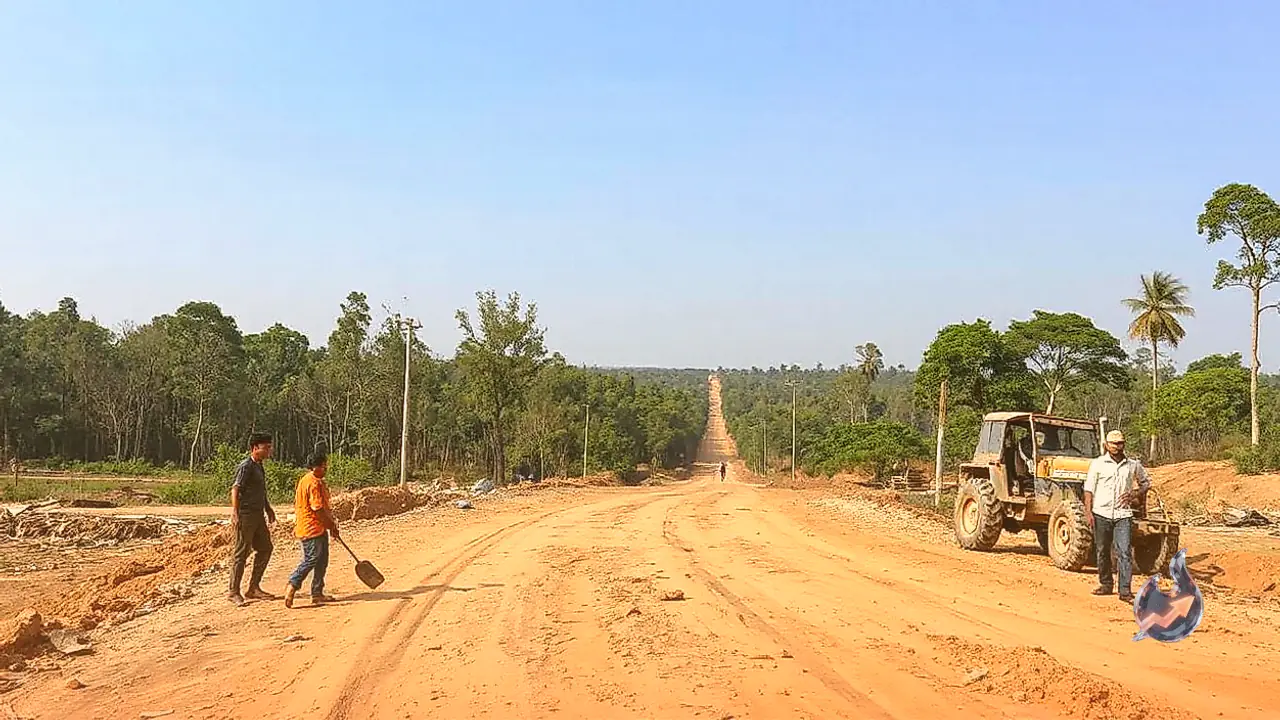



















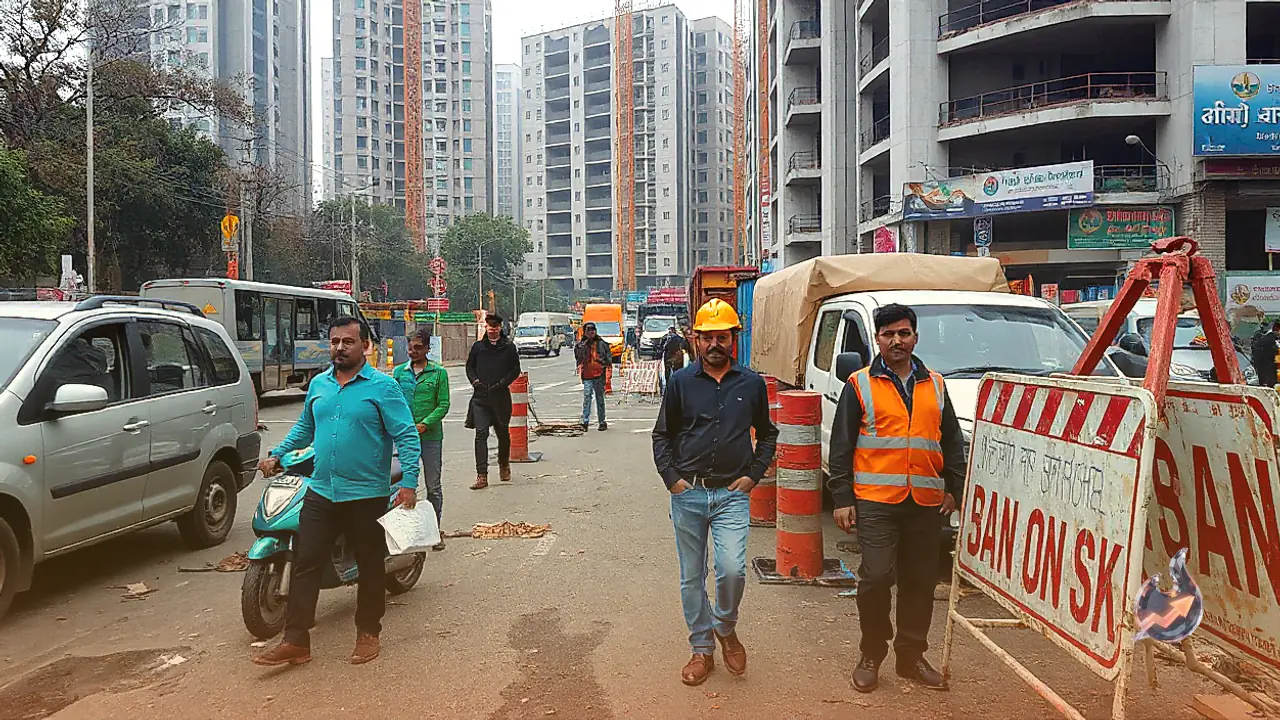

A fresh set of regulatory curbs is taking effect across the National Capital Region to counter the annual surge in winter air pollution. The central authorities have declared a complete prohibition on construction and demolition activities across Delhi and adjacent areas from November 5 to November 20, 2026. Under this 15-day restriction, all structural building, alteration, and leveling tasks will be suspended to keep airborne dust particles and particulate matter under check. The measure forms a core component of the seasonal winter action plan designed to mitigate hazardous smog episodes during the colder months.
Central Minister Inspects Integrated Surveillance Hub and Affirms Vehicle Restrictions
Union Environment Minister Bhupender Yadav carried out an inspection of the newly constructed PAVAN Integrated Command and Control Centre (PAVAN-I3C), set up by the Commission for Air Quality Management in Delhi. Addressing enforcement measures, he made it clear that there will be no exemptions or relaxation regarding the ban on non-Delhi registered BS-IV and older standard vehicles entering the capital. The minister noted that the centralized surveillance mechanism will enable enforcement agencies to identify non-compliant factories, severe traffic bottlenecks, and emission sources rapidly for prompt corrective action.
The announcement coincides with the rollout of Delhi's permanent winter anti-pollution regulatory framework starting November 1. This framework consolidates multiple seasonal containment restrictions into a unified regime that operates annually from November 1 through February 28.
Operational Roadmap of the Winter Action Plan Starting November 1
The winter action plan, coming into force on November 1, 2026, introduces a battery of curbs affecting commuters, workplaces, and project developers. Non-Delhi registered vehicles failing to meet BS-VI standards will be barred from entering the territory. Motorists seeking to purchase fuel at filling stations must present a valid Pollution Under Control (PUC) certificate. To ease vehicle congestion and lower peak emissions, offices are instructed to implement work-from-home arrangements for 50 percent of their workforce.
In an effort to discourage personal vehicle usage and encourage commuters toward public transit networks, authorized municipal parking facilities will double their parking fees throughout the winter period. Under the standing seasonal mandate, dust-generating demolition and construction jobs remain barred from November 1 through January 31. Furthermore, between December 10 and January 20, a near-total shutdown will apply to broader building activities. Essential emergency works and critical public infrastructure schemes are exempt from this freeze. Heavy vehicles transporting brick, sand, and other raw building materials will also face an entry embargo during the ban period.
GRAP Enforcement Thresholds and Environmental Compensation Penalties
During the previous winter season, episodic halts were repeatedly invoked under different tiers of the Graded Response Action Plan (GRAP), with the final shutdown lasting from January 16 to January 22, 2026. Under the revised GRAP guidelines, when the Air Quality Index (AQI) climbs into the severe zone between 401 and 450, Stage-III provisions take effect, ordering an immediate halt to private construction and demolition tasks while permitting limited exemptions for linear public utility works.
When ambient conditions deteriorate beyond an AQI of 450 under Stage-IV, prohibitions expand to include public works, pausing development on expressways, flyovers, roads, bridges, electricity transmission cables, underground pipelines, and telecommunication infrastructure. Violators ignoring these directions face stringent environmental compensation fines assessed under the rules framed by the National Green Tribunal. The targeted halt on building activities represents an added layer of intervention alongside GRAP protocols.
Round-the-Clock Monitoring Through PAVAN-I3C Technology
The monitoring apparatus at the PAVAN-I3C facility is built upon the operational premise of identification, analysis, and execution. The command centre synchronizes real-time streams covering local air quality metrics, factory discharges, meteorological shifts, satellite imaging data, urban traffic speeds, public complaints, and environmental compliance logs.
The surveillance grid pulls continuous data from 111 air quality monitoring stations positioned across Delhi-NCR. It also integrates real-time trackers linked to over 2,300 industrial premises and more than 3,200 registered construction sites. Minister Bhupender Yadav observed that this tech-driven coordination represents a decisive transition from reactive crisis management toward predictive prevention, enabling ground teams to pinpoint violations instantaneously and enforce regulatory accountability.