
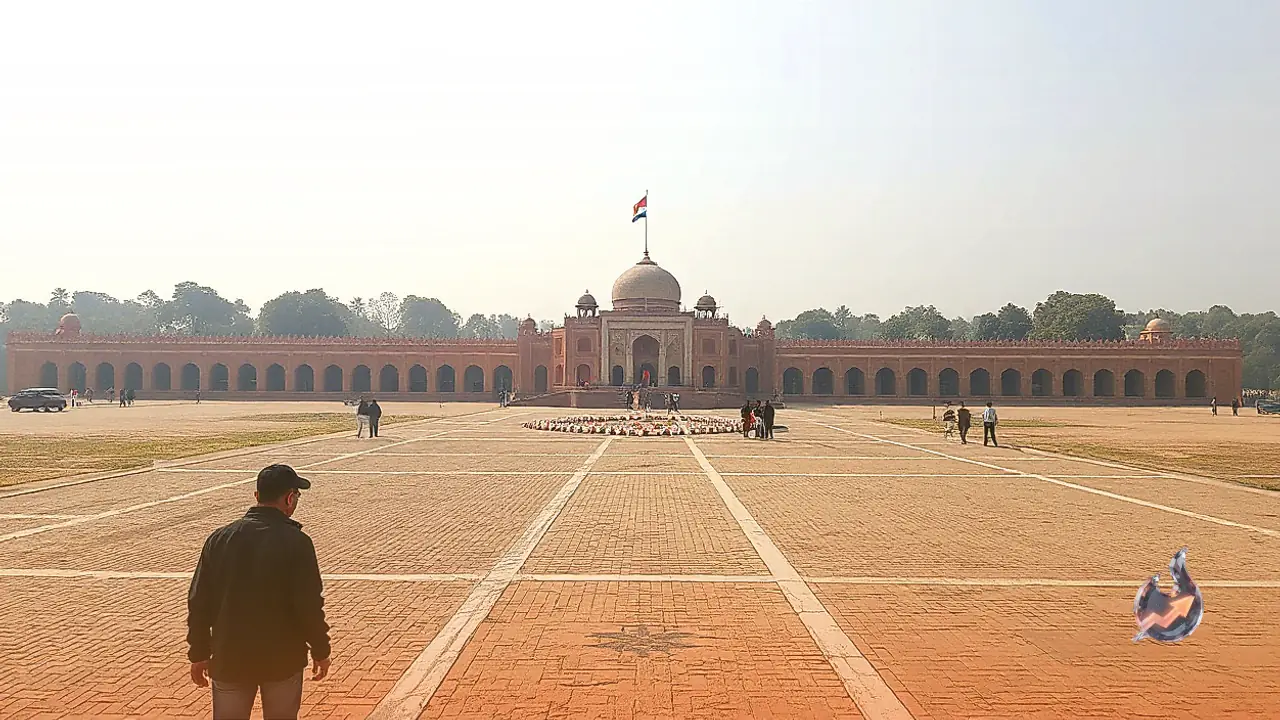


















The uprising of 1857 occupies a foundational place in the history of India's freedom struggle. While popular historical accounts often mark Meerut as the initial flashpoint of the rebellion, archival records preserved from Ambala Cantonment in Haryana present a significantly different chronology. Research indicates that Indian soldiers stationed in Ambala Cantonment revolted against British officers nearly nine hours prior to the outbreak in Meerut on May 10, 1857. To bring this often-overlooked chapter and the supreme sacrifices of freedom fighters to wider public attention, a sprawling martyr memorial has been built in Ambala Cantonment at an estimated cost of Rs 800 crore. Construction on the site is now finished, and Union Home Minister Amit Shah is scheduled to formally inaugurate the complex ahead of its public opening.
Twenty-Three Galleries Depicting Nationwide Strife and Gold Inscriptions
The vast complex features 23 dedicated galleries that trace the breadth of the anti-colonial resistance across the Indian subcontinent. Rather than focusing exclusively on Haryana and Ambala, these exhibition halls showcase events and confrontations from Meerut, Delhi, Punjab, Gujarat, and Jhansi. Rigorous research has led to the verified identification of more than 700 freedom fighters, compiling their names, their fathers' names, and their native villages. These records have been inscribed in golden lettering across the memorial walls to honor their memory.
A Broad Mass Movement Beyond a Military Mutiny
Historian Atul Yadav from the PG College in Ambala pointed out that viewing the events of 1857 merely as a military insurrection does not capture its true historical character. In his assessment, the upheaval transformed into a mass popular movement where all segments of society rose against foreign colonial dominance. Across Haryana, ordinary peasants, women, sepoys, and rural workers joined hands in defying imperial control. He added that the memorial, realised through the sustained efforts of Cabinet Minister Anil Vij, will offer younger generations a comprehensive understanding of India's collective resistance.
The Ambala Outbreak Preceding Meerut by Nine Hours
The primary scholarly foundation behind the memorial relies on the detailed historical investigations conducted by Dr. K.C. Yadav, the former head of the history department at Kurukshetra University. His findings document that on the morning of May 10, 1857, sepoys of the 5th and 60th Native Infantry stationed in Ambala Cantonment walked out of their barracks armed with weapons, roughly nine hours before similar action erupted in Meerut.
Furthermore, archival records preserved at the National Archives describe a tragic confrontation that unfolded in September 1857. Sepoys had been assembled on the parade ground when one Indian soldier allegedly shouted a warning to disperse, prompting European regiments to open immediate fire. Within an interval of just ten minutes, 135 sepoys were killed on the spot, 33 were captured and imprisoned, and roughly 40 managed to escape into the surrounding areas. Historians consider this episode one of the critical yet under-recognized sacrifices of the 1857 campaign.
Archival Records Sourced from London and Lahore
In designing the historical content for the site, researchers retrieved documentation from the National Archives and various domestic archaeological repositories, as well as institutional archives overseas. Significant materials were obtained from the library collections in London and historical records in Lahore. These verified documents served as the primary basis for etching the names of over 700 martyrs in gold. Authorities note that as further authentic historical documentation emerges, additional names will be inscribed on the memorial walls.
Immersive 360-Degree Projection and Digital Tributes
To recreate the atmosphere of the mid-nineteenth century, the facility integrates contemporary audiovisual systems throughout its exhibits. Visitors will encounter 360-degree projections, alongside coordinated sound and laser performances that depict turning points in the struggle against colonial authorities. The facility also includes a purpose-built digital tribute gallery where visitors can place their hands on interactive surfaces to honor the fallen soldiers, with the system recording each digital homage.
A 63-Metre Lotus Structure, Sky Cafe, and Supporting Infrastructure
The visual centerpiece of the site is a 63-metre-tall architectural installation styled in the shape of a blooming lotus flower. The structure houses two high-speed elevators that transport guests to an observation level featuring a sky cafe. The surrounding complex includes an open-air theater capable of accommodating 2,500 spectators, an indoor auditorium with seating for 300 people, and a dedicated helipad. To ensure continuous operations, an independent electrical substation and backup generators have been installed on the property.
Tour Logistics and Digital Ticketing Systems
Exploring the entire exhibition across all 23 galleries is anticipated to take around six hours. To facilitate orderly movement, visitors will be guided through the halls in batches of 40 people. Entry passes can be reserved online via an official website and a dedicated mobile application. Additionally, eight on-site retail outlets have been set up to sell books, souvenirs, and replica artifacts, making the memorial an educational and cultural landmark dedicated to preserving the nationwide legacy of 1857.