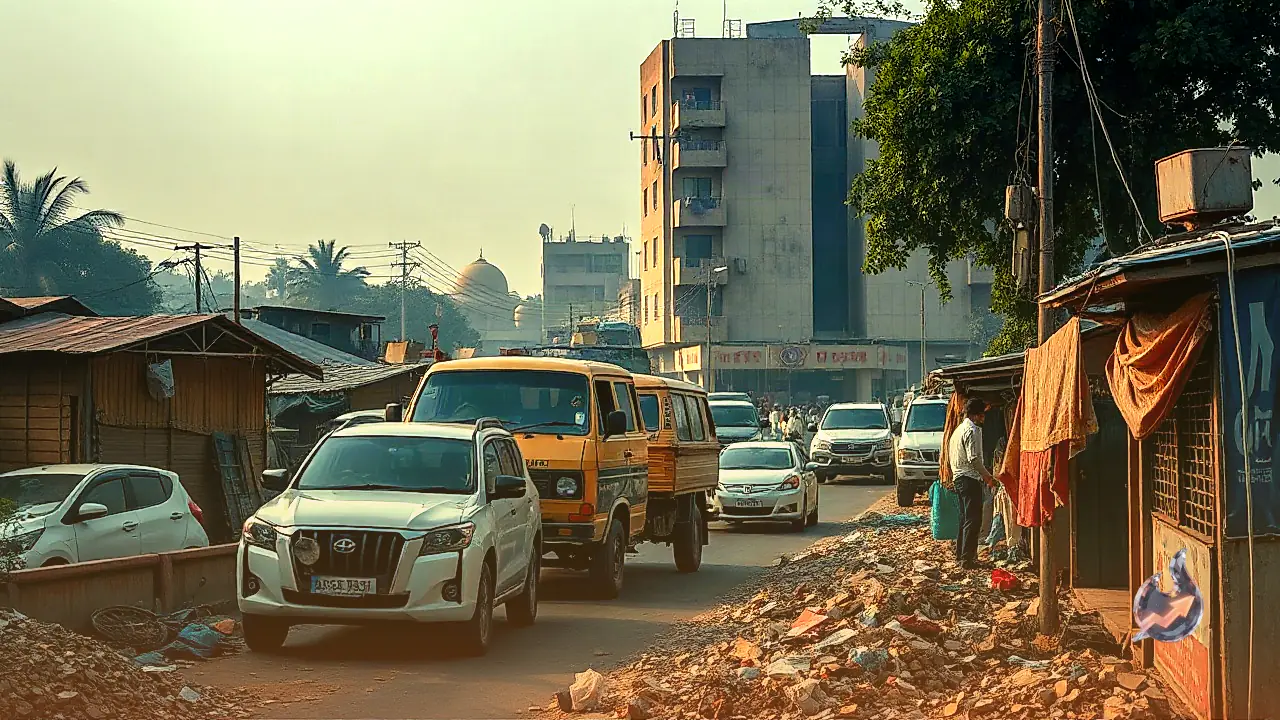





















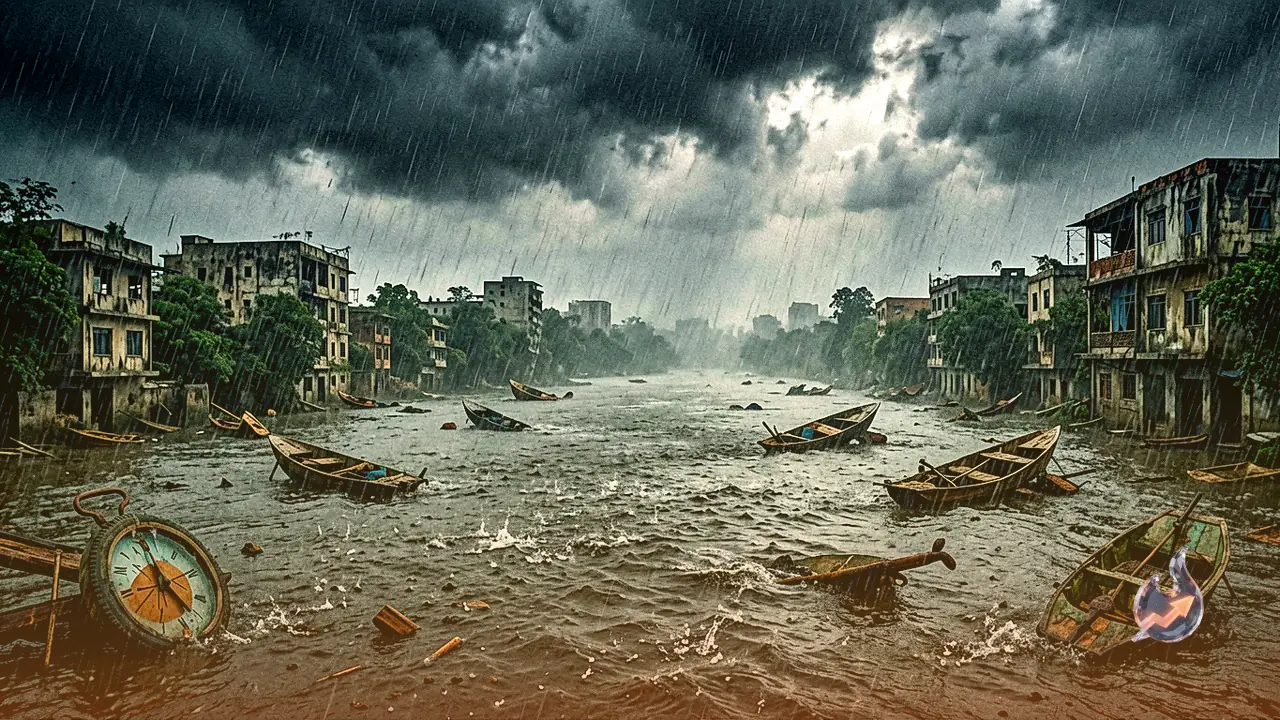

Heavy monsoon downpours in India's capital frequently transform busy thoroughfares into wide waterlogged stretches, reducing vehicular traffic to a crawl, creating overwhelming noise from blaring horns, and turning short routine commutes into agonizing hours-long delays. Beyond the immediate gridlock and commuter misery lies a far more severe structural and environmental hazard. A comprehensive research study released by the Council on Energy, Environment and Water (CEEW) warns that shifting precipitation patterns are rapidly pushing Delhi toward catastrophic urban flooding, raising the frightening possibility of major parts of the metropolis being submerged under water.
A Decade of Data Reveals Erratic Rainfall Patterns
An examination of weather records spanning the last 10 years highlights a dramatic transformation in how rain falls over the national capital. Rather than receiving steady and evenly distributed precipitation throughout the monsoon season, Delhi now experiences extreme fluctuations. The city frequently undergoes prolonged dry spells with minimal rainfall, punctuated by sudden, violent cloudbursts that dump massive volumes of water in brief intervals. This high-intensity precipitation instantly overpowers the metropolitan drainage network, triggering rapid inundation across vulnerable urban corridors.
Widespread Monsoon Uncertainty Across Northern India
Analyzing these climate shifts, Dr. Vishwas Chitale, a Fellow at CEEW, explained that the torrential rains witnessed across Delhi-NCR are part of a much broader trend of rising monsoon instability. Weather advisories from the India Meteorological Department (IMD) covering Haryana, Chandigarh, and Delhi repeatedly demonstrate how extreme precipitation events cause immediate waterlogging and halt urban transportation. Long-term monsoon analysis indicates that precipitation is not merely shifting between overall higher or lower volumes, but its precise timing, spatial distribution, and overall intensity have become increasingly unpredictable.
Heavy Precipitation Spikes Across 64 Percent of Tehsils
When evaluated against the historical baseline period from 1982 to 2011, national climate metrics show that 64% of tehsils in India experienced a sharp rise in heavy rainfall days over the past decade. Furthermore, 23% of districts across the country, including New Delhi, recorded a dangerous dual tendency, experiencing an increase in both historically dry years and exceptionally wet years. This erratic behavior reflects a significant breakdown in traditional seasonal climate balance.
Concretization Erodes Soil Water Absorption Capacity
For densely populated and heavily built-up zones such as Delhi-NCR, intense short-duration rainfall events present severe structural challenges. Decades of aggressive urbanization and concrete paving have drastically reduced the natural soil surface capable of absorbing rainwater. As a result, storm run-off rushes directly onto roads and into aging drainage systems that lack the capacity to handle high volume surges, leading to widespread urban flooding, disruption of essential municipal services, and gridlocked transport channels.
Key Recommendations for Urban Flood Resilience
To prevent future urban catastrophes, environmental experts urge city planners and municipal leaders to stop relying solely on total seasonal rainfall averages when designing infrastructure. Urban planning must instead adapt specifically to high-intensity, short-duration storm events. Corrective strategies must prioritize building climate-resilient stormwater drainage systems, restoring natural drainage channels and urban water bodies, expanding rainwater harvesting infrastructure, and deploying localized early warning systems to alert communities before floodwaters rise.