
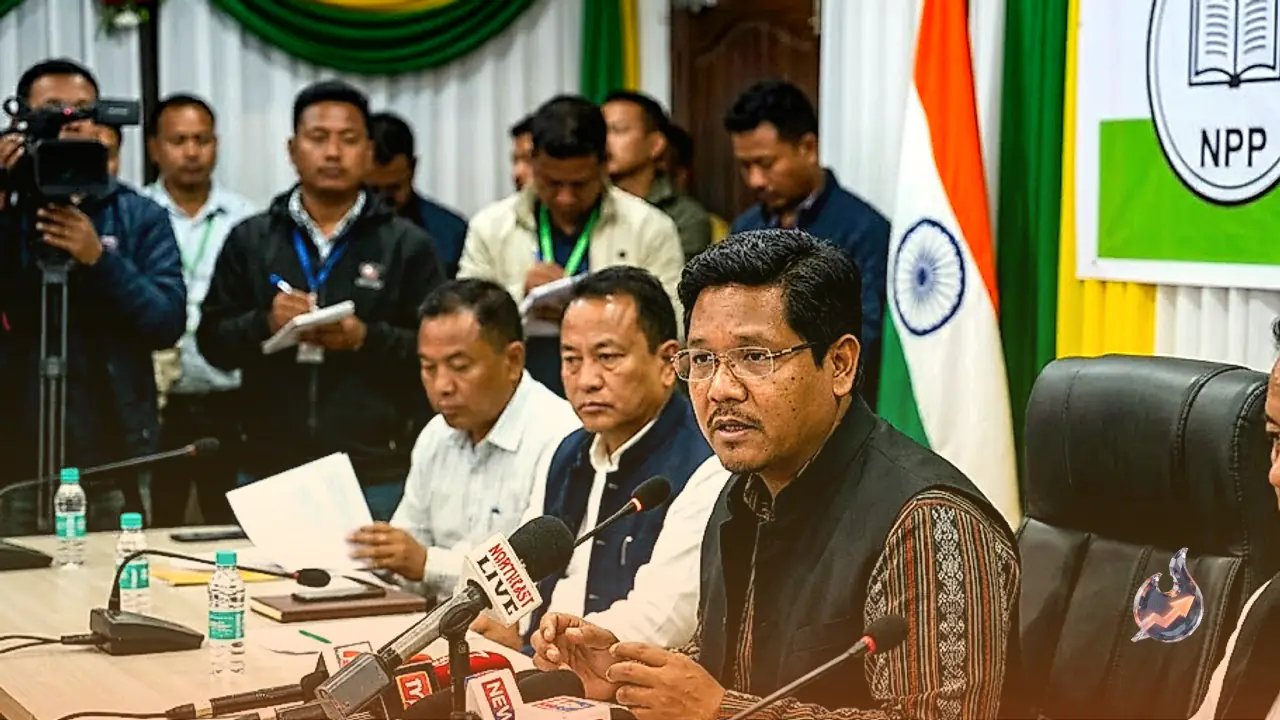

















New Delhi has sent an unequivocal message across global diplomatic circles regarding its strategic autonomy and foreign policy priorities. Policymakers in Washington had operated under the premise that India would gradually align with their bloc and distance itself from its longstanding relationship with Russia. However, recent remarks by External Affairs Minister S. Jaishankar at the Munich Leaders Meeting have challenged that assessment. Jaishankar characterized the United States as an increasingly solitary superpower in the evolving world order. Simultaneously, Union Finance Minister Nirmala Sitharaman stated that trade negotiations between India and the United States have reached a standstill. Together, these positions demonstrate that India is unwilling to bend to external geopolitical pressures, prioritizing its core national interests and decades-long strategic ties with Moscow.
Moving Beyond Strategic Hesitation and Passive Diplomacy
To contextualize the evolution of modern Indian diplomacy, External Affairs Minister S. Jaishankar drew a compelling parallel in his book, The India Way, referencing Satyajit Ray's celebrated cinematic work Shatranj Ke Khilari. In that narrative, two aristocrats of Awadh remain completely absorbed in their game of chess even as the East India Company systematically assumes control over their state. Jaishankar utilized this historical metaphor to emphasize that remaining detached or passive amidst global upheaval can prove perilous for any sovereign nation.
Prominent Indian strategist Jasjit Singh had earlier diagnosed India's historical diplomatic reluctance as the Panipat Syndrome. This term described a strategic posture where policy responses remained strictly defensive and hesitant until a crisis arrived directly at the doorstep, rather than taking proactive measures to shape external conditions.
Contemporary Indian foreign policy has discarded that defensive mindset. New Delhi no longer waits to react to the strategic maneuvers of other global powers, choosing instead to define its own trajectory. A persistent limitation of Western diplomacy has been the tendency to view complex global developments exclusively through its own geopolitical prism. Western capitals expected India to sever ties with Moscow following the conflict in Ukraine. New Delhi rejected these demands, asserting that it would not function as a client state to any foreign power.
Recalling Decades of Tested Partnership in Munich
Addressing international delegates at the Munich Leaders Meeting, S. Jaishankar articulated the deep historical roots anchoring India-Russia relations. He explicitly stated that bilateral relations have remained exceptionally robust since the 1950s, emphasizing that this shared history cannot simply be set aside. His remarks directly addressed Western critics urging India to overlook its historical ties.
Jaishankar recalled that during critical junctures when India's sovereignty and territorial integrity faced imminent threats, the Soviet Union consistently provided steadfast backing. During that same historical era, the United States and several Western partners were actively supporting a military dictatorship in India's immediate neighborhood.
The events surrounding the 1971 liberation war remain a pivotal chapter in South Asian history. In that confrontation, the United States dispatched its Seventh Naval Fleet into the Bay of Bengal to apply strategic pressure on New Delhi. Had Moscow not deployed its nuclear submarine flotilla during that critical window, the strategic outcome across the subcontinent could have differed significantly.
Furthermore, whenever Western countries sought to challenge India's position on Jammu and Kashmir at the United Nations, Soviet vetoes consistently served as an essential diplomatic safeguard. Historical precedent has shown that Moscow remained a dependable partner in times of crisis, while Western policies frequently fluctuated based on immediate political convenience.
Exposing Inconsistencies in Global Energy Politics
During an address in Finland, the External Affairs Minister highlighted the stark contradictions in Western stances regarding energy procurement. When the conflict in Ukraine first erupted, Washington initially preferred that India purchase discounted Russian crude oil to preserve stability across international energy markets and prevent severe supply shortages. The underlying concern was that abruptly removing Russian barrels from the global supply pool would cause worldwide oil prices to spike uncontrollably.
Yet, once India expanded its crude oil imports to protect the economic security of its 1.4 billion citizens, political figures and media outlets in Washington shifted their narrative, leveling criticism and raising allegations regarding sanctions compliance.
Commenting on these contradictory demands, Jaishankar remarked that nations should refrain from cloaking self-interest in lofty moral principles. He pointed out that policies shifted depending on convenience, treating actions as acceptable when beneficial to Western markets and problematic when pursued by others. Jaishankar emphasized that seasoned global actors recognize the underlying realities at play. India's fundamental priority remains ensuring affordable and secure energy supplies for its population rather than conforming to rhetorical standards set abroad.
Stalled Trade Discussions and a Changing Superpower Dynamic
Union Finance Minister Nirmala Sitharaman's confirmation that trade negotiations between India and the United States have hit an impasse points to deeper structural frictions. Under Donald Trump's leadership, American economic policy has become increasingly transactional and unpredictable. Washington has consistently leveraged its vast economic scale and the primacy of the dollar as instruments of international pressure.
This approach has involved imposing unilateral tariffs on close partners while demanding extensive market concessions in return. As a consequence of these aggressive trade tactics, the United States has found itself operating as an increasingly isolated superpower on the multilateral stage, disrupting the very rules-based trading frameworks it historically championed.
In contrast, European diplomacy has displayed a degree of pragmatic adaptation following initial frictions. India had firmly reminded European interlocutors that their regional priorities do not automatically constitute the primary concerns of the entire world. Over time, European partners recognized New Delhi's indispensable geopolitical weight, adjusting their engagement to respect India's non-aligned and multi-vector foreign policy approach.