


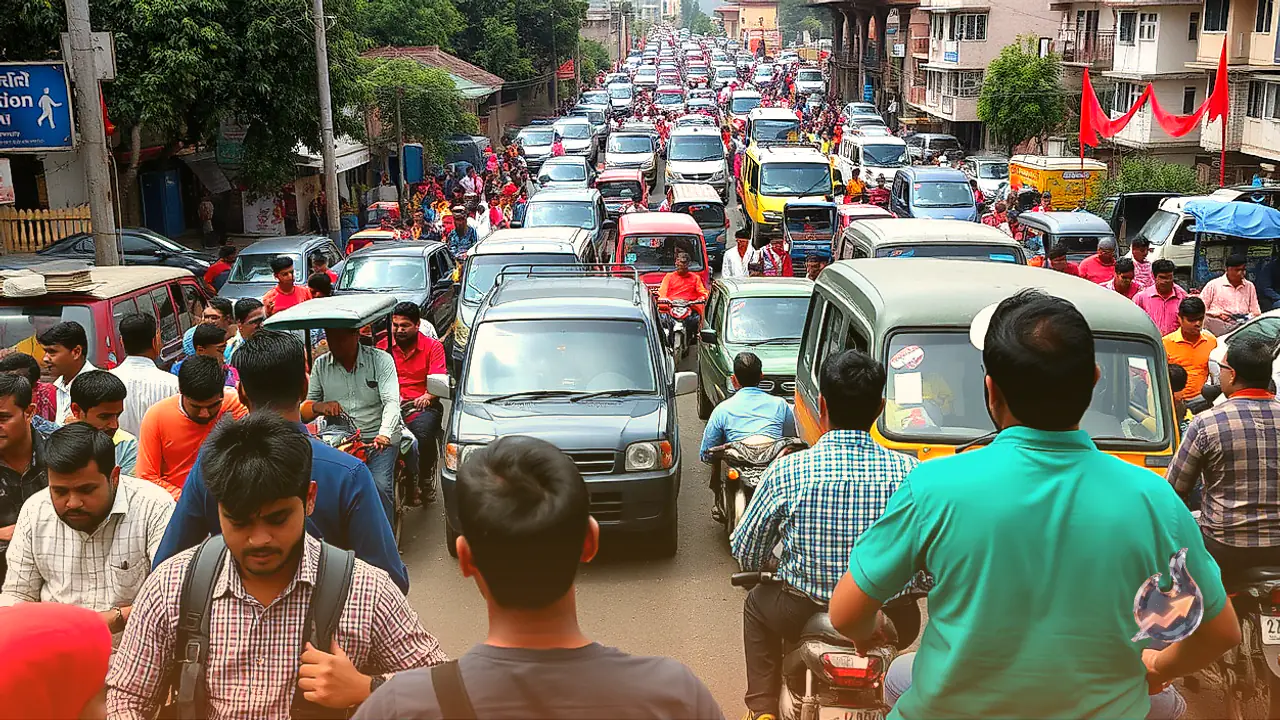














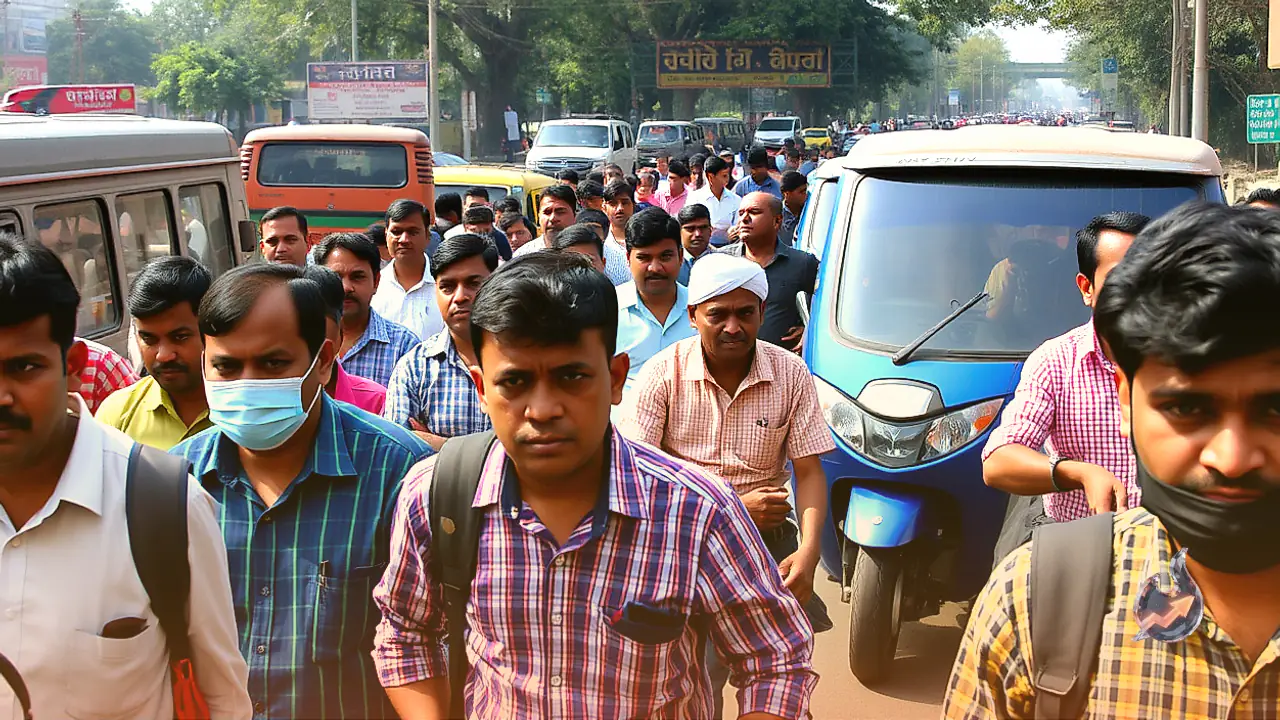

Opened to traffic on September 29 to provide a smooth, signal-free connection between Mayur Vihar and AIIMS, the Barapullah Phase 3 elevated corridor has found itself at the centre of intense public scrutiny due to persistent gridlock. Designed to slash travel times across the capital, the elevated stretch is witnessing severe vehicular bottlenecks on a daily basis, turning what was promised to be a matter of minutes into hours of crawling traffic. The immense vehicular load on this elevated road has made travel far more arduous and costly for commuters than using conventional ground routes. This unrelenting congestion has prompted observers and commuters to draw comparisons with the city's bus rapid transit corridor, a project that was launched with great promise but eventually turned into an unmanageable headache.
How South Delhi's Bus Rapid Transit Experiment Began
The city's Bus Rapid Transit (BRT) network was officially launched on April 20, 2008. The Sheila Dikshit-led Congress administration constructed the dedicated transit corridor along a 5.8-kilometre main road stretching from Ambedkar Nagar to Moolchand in South Delhi. Built at an approximate cost of 150 crore rupees ahead of the 2010 Commonwealth Games, the initiative was designed to modernise public transport infrastructure and encourage citizens to rely more on mass transit. However, it ended up becoming a notable urban planning failure and had to be decommissioned.
Global Inspiration and Priority for Public Buses
At the time of conceptualising the project, the volume of private vehicles across the city was multiplying rapidly, turning road congestion into an everyday crisis. Buses, the primary mode of public transit, routinely found themselves trapped in dense general traffic, discouraging people from using mass transit. To counter this, the government devised a dedicated lane strategy so buses could travel rapidly without being impeded by private traffic. Alongside the central bus lane, dedicated infrastructure was also created for non-motorised transit, including cyclists and pedestrians.
To design this framework, planners drew direct inspiration from successful international transit networks operating in cities such as Bogota in Colombia and Curitiba in Brazil. The official expectation was that shifting commuters towards rapid buses would significantly curb vehicular pollution while offering a faster and economical commuting choice.
Design Flaws, Accidents, and Public Backlash
In practice, however, the project created massive operational bottlenecks. Having bus shelters positioned in the middle of the carriageway forced pedestrians to negotiate oncoming traffic, creating grave safety risks. At the same time, the road space allocated for private cars and two-wheelers was drastically narrowed, triggering massive, unrelenting traffic jams. Traffic lights along the corridor failed to function effectively, and strict lane discipline could not be maintained. As a consequence, neither could buses maintain high speeds nor could private vehicles move freely. The corridor also witnessed several fatal accidents involving pedestrians, sparking widespread public outrage and dragging the infrastructure project into legal battles before the courts.
Dismantling of the Eight-Year-Old Corridor
Faced with persistent public resentment, recurring accidents, and evident design failures, the Aam Aadmi Party government decided in 2015 to scrap the corridor. The Delhi Cabinet granted formal approval for its demolition in July 2015, and by 2016 the physical structures along the route were completely dismantled. The administration conceded that while bus rapid transit systems had proven successful elsewhere globally, the model was a failure under local conditions. Thus, an infrastructure experiment that lasted eight years came to an end due to engineering flaws, severe bottlenecks, and accidents.
Does Barapullah Phase 3 Risk Repeating Past Errors
With massive traffic tailbacks greeting commuters right from the opening of the Barapullah Phase 3 elevated road, questions are now being raised whether this modern corridor faces a similar fate. Seeing the daily chaos, commuters are actively drawing parallels to the past. In response, Delhi Traffic Police stated that efforts are underway to address the bottleneck. Traffic authorities noted that monitoring is ongoing and live traffic updates will also be shared on Google. They further stated that vehicular diversions will be implemented wherever necessary to smooth out traffic flow along the stretch.