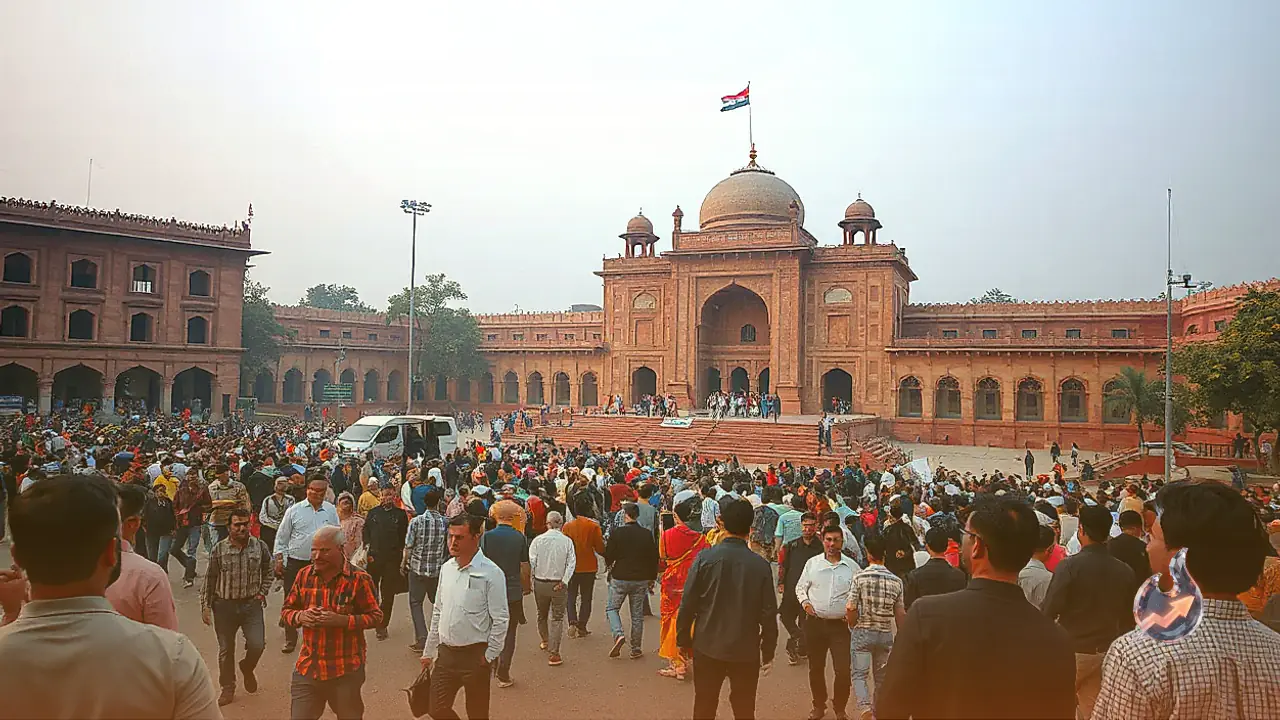




















Groundwork on the comprehensive modernisation of the New Delhi Railway Station has gained significant momentum to equip the national capital's primary transit hub for future passenger loads. Operating with an estimated investment of approximately Rs 2500 crore, the project aims to completely restructure the 65-year-old railway premises. The station currently manages an average daily footfall of around 5 lakh passengers and handles the movement of roughly 350 to 400 trains every single day, while housing the world's largest route relay interlocking system. To resolve long-standing congestion and build contemporary infrastructure, extensive demolition and rebuilding works are actively underway across both ends of the facility.
Foundation and Structural Work on the Paharganj Flank
On the Paharganj exit side, teams have already concluded the demolition of major portions of the old building complex. Following the complete clearance of the discarded structures, ground excavation has been completed, allowing workers to initiate concrete pouring operations. Foundation construction for the upcoming terminal building is currently progressing, with an extensive network of steel reinforcement bars already laid out across a large sector of the site. Because the operational underground tunnel network of Delhi Metro runs directly beneath the railway premises, civil engineering teams are carrying out heavy drilling and foundation tasks under tight safety protocols to prevent any structural impact on metro transit.
Platform Operations and Traffic Routing Adjustments
Active construction continues along the primary pathway connecting the Paharganj approach to Platform 1, with parallel subterranean and surface operations taking place around Platform 3. Despite the scale of ongoing civil work, existing passenger amenities and basic services remain operational across the station. However, given the vast scale of structural renovations, transit authorities anticipate that the departure and termination of selected trains might eventually be diverted away from New Delhi to secondary stations across the capital. In light of the ongoing construction zones and re-routed movement corridors, commuters are advised to reach the station at least 1 hour prior to their scheduled departure times.
Phased Expansion Across Ajmeri Gate and Platform Zones
Redevelopment activities are also advancing simultaneously on the opposite flank near Ajmeri Gate, covering the vicinity of Platform 16. The entire overhaul has been divided into four sequential phases, with the inaugural phase focusing heavily on upgrading the zone spanning Platforms 1 to 5. Upon completion, the master development will encompass approximately 2.20 lakh square metres of built-up space, centered around a newly constructed building rising roughly 7 floors high. Two brand-new architectural structures will flank both sides of the station, incorporating spacious passenger waiting lounges, contemporary lifts, automated escalators, and dedicated retail shopping spaces.
Road Network, Multi-Level Parking, and Commercial Amenities
To eliminate severe vehicular bottlenecks on surrounding roads, planners have designed seven flyovers around the perimeter of the complex alongside two dedicated underground tunnels. Direct connectivity will be provided through an elevated road corridor that ensures seamless drop-off and pick-up access directly to transit gates. Security throughout the hub will be upgraded with modern access control systems, high-definition CCTV surveillance, and solar energy installations. A comprehensive vehicular parking network will incorporate slots for 40 buses on the Paharganj side, 50 buses at Ajmeri Gate, and a multi-level parking facility capable of accommodating 1,500 private cars. Furthermore, the completed complex will integrate corporate offices, banking outlets, retail malls, and restaurants within the station premises.