



















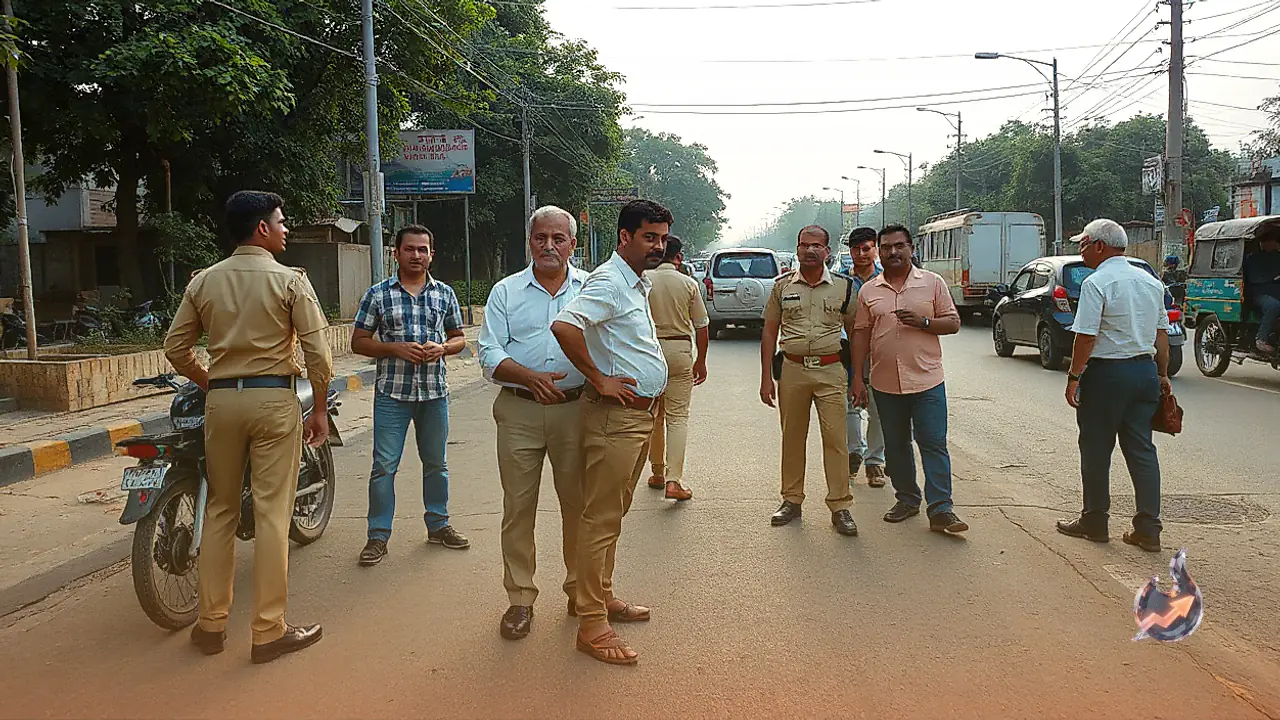

An interstate cyber fraud syndicate that duped unsuspecting vehicle owners by dispatching bogus traffic fine alerts and misleading promotional messages has been dismantled in the national capital. Law enforcement personnel investigating the widespread racket took five key operatives into custody after tracing their footprints across multiple regions of the country. Detailed inquiries revealed that the gang is tied to 544 formal cybercrime complaints involving financial misappropriation exceeding 10 crore rupees. The entire scheme relied heavily on an offshore application designed to trigger mass phishing communications.
The Digital Trap and Automated Incentives
The operational framework of the cyber ring involved distributing malicious software from abroad to generate deceptive notifications. Users who engaged with the application were lured with micro-incentives ranging between 1 and 3 rupees whenever they attempted to redeem credits. However, these nominal payoffs served merely as bait to take over basic device capabilities. The software secretly manipulated infected handsets to push out additional waves of phishing links without the immediate awareness of the device holders.
How a Single Complaint Unravelled the Syndicate
The initial breakthrough for investigators came following a complaint filed in November 2025. A commuter had clicked on an SMS link assuming it was a legitimate demand for settlement of a vehicular penalty, only to lose 2.21 lakh rupees directly from a credit card account. Digital forensic tracing of the transmitting SIM revealed it was registered under the identity of Nitesh Patel from Jabalpur in Madhya Pradesh. Subsequent tracking led officers to Patel's nephew, whose smartphone housed a dedicated APK called Wingo Cash, which had been retrieved through an invite on a WhatsApp group.
Background SMS Blasts and Global Banking Channels
Technical assessments established that whenever an individual triggered a reward redemption, the software initiated an automated sequence. During this execution phase, the smartphone display remained completely unresponsive for roughly 30 seconds. In that brief window, the program dispatched between 9 and 12 deceptive text messages to random recipients. These transmissions mimicked urgent pending traffic challan clearances, courier delivery verifications, or reward point updates. Officers mapped approximately 3,300 such messages during the investigation. The stolen capital was directed toward accounts situated in an international bank, moving through a sprawling matrix of mule bank accounts. Within a narrow span of three days, roughly 2 crore rupees had been dispersed across more than 41,000 active app users to sustain the operation.
Interstate Crackdown and Heavy Recoveries
Coordinated raids spanned several metropolitan centers and states, leading to the apprehension of Moti Singh Baghela, Harshpal, Vicky, Vishal Das Vaishnav, and Barjesh Kumar from locations across Mumbai, Lucknow, Delhi, Rajasthan, and Punjab. Raiding teams confiscated substantial infrastructure used to facilitate the illicit transactions. The seized inventory includes 15 digital devices, 59 debit cards, 52 bank passbooks and chequebooks, 14 corporate rubber stamps, 5 POS terminals, 8 QR code scanners, a gold chain, and a motor vehicle.