















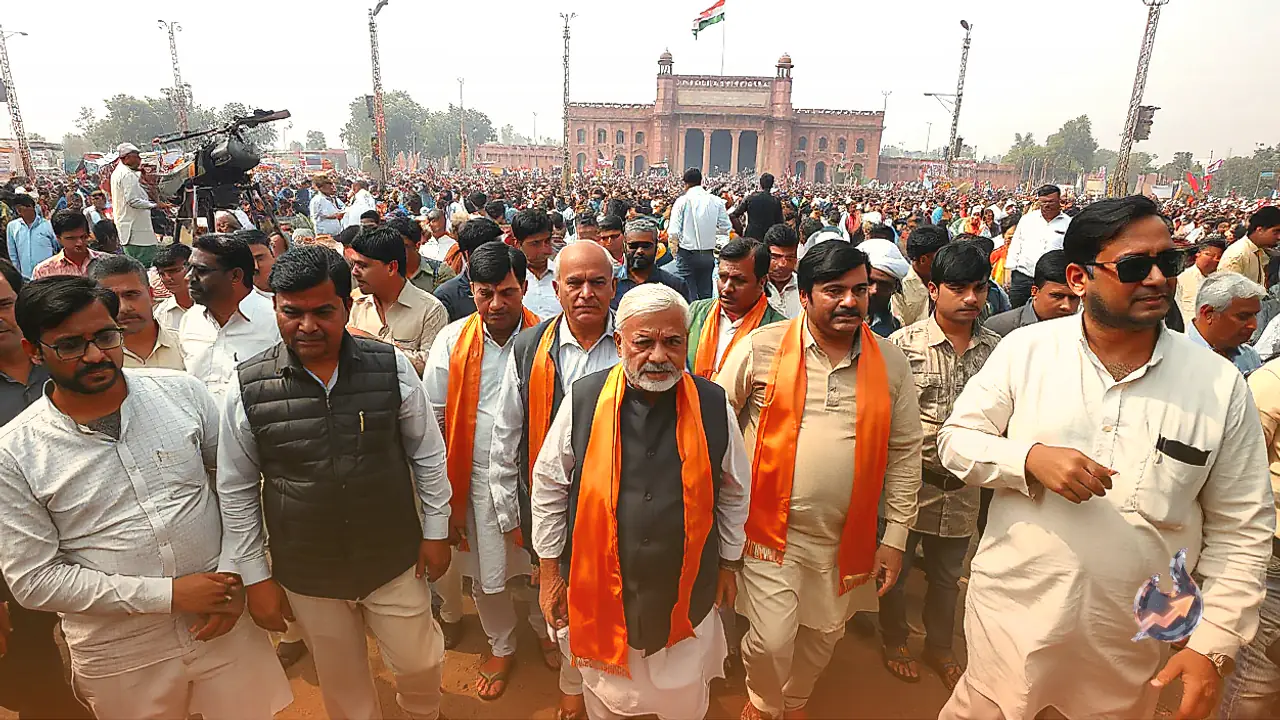

A coordinated opposition movement reached the heart of the national capital as political parties rallied together to question the transparency of the electoral mechanism. Centering their resistance on the Special Intensive Revision of voter rolls and demanding the exit of the Chief Election Commissioner, diverse political groups assembled on a shared platform to assert that institutional integrity remains non-negotiable in a democratic setup.
Leaders Prepare Motorcade in Open Vehicles
According to the logistical itinerary, allied members of parliament scheduled their initial gathering at the Constitution Club around 11:00 AM. Meanwhile, the most prominent figures of the coalition convened at the official residence of Congress President Mallikarjun Kharge located at 10 Rajaji Marg to calibrate their strategy. The convoy was slated to depart the residence at roughly 11:45 AM using specially arranged open-top transport designed to keep leaders accessible to onlookers, before kicking off the formal procession near the Minto Bridge intersection close to noon.
Ground Preparations and Weather Difficulties
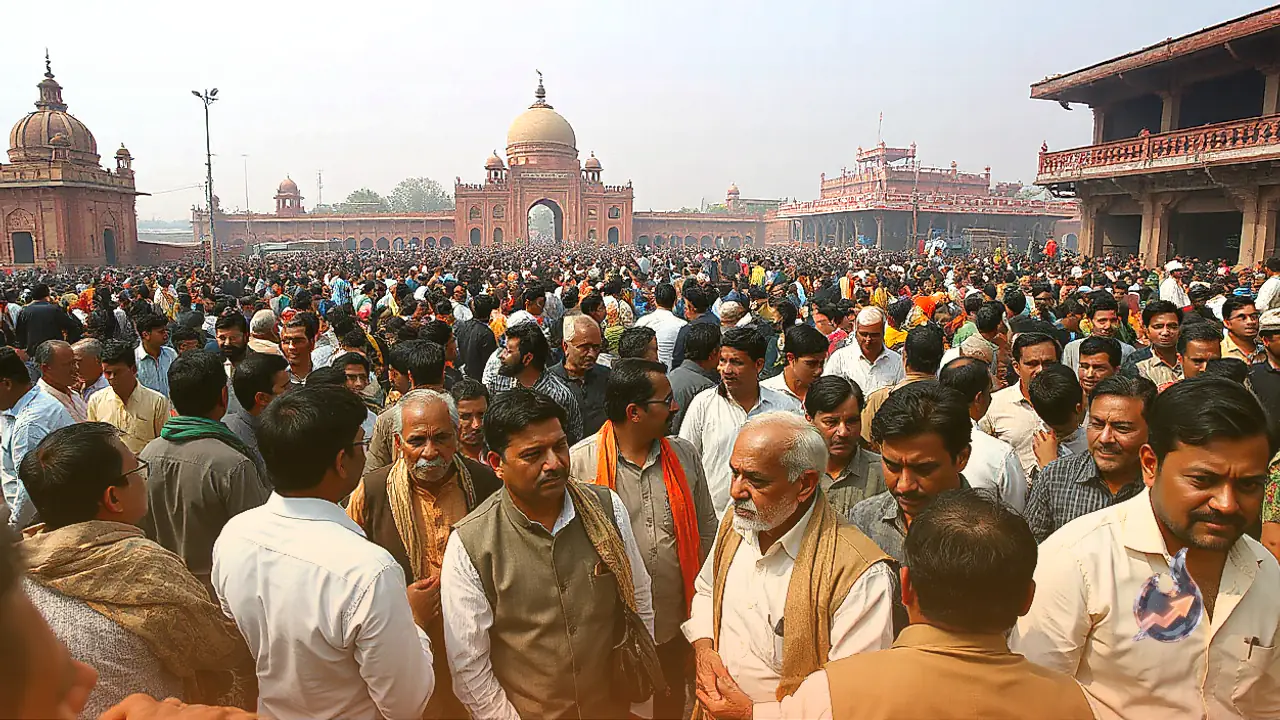
Supporters started arriving at the historic staging ground as early as 5:30 AM on Sunday. Although organizers laid out large seating arrangements with chairs across the venue, substantial patches of mud and standing rainwater persisted due to recent precipitation. Despite efforts to drain the site, water could not be removed entirely. These soggy conditions had previously forced the postponement of a mock parliamentary session by a full day. Administrative clearances stipulated that activities must strictly conclude between 10:00 AM and 5:00 PM, with no overnight occupancy permitted on the premises.
Strict Security Grid and Administrative Oversight
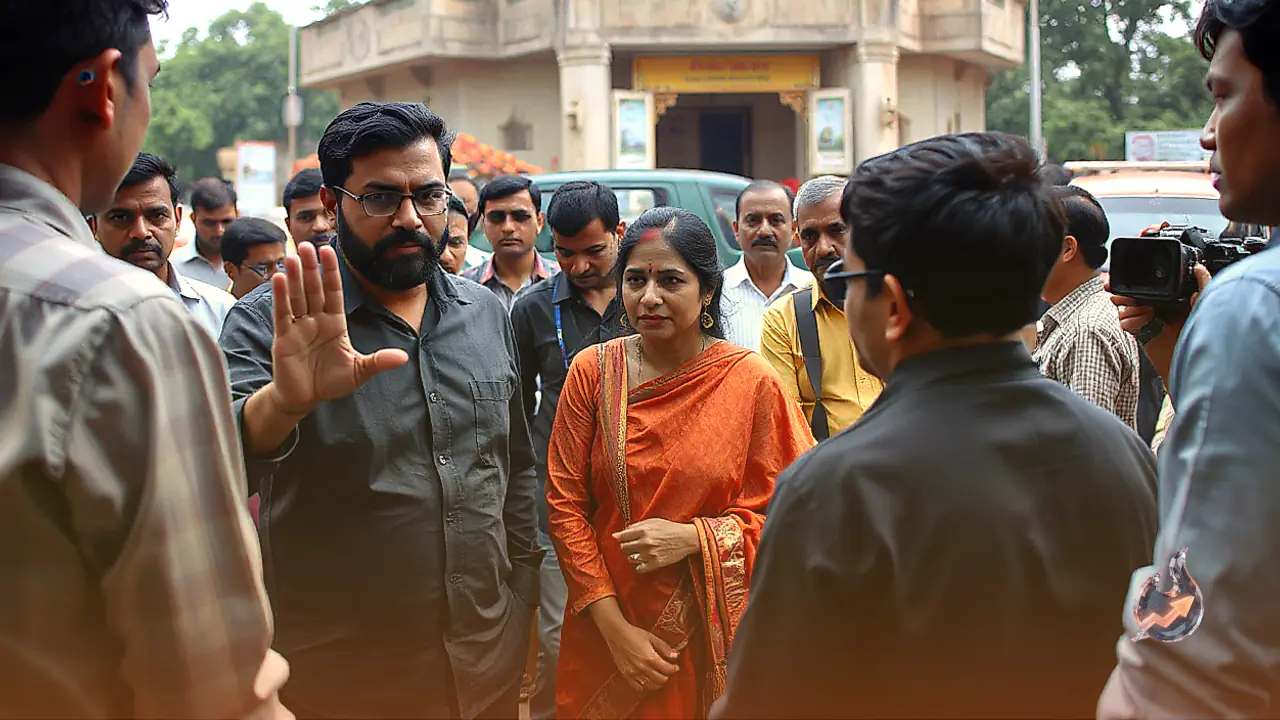
Central Delhi DCP Rohit Rajbir indicated that comprehensive safety arrangements were instituted to safeguard public order and minimize local inconvenience. Between 200 and 250 closed-circuit surveillance cameras were networked across the vicinity to maintain continuous observation over entry gates and assembly pockets. On-duty police personnel carry body-worn recording units and deploy aerial drones. Out of the eight gates surrounding the venue, only three have been designated for general public access, reserving distinct channels for high-profile attendees and senior law enforcement officers. Visitors face two separate screening checkpoints equipped with metal detectors and baggage scanners prior to entry.
Inside the perimeter, organizers partitioned the expanse into distinct enclosures with stationed police details and open corridors for monitoring. DCP Rohit Rajbir noted that security teams are coordinating closely with the control room established by the organizers. Furthermore, community volunteers from the Seva Dal, the Civil Defence Committee, and local resident welfare associations are assisting authorities with roadside crowd handling. Police estimate that seating and barricaded walkways limit operational capacity to between 30,000 and 40,000 attendees, despite an open-ground limit of 45,000 to 50,000 individuals.
Border Barricades and Inter-State Travel Delays
Many participants journeying across state boundaries encountered prolonged transit hold-ups. Travellers proceeding from Punjab reported heavy bottlenecks along the Haryana border, where law enforcement barriers created bottlenecks on arterial routes. Baljinder Singh, an attendee traveling from Firozpur, pointed out that thousands of vehicles remained stranded overnight due to barricading on the Punjab-Haryana corridor, causing widespread travel disruption.
Electoral Roll Dispute at the Heart of the Protest
The core dispute driving this public display involves the ongoing Special Intensive Revision of voter records. Coalition partners claim that legitimate voters are being systematically eliminated from the registries during this administrative exercise, prompting direct calls for Chief Election Commissioner Gyanesh Kumar to resign. Rahul Gandhi reiterated these criticisms by circulating footage from a mock parliament, claiming that clear evidence warrants administrative consequences. Conversely, both the election authority and the ruling party firmly denied any deliberate manipulation, asserting that deletions are confined strictly to deceased or relocated voters.
Trader Apprehensions and Calls to Support Local Commerce
Business representatives previously raised serious concerns regarding traffic paralysis in traditional market districts such as Chandni Chowk, Sadar Bazar, Karol Bagh, and Chawri Bazar. The Chamber of Trade and Industry had highlighted risks of reduced footfall and delivery disruptions, asking organizers to shift dates or relocate the rally. Responding to these fears, Rahul Gandhi maintained that peaceful public expressions can easily coexist with regular commercial activity, advising attendees visiting for the event during the festive season of Diwali, Chhath, and Bhai Dooj to spend money at neighborhood shops and support local shopkeepers.
Ruling Party Retaliation: Counter-Marches and Historical Critiques
The demonstration drew sharp counter-reactions from political opponents who organized separate initiatives. Dr. Archana Gupta, the Haryana state chief of the ruling party, characterized the opposition gathering as an attempt to erode faith in constitutional bodies and stoke domestic instability. She noted that national party president Nitin Nabin was arriving in the state on the occasion of Haryana Day.
Meanwhile, Delhi government minister Manjinder Singh Sirsa invoked the painful memories of the 1984 anti-Sikh violence to condemn the gathering. Demanding accountability, Sirsa launched a foot march titled 'Save Democracy, Remove Anarchy' moving from the Harinagar Depot toward the Tilak Nagar metro station, dedicating the demonstration to affected families who suffered losses during that period.
Independent Political Stances and Civil Society
Alongside formal political parties, various civil groups and social bodies were invited to participate. Not all aligned organizations chose to be physically present, however. Cockroach Janata Party founder Abhijeet Deepke announced that while his platform stands in complete solidarity with the demonstration, it would abstain from attending to protect its distinct identity as an autonomous and neutral entity.