




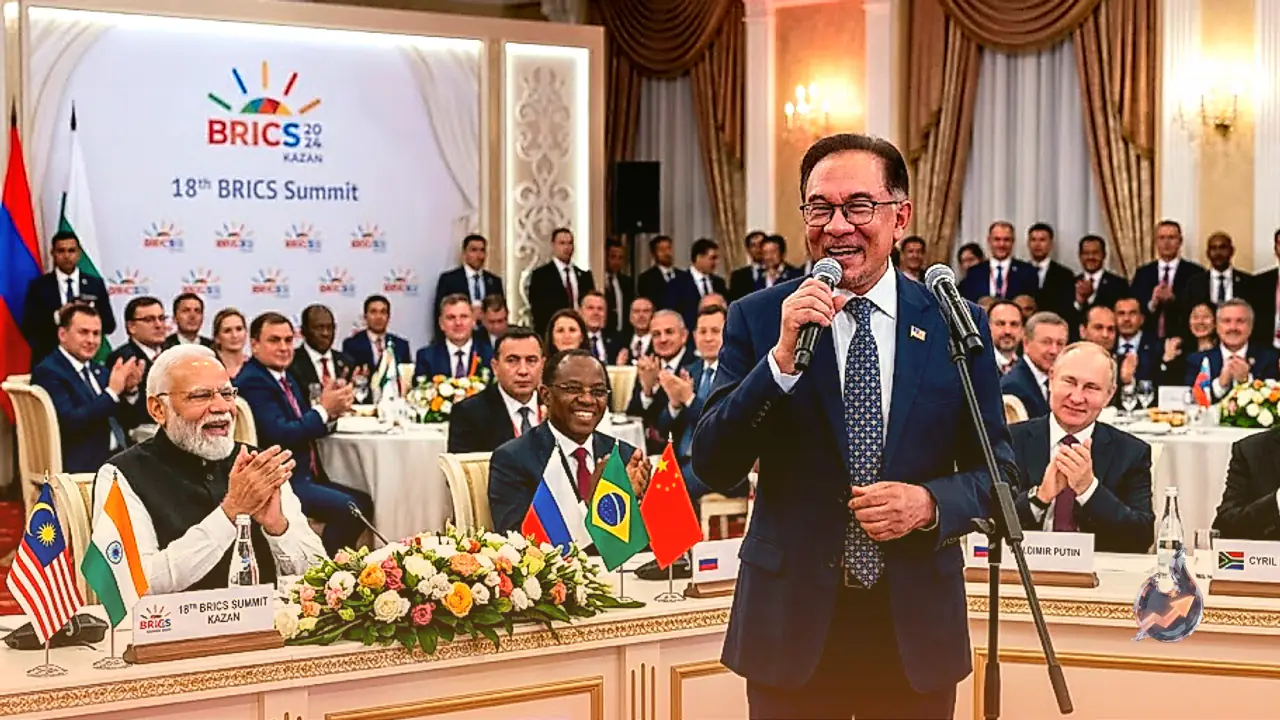

















India's long-standing push for a rightful and expanded presence in the United Nations Security Council received significant diplomatic reinforcement at the BRICS gathering. Within the adopted New Delhi Declaration, both Russia and China reiterated their endorsement of the aspirations held by India and Brazil to assume a more substantial role across the United Nations, particularly inside its top decision-making body. The development holds notable diplomatic weight, given that both Moscow and Beijing wield veto authority as permanent members of the council.
Decoding the Diplomatic Language of the Declaration
A closer reading of the agreed declaration shows that the language carefully reaffirms backing for the aspirations of India and Brazil rather than explicitly writing out an immediate grant of permanent seats. Nevertheless, securing the joint endorsement of two veto-wielding powers inside a collective document remains a noteworthy step. The declaration also grounded this position in precedent, specifically citing the Beijing Declaration of 2022 and the Johannesburg II Leaders Declaration adopted in 2023.
Speaking on the deliberations, BRICS Sherpa Sudhakar Dalela noted that discussions throughout the summit revealed a wide-ranging consensus on the pressing need for structural overhauls across the United Nations and the Security Council. He pointed out that member nations presented their views candidly, uniting around the central principle that the collective voice of the Global South must be substantially amplified in world affairs.
Dismantling the Pyramid of Privilege
During the summit proceedings, Prime Minister Narendra Modi delivered a pointed critique of the prevailing architecture governing international decision-making. He stressed that developing countries must be granted a much bigger seat at the table where global determinations are shaped. Drawing an analogy, the Prime Minister likened the existing framework to a pyramid where a handful of powerful nations occupy the apex, leaving countries at the base to bear the full consequences of decisions without holding any genuine leverage to influence them.
Prime Minister Narendra Modi asserted that this structure, which functions as a pyramid of privilege, must be deliberately transformed into a platform of partnership. His remarks underscored that developing nations can no longer be treated simply as rule-followers bound by standards authored elsewhere; instead, they must emerge as equal stakeholders shaping the rules that govern the global community.
The Stagnant Framework of 1945
The operational framework of the United Nations Security Council was established in 1945 in the immediate aftermath of the Second World War. Under that arrangement, five nations, namely China, France, Russia, the United Kingdom, and the United States, were granted permanent seats alongside veto capabilities. While nearly eight decades have elapsed since that settlement, the core permanent roster has remained completely frozen in time, even as economic weight, population dynamics, and geopolitical realities have undergone profound shifts.
India has persistently argued that its position among the most populous countries and its rapidly expanding economic stature warrant permanent inclusion. Leaving such dynamics unreflected in the council structure means the body fails to mirror contemporary realities, eroding its legitimacy and leaving it ill-equipped to address modern global crises.
Broader Representation for Developing Nations
Beyond individual claims, the New Delhi Declaration stressed that structural reform across the United Nations must be comprehensive, aimed at making the Security Council more democratic, representative, capable, and efficient. The leaders called for an increase in the presence of developing economies so the council can respond adequately to complex transnational emergencies.
The declaration also pushed for meaningful representation for emerging markets, developing countries, and the least developed nations across Africa, Asia, Latin America, and the Caribbean. According to the document, genuine multilateral credibility cannot survive unless international governance mechanisms are expanded to include those regions that have historically been sidelined from central decision-making.


