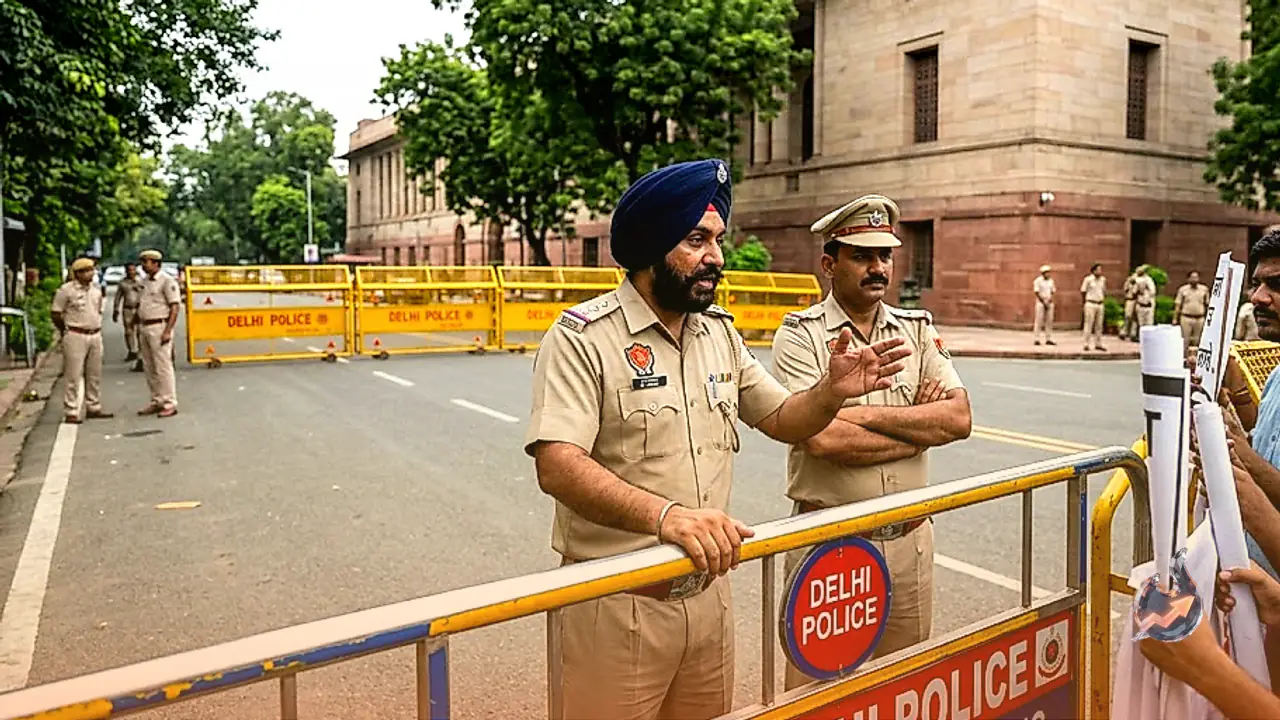
























In an important ruling delineating national sovereignty and immigration enforcement, the Delhi High Court has held that the possession of a valid visa does not bestow upon a foreign national an absolute or legally enforceable right to enter India. The court observed that the discretion to grant or refuse admission to any alien at the border remains squarely within the statutory and sovereign domain of the central government and its immigration authorities. This verdict was delivered while dismissing a legal challenge mounted by a woman from Turkmenistan who was turned away at the airport despite holding a valid business visa.
The Incident at Indira Gandhi International Airport
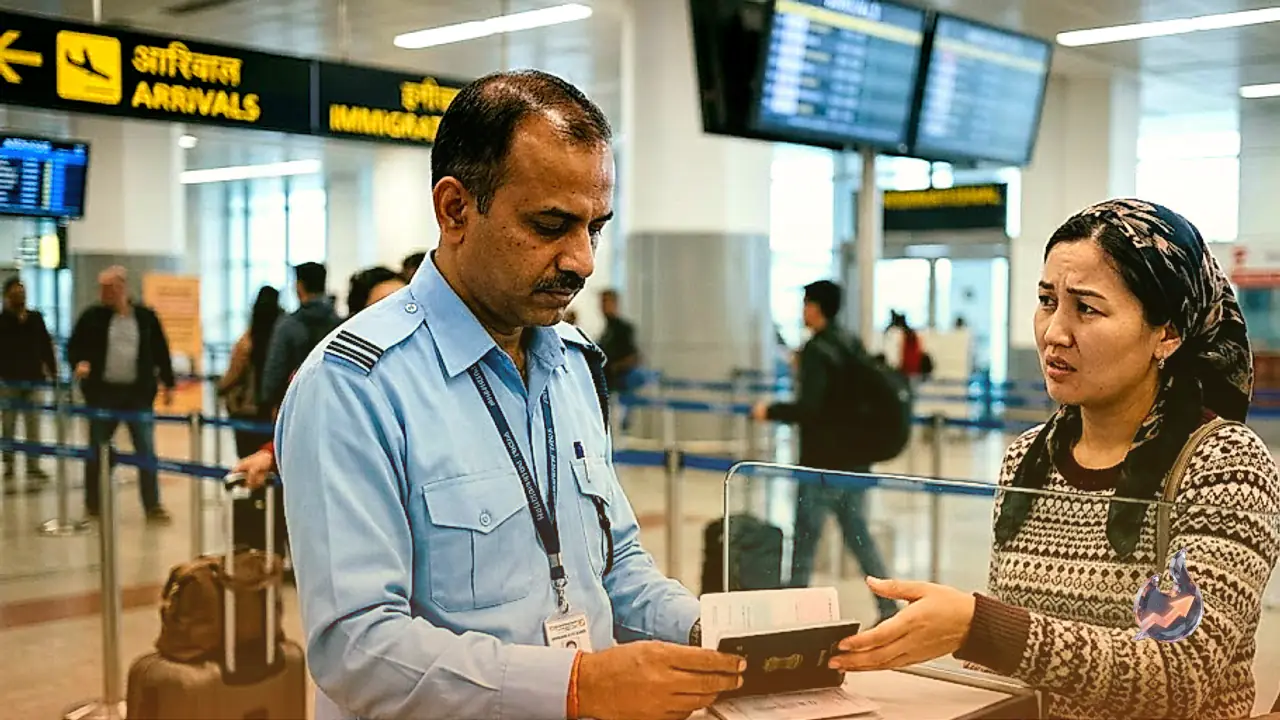
The controversy dates back to 25 March 2026, when the petitioner, a female citizen of Turkmenistan, arrived at Indira Gandhi International Airport in Delhi aboard an international flight alongside her husband. Both travellers carried travel papers, with the woman holding a valid Indian business visa. During border clearance procedures, immigration officials permitted her husband to enter the country without hindrance. However, authorities intercepted the woman right at the immigration counter, declined to clear her entry, and placed her on a return flight back to Turkmenistan that very day.
Aggrieved by the sudden deportation, the woman approached the High Court through a writ petition, contending that immigration officials had failed to communicate any formal reason for barring her entry. She further argued that subjecting her to differential treatment was unlawful and arbitrary, pointing out that her husband had arrived on the exact same flight under comparable circumstances and had been granted seamless entry into the country.
Government Cites 47 Trips in 2025 and Dubious Travel Patterns
Appearing on behalf of the central government, counsel submitted that obtaining an entry visa and actually being permitted to step foot onto Indian soil are two legally distinct steps. While diplomatic missions may issue visas based on initial declarations, frontline immigration officers retain full statutory power to assess incoming travelers at border control, particularly to safeguard national security, law and order, and statutory compliance.
The government placed extensive travel logs before the bench, demonstrating that the woman had undertaken an extraordinary 47 visits to India in the calendar year 2025 alone. An analysis of these visits revealed an unusual pattern: the vast majority of her stays lasted merely one to three days, conducted alternately on business and medical visas. Authorities explained that this hyper-frequent, short-duration travel profile triggered red flags regarding the authenticity of her visits. When questioned by immigration officers at the airport regarding the exact nature of her business, commercial ventures, and activities in India, she failed to furnish coherent or satisfactory responses.
Confidential Documents in Sealed Cover Reveal Discrepancies
To support its administrative decision, the central government submitted sensitive intelligence records in a sealed cover for the court's scrutiny. Upon examining these confidential files, the court noted several glaring discrepancies in the petitioner's documentation and personal disclosures. Crucially, the woman was unable to produce standard professional credentials, such as a business card or formal letters of invitation from any Indian commercial enterprise.
Furthermore, she could not supply verified information regarding the enterprise she purportedly managed in her home country of Turkmenistan. Intelligence files also showed that the contact mobile number furnished in her documentation was incorrect. A major factual contradiction came to light: while she had sought and obtained entry under a business visa classification, she had declared herself to be a housewife during official documentation and inquiries.
Ruling by Justice Amit Mahajan and Legal Assessment
Delivering the verdict, Justice Amit Mahajan held that a foreign national holds no vested, enforceable legal right to demand entry into India that can be commanded by a court of law through a writ. The court reiterated that even in cases where an alien holds a valid travel visa, immigration personnel are legally obligated and empowered to conduct necessary verifications and deny entry whenever statutory conditions or security standards are not met.
Justice Mahajan emphasized that admitting foreign nationals remains an executive sovereign prerogative. The bench remarked that when immigration decisions rest on sensitive intelligence inputs involving national security and public order, constitutional courts will not ordinarily substitute their own judgment for the specialized assessment of the competent authorities.
The court also firmly rejected the petitioner's grievance regarding the disparate treatment meted out to her husband. Justice Mahajan observed that merely traveling on the same aircraft and observing her spouse gain entry did not establish parity between their individual cases. The executive possessed distinct, adverse background inputs regarding the woman's travel history and credentials. Holding that the petitioner had completely failed to establish any violation of an enforceable legal right, the Delhi High Court dismissed the petition in its entirety.