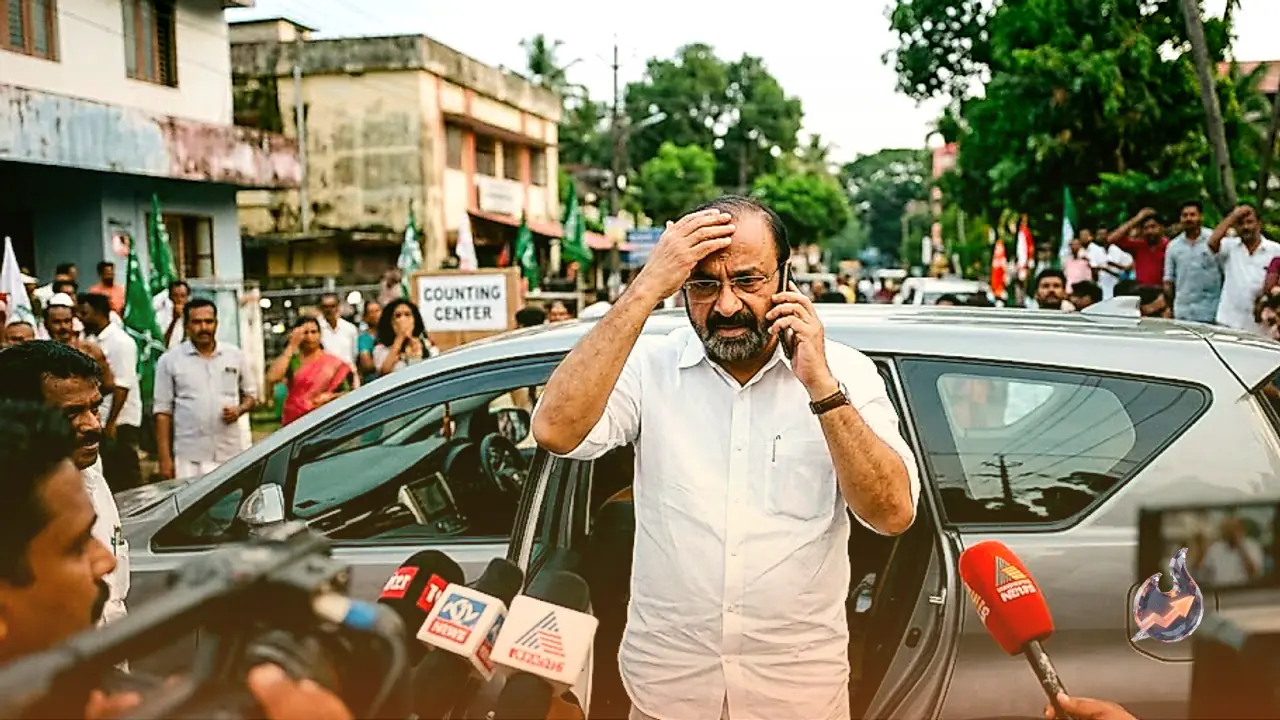
























The Kerala High Court has delivered a decisive ruling on cross-border marriages and entry regulations, holding that a foreign national acquires no inherent or legally enforceable right to an Indian visa merely by marrying an Indian citizen. The bench underscored that the issuance of visas remains an exclusive sovereign prerogative of the Union government, closely linked to territorial integrity, national security, and public order. This pronouncement arrived as the court dismissed a plea brought by a couple challenging the inability of the Pakistani wife to apply for entry to attend a family wedding.
Marriage in Dubai and the Impasse Over Visa Application
The factual matrix of the case reveals that the petitioner, a citizen of Pakistan, entered into wedlock with an Indian national in Dubai. The couple has since been living abroad together. The woman sought to travel to India specifically to attend a wedding ceremony in the country. However, upon attempting to initiate the process for an Indian entry permit, she found that no viable administrative window or channel was available to submit her application, prompting the couple to approach the high court for judicial intervention.
Claims Under Constitutional Protections and Long-Term Stay
In their plea, the petitioners contended that denying the foreign national even an avenue to formally apply for a visa amounted to a breach of basic constitutional guarantees under Article 14, which secures equality before the law, and Article 21, protecting personal liberty. The petition further highlighted that while the initial objective was focused on participating in a single wedding ceremony, her legal status as the spouse of an Indian citizen would inevitably necessitate a long-term visa for ongoing family ties, making the complete administrative block unjustified.
Central Government Defends Sovereign Prerogative and Immigration Policy
Opposing the petition strongly, the central government argued that the entry, movement, and stay of any foreign national on Indian territory are strictly governed by statutory law and executive policy. Counsel representing the Union maintained that sovereign authority over immigration decisions rests entirely with the central administration. It was argued that foreign nationals cannot demand entry into the country as an entitlement, and compliance with statutory visa regimes remains an absolute prerequisite for crossing Indian borders.
Suspension of Consular Services Following the Pahalgam Attack
The high court took formal note of the geopolitical and security events shaping current policy, observing that the central government had halted visa services for Pakistani nationals following the Pahalgam attack that occurred on April 22, 2025. Acting under Section 3 of the Foreigners Act, 1946, the government issued an order barring visa facilities for Pakistani citizens. Under this directive, all processing remains suspended until the executive explicitly withdraws or modifies the restriction.
National Security Dominates Immigration Regimes
Addressing the prevailing restrictions, the court emphasized that following security vulnerabilities exposed by the April 22, 2025 incidents in Pahalgam, the central government exercised lawful executive discretion on April 25, 2025, to suspend all visa operations for Pakistani nationals, a policy that remains operative. Regulating the ingress, residence, internal transit, and departure of foreign individuals constitutes an essential facet of national sovereignty, squarely tethered to public order, sovereignty, and state security.
Court Rejects Invocation of Fundamental Rights Outside Indian Soil
The court firmly repudiated the notion that marriage alters the fundamental statutory framework governing entry, holding that no foreigner, including the spouse of an Indian national, holds an enforceable claim to tourist or visitor visas. Addressing the invocation of constitutional protections, the bench clarified that while Article 14 does extend certain protections to non-citizens, such a claim can be asserted only within Indian territory and solely when the individual is physically present inside the country. Consequently, an extraterritorial demand for a visa cannot be sustained on constitutional grounds.