























The dream of transforming Faridabad into a clean and sustainable smart city hinges significantly on the conscious participation of its residents. Daily kitchen activities generate substantial amounts of organic waste, particularly fruit peels, which are often discarded carelessly onto streets and open spaces, causing environmental degradation and foul odors. However, when managed properly, this organic waste can be converted into valuable, eco-friendly household essentials. Setting an inspiring benchmark for urban waste reduction, Faridabad resident Suchita Sahu has pioneered a simple, zero-cost method to turn fruit peels into multi-purpose bio-enzymes, demonstrating how individual efforts can mitigate urban garbage challenges.
Simple Step-by-Step Method to Prepare Bio-Enzymes at Home
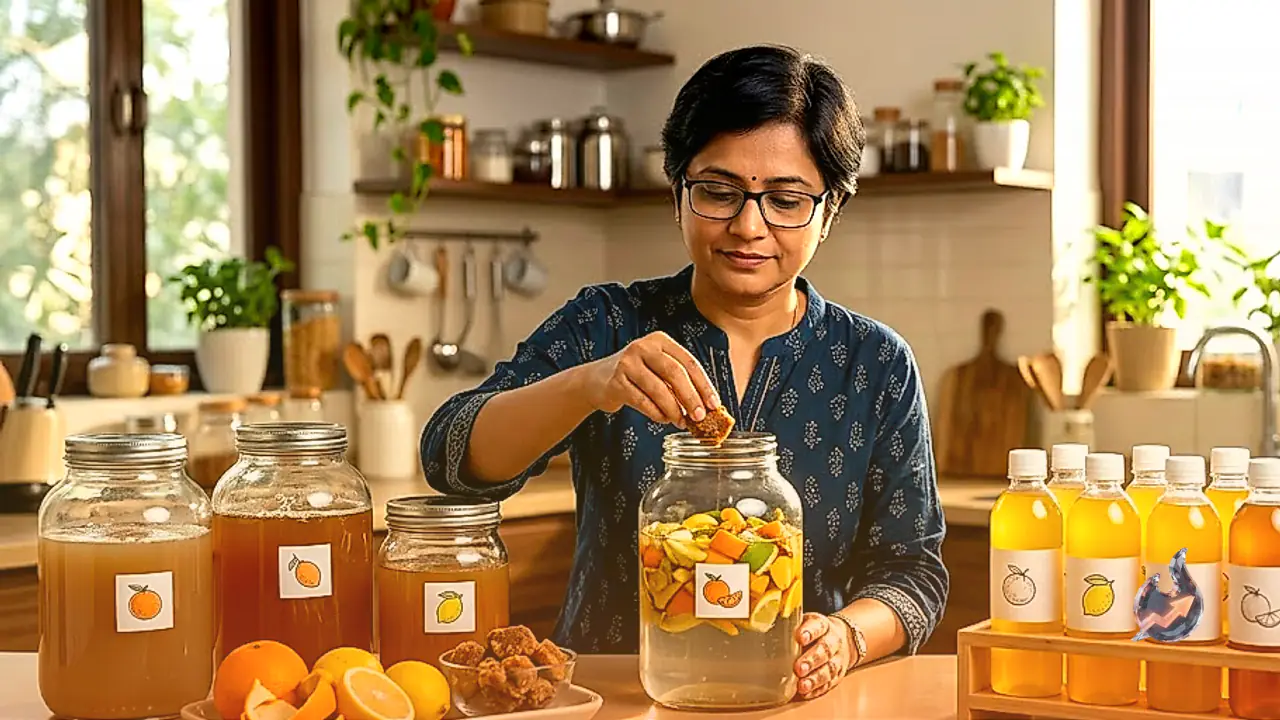
According to Suchita Sahu, everyday kitchen leftovers such as peels of oranges, sweet limes, papayas, and other fruits should never be treated as garbage. Instead, these organic scraps can serve as raw materials for producing seven to eight varieties of useful cleaning items. Preparing a bio-enzyme at home requires no specialized machinery or technical expertise, making it accessible to every household. The preparation involves maintaining a specific ratio of three key ingredients: 300 grams of fruit peels, 100 grams of jaggery, and 1 liter of water.
These components are placed inside an airtight plastic container or jar and sealed tightly. As the organic matter ferments, natural gases build up inside the container. To prevent excess pressure, it is essential to open the lid slightly once every day during the initial 20 to 25 days to release accumulated gas. The jar is then kept stored in a shaded area. After a full maturation period of approximately 90 days, the resulting fermented liquid becomes a potent, natural bio-enzyme ready for household applications.
A Safe and Natural Alternative to Chemical Cleaners
Conventional synthetic cleaners available in commercial markets often contain aggressive chemicals that pose long-term health risks to residents and pollute local water bodies upon disposal. In contrast, home-brewed bio-enzymes provide a 100 percent natural, non-toxic, and biodegradable alternative. The liquid functions effectively as a multi-surface cleaner, making it suitable for mopping floors, scrubbing kitchen utensils, and disinfecting bathroom tiles and toilets.
Beyond removing stubborn grime and neutralizing unpleasant odors, bio-enzymes help improve indoor air quality without emitting harmful fumes. Additionally, the diluted runoff water from cleaning can be safely poured onto domestic plants. The enzyme solution acts as a natural soil booster and liquid nutrient, promoting healthier plant growth while preserving soil fertility without chemical contamination.
Product Expansion and Economical Eco-Friendly Solutions
Building upon the foundational bio-enzyme formula, Suchita Sahu has expanded her line of eco-friendly products derived entirely from fruit peels. She manufactures a natural liquid laundry detergent designed for use in washing machines, which is offered at a price of Rs 230 per liter. This product offers a gentle yet effective washing solution free from synthetic surfactants.
Furthermore, she has formulated a natural insect repellent liquid designed to deter ants and small pests safely without using dangerous pesticides. This pest-repellent liquid is priced at Rs 160 per liter. With a diverse catalog of 7 to 8 fruit peel-based products, her work highlights the immense economic and ecological value hidden within everyday domestic kitchen waste.
Community Outreach and Mass Training Initiatives
For Suchita Sahu, the primary focus goes far beyond product sales; her mission is centered on spreading environmental awareness and empowering communities. She regularly visits local schools, colleges, and community institutions to conduct hands-on training workshops for students, youth, and women's groups. Through these outreach programs, thousands of individuals have already learned the science of bio-enzyme creation and waste segregation.
She emphasizes that if every household adopts the habit of repurposing wet kitchen waste instead of throwing it into municipal bins, the volume of garbage reaching city landfills would drop dramatically. This collective shift in waste management would reduce municipal sanitation burdens and visibly improve the overall cleanliness of urban neighborhoods.
Building Smart Cities Through Responsible Habits
One of the most compelling aspects of this initiative is its minimal cost requirement. Making bio-enzymes demands no expensive equipment or financial investment—just a standard plastic jar, clean water, jaggery, and leftover fruit peels. Although the process requires patience over its 90-day curing period, the resulting solution has a long shelf life and simplifies daily domestic cleaning chores significantly.
A true smart city is not defined solely by large-scale infrastructure projects or government funding, but by the sustainable habits and environmental responsibility of its citizens. By taking accountability for household waste management, communities can drastically lower chemical consumption and protect municipal ecosystems. The grass-root initiative in Faridabad serves as a practical, scalable blueprint for sustainable living across urban India.