























Grapes are highly beneficial for health as they are rich in vitamins, potassium, fiber, and antioxidants. However, grapes available in the market often contain various chemicals. To keep them fresh for longer periods, chemicals like oxalic acid are sprayed on them, while wax or oil sprays are used to give them an attractive shine. Due to this, many people prefer growing grapes at home in pots. Often, it is observed that potted grape plants fail to produce flowers and fruits, and the blossoms tend to drop off. The months of October and November require special care for grape plants. Knowing which fertilizers to apply during winter and how to properly maintain the plant is essential for a good harvest.
The common grapes we consume contain seeds, but plants grown from these seeds will not bear fruit. Instead, one should bring a grafted grape vine from a nursery, which can be easily grown at home in a pot and bears fruit much earlier. Whenever you bring a plant or vine from a nursery, it should be provided with liquid nutrients right from the beginning. Liquid fertilizers like NPK are easily available online nowadays and can be mixed with water. Applying this helps the vine spread out robustly within just 20 days. When considering the best varieties of grapes, Thompson Seedless is the most popular choice. Additionally, Sonaka, Manik Chaman, and Pusa Navrang are also considered excellent varieties that bear fruit in clusters of 15 to 20.
The ideal season for planting a grape vine is the months of July and August, as the plant experiences strong growth during the monsoon season. Initially, the plant can be potted in an 18-inch container, placed in a spot that receives plenty of sunlight. The grow bag or pot must have proper drainage holes. The potting mixture should consist of 50 percent garden soil, 40 percent vermicompost or decomposed cow dung manure, 200 grams of neem cake, and 300 grams of stone dust or calcium powder.
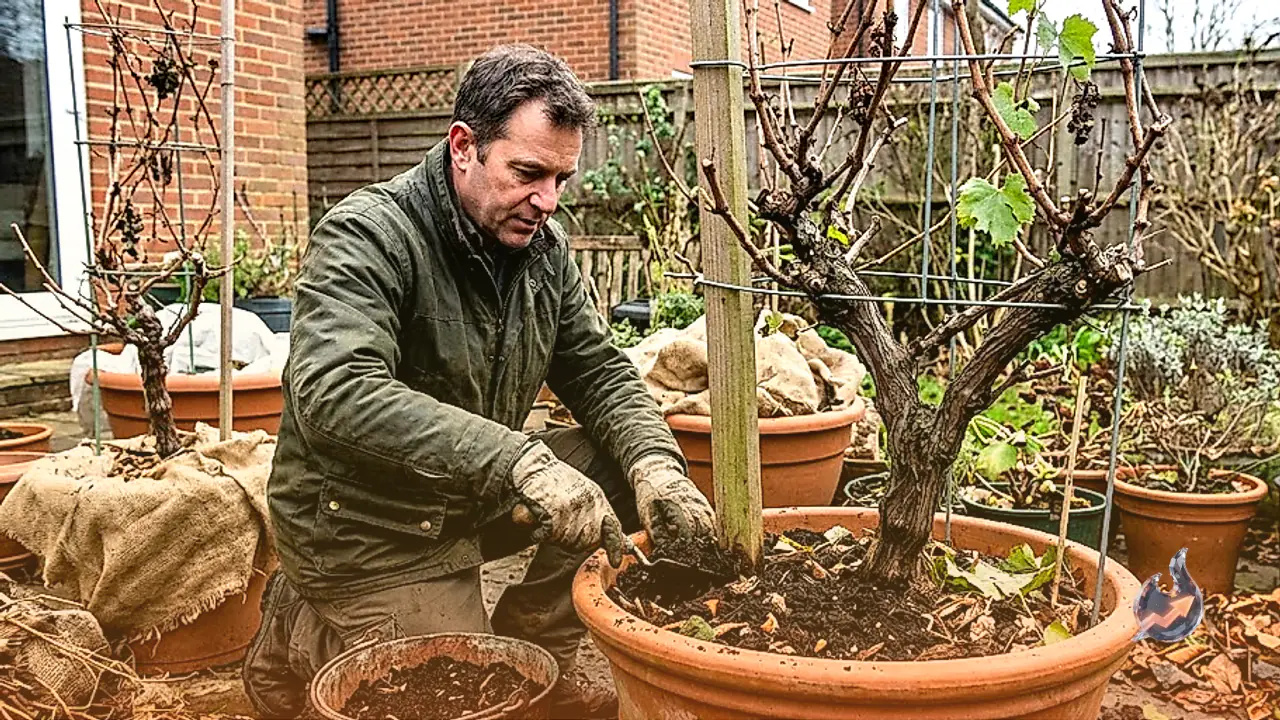
The months of November, December, and January constitute the dormancy period for grape vines, during which the leaves shed. Pruning the vine during these three months is crucial, and the vine should not exceed 15 feet in length. Using a net for the grape vine is necessary, and gardeners should maintain only one main vine while cutting away the smaller side branches. This makes the main vine thicker and denser, resulting in a higher yield of flowers and fruits. Fertilizers should be applied strictly during the October and November months.
After completing the pruning process, loosen the soil in the pot through weeding and tilling. Prepare a nutrient mixture by combining vermicompost, two tablespoons of mustard cake, and two tablespoons of seaweed granules. Add this mixture to the pot and lightly cover it with soil. All three of these are organic fertilizers that provide excellent growth to the plant starting from January and February. If the plant is old and shows halted growth, it should be repotted by gently pruning the roots and refilling the pot with a fresh mixture of soil and vermicompost before watering thoroughly.
During the cold season, the grape plant appears completely dried up, and its leaves turn yellow and drop off. Interestingly, the plant remains green from the inside even when not a single leaf is visible. The plant can be fed with a protein plant mix fertilizer, or a customized blend of mustard cake, neem cake, vermicompost, and humic acid or seaweed. Loosen the soil and apply this mixture. By February, new buds begin to sprout, fresh clusters emerge, and abundant fruits start growing. Additionally, Epsom salt can be applied to the plant to bring a shine to the leaves, using a spray made by mixing one teaspoon of Epsom salt in one liter of water. Summer is the season of maximum growth for grape plants, during which watering requires special attention. Following these care routines will certainly yield 10 to 20 kilograms of produce from a single plant, bearing heavy clusters of fruit.