






















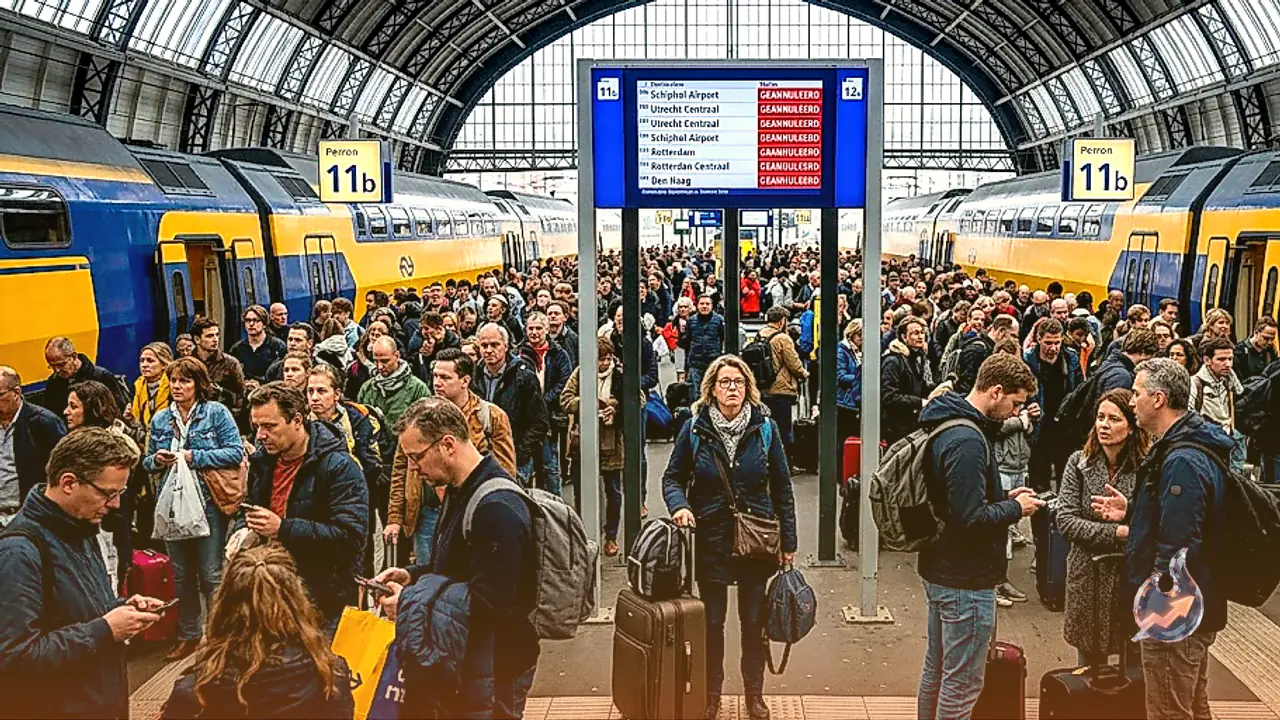

A severe wave of disruption brought train travel across central and northern parts of the Netherlands to a standstill on Tuesday following suspected acts of sabotage on railway lines. Major transit corridors serving Amsterdam were heavily affected, leaving thousands of commuters and intercity passengers facing widespread cancellations and lengthy schedule delays. In addition to stranded trains, multiple level crossings malfunctioned across the impacted network, creating safety hazards and cascading delays into adjacent road transport.
Metal Pipes Fixed to Tracks in Coordinated Disruption
Infrastructure operator ProRail confirmed that foreign objects had been strategically placed directly onto the tracks across several separate sites. Footage aired by Dutch public broadcaster NOS captured police officers carrying metal pipes, measuring approximately 1.5 metres (5 feet) in length, away from railway lines near Veenendaal in the central region of the country. According to railway officials, the precision of the interference indicated an intentional effort to disrupt the signaling sections of the rail infrastructure rather than an accidental issue.
Addressing the crisis, ProRail stated: "Materials were found at multiple locations in the track that were deliberately placed there. This causes section malfunctions. Sabotage appears to be involved." The operator further characterized the event as an intentional disruption caused directly by human action, explaining that placing conductive metal objects across tracks triggers automated safety faults in the electric circuit sections that regulate train spacing and crossing gates.
Major Hubs and Schiphol Airport Severely Impacted
The scale of the disruption rapidly mounted through the day, with the national railway network portal registering 15 distinct disruptions nationwide on Tuesday. Among the hardest-hit destinations were routes connecting to Utrecht, one of the country's pivotal rail interchanges, and direct services running to Schiphol, the primary international airport serving the Amsterdam metropolitan area. Passengers traveling toward flight departures experienced sudden cancellations, forcing many to seek alternative road transport under challenging conditions.
Because automated crossing barriers were triggered into fail-safe modes or malfunctioned entirely, railway staff had to implement emergency protocols to prevent accidents at vehicular intersections. Maintenance teams were dispatched alongside law enforcement officers to scour rail corridors, remove foreign objects, and run diagnostic assessments on electrical track blocks before clearing routes for resumption.
National Police Unit Investigates Unidentified Motive
Given the coordinated nature of the incidents across different geographical points, the national police unit stepped in to lead an active criminal investigation. Authorities have not yet identified any suspects or determined a motive behind the interference. Investigators are reviewing surveillance logs, surveying physical entry points along track embankments, and testing the recovered metal pipes for forensic evidence.
ProRail advised commuters across the central and northern territories to monitor real-time journey planners and anticipate ongoing irregularities until all affected sections have been thoroughly inspected and verified safe for full operational speeds.