























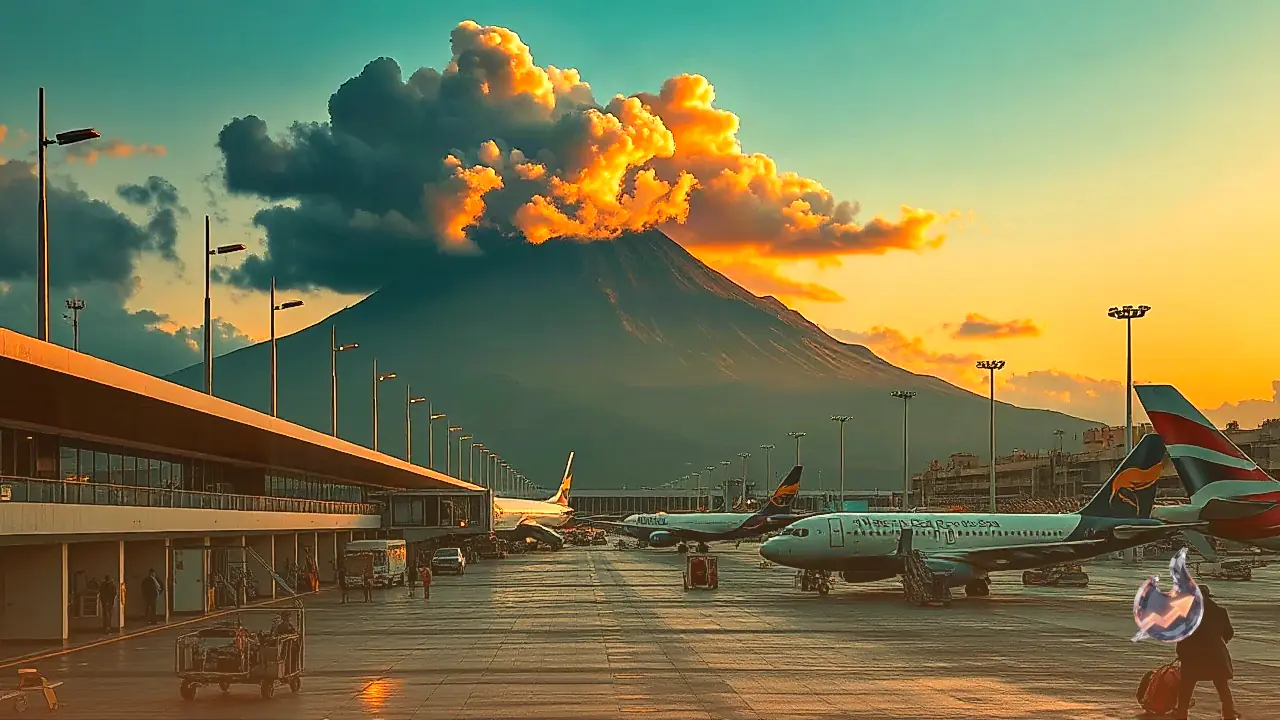

A sudden surge of volcanic ash from Mount Etna has brought air travel to a standstill on the Italian island of Sicily, forcing officials to shut down one of the country's most critical transit hubs. Authorities halted all inbound and outbound services at Catania International Airport after dense airborne particles drifted into nearby flight corridors. Airborne volcanic debris presents severe risks to turbine engines and drastically reduces visibility, making continued runway activity unsafe for commercial aviation.
Ground Stop Extended Until Tuesday Evening
Flight suspensions commenced on Monday as ash concentrations over the airfield worsened. Aviation officials later confirmed that the full stoppage of arrivals and departures would remain in force until 22:00 local time (20:00 GMT) on Tuesday. Catania ranks as Italy's fifth-busiest airport by passenger traffic, typically handling approximately 12 million passengers every year. In an official update published on its website on Tuesday, the airport authority stated that further developments would follow as conditions evolve. In the meantime, airport authorities advised travellers scheduled to depart from Catania to contact their respective airlines for real-time schedule information before setting out for the terminal.
Aviation Red Alert Triggered by Volcano Monitors
The intensifying activity across Etna's summit vents led scientists at the INGV Etneo Observatory to raise the aviation warning to a red alert on Monday. This notification signifies significant ash emissions into airspace used by commercial aircraft. This closure marks the second time in recent months that emissions from Etna have crippled the airport. Just last month, during the height of the summer travel rush, the terminal was forced to suspend operations for nearly an entire week due to volcanic unrest.
Geography Sparks Debate Over Sicily's Air Infrastructure
Mount Etna stands 3,324 metres (10,906 feet) tall and lies only about 40 kilometres (25 miles) from Catania's runways. Because Europe's tallest active volcano erupts on a frequent basis, its close proximity has repeatedly left flight schedules vulnerable to sudden shutdowns. This persistent disruption has prompted repeated appeals from critics who argue that Catania airport should be phased out, urging authorities instead to expand and upgrade alternative aviation facilities across Sicily that sit further from the hazard zone.
Spectacle Continues to Draw Global Visitors
While local airspace suffers recurring disruption, Etna remains an enormous economic and tourism magnet. Around 1.5 million people visit the mountain annually. Even during the disruptive eruptions in August, vast crowds of onlookers gathered along safe observation points to view the glowing lava streams descending the mountain slopes, underscoring the delicate balance between natural wonder and infrastructure challenges in the region.