






















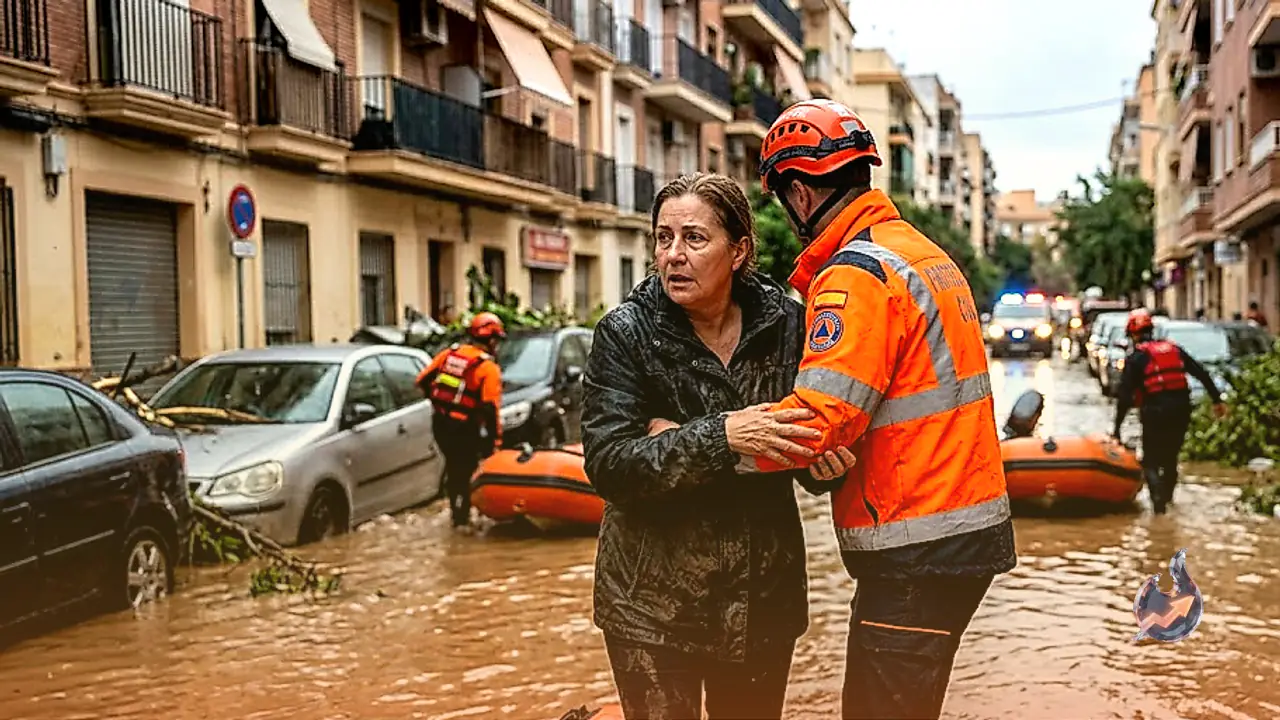

Extreme autumn weather has battered north-eastern and eastern Spain, triggering destructive flash floods that claimed one life and brought massive operational paralysis to major urban centers. Torrential rain inundated cities across Catalonia and Valencia, transforming major roadways into rushing torrents and trapping vehicles under waterlogged structures. The severe deluge caused widespread transit cancellations, shuttered metropolitan subway lines, and prompted Prime Minister Pedro Sanchez to warn citizens of very complicated situations as emergency agencies mobilized across the storm-ravaged provinces.
Fatal Incident in Olivella and Hazardous Rescues
The human toll of the storm emerged in the small town of Olivella, located approximately 40 kilometers (25 miles) west of Barcelona. Authorities confirmed that an individual lost their life after an overflowing stream swept away an automobile amid rapid water rise. On Thursday, Catalan firefighters announced on X that search and rescue personnel had recovered the lifeless body of a man from the submerged vehicle. This update corrected preliminary accounts that had initially identified the missing motorist as a woman. Video footage circulating across social platforms highlighted the severity of the crisis, showing passenger cars submerged up to their windows and emergency teams conducting high-risk operations to extract motorists trapped in deeply flooded underpasses.
Emergency Response and Warnings in Catalonia
Ahead of the worst downpours, Spain's state meteorological agency AEMET issued severe weather alerts covering multiple eastern territories on Wednesday, elevating the alert level to a red warning specifically for the coastline of Barcelona. Catalonia's civil protection and emergency departments logged an overwhelming surge in distress calls, fielding more than 850 emergency communications related directly to flood incidents. In total, authorities registered over 500 distinct operational incidents across the territory. Confronted with rapidly deteriorating ground conditions, public officials repeatedly urged residents to avoid all non-essential road journeys while frontline teams worked to secure endangered infrastructure.
Transit Turmoil Across Barcelona
In Barcelona, urban transit networks buckled under the sustained deluge. Municipal authorities were forced to shut several downtown metro stations after water entered concourses, while surface bus routes required sudden diversions away from flooded corridors. Regional commuter trains faced severe scheduling chaos and delays as rail beds became waterlogged. International and domestic air travel suffered significant disruptions at Barcelona's El Prat Airport, where heavy downpours resulted in extensive flight cancellations and prolonged ground delays for departing and arriving aircraft.
Historic Cloudburst Across Valencia
The neighboring autonomous community of Valencia experienced similarly violent atmospheric conditions. Meteorological association AVAMET reported that certain municipalities endured an astonishing cloudburst exceeding 70 millimeters (2.76 inches) of rainfall within a narrow 30-minute window. Commenting on the anomaly via X, the association emphasized that such intense accumulation over half an hour represents an exceedingly rare meteorological occurrence. In the broader province of Valencia, emergency operators managed 478 separate crisis incidents, dominated by structural damage, building leaks, and paralyzing traffic blockages. Within Valencia city itself, transit operators suspended every urban metro line, while the regional airport shut down entirely for multiple hours, forcing incoming flights to divert to alternate airfields. The flooding also forced the postponement of a top-flight football fixture between Levante and Athletic Bilbao, as the pitch became completely waterlogged and storm runoff infiltrated the subterranean tunnel leading to the locker rooms.
Record Temperatures and Climatic Mechanics
This unprecedented autumn storm arrived directly on the heels of Spain's hottest recorded summer in modern history, followed by an abnormally warm opening to September. Atmospheric scientists emphasize that anthropogenic climate change is substantially intensifying the seasonal Mediterranean storms that periodically hit eastern Spain during the transition into autumn. Over extended summer heatwaves, the Mediterranean Sea absorbs enormous volumes of thermal energy, accelerating the rate of marine evaporation. When low-pressure systems push into the basin, the elevated moisture loading within the heated atmosphere provides the exact thermodynamic fuel required to produce catastrophic and hyper-concentrated deluges.